Journal
What Is Transepidermal Water Loss and Why It Matters After a Procedure
Transepidermal water loss quietly drives most of what we feel as post-procedure tightness, sensitivity, and dullness. Here is how it works and how to manage it.
August 25, 2026 / 6 min read
Most of the discomfort that follows an aesthetic procedure can be traced back to a single, measurable phenomenon: transepidermal water loss. The term itself sounds clinical, but the experience is familiar to anyone who has had a treatment. The skin feels tight a few hours after the appointment. It looks slightly dull the next morning. Products that normally feel pleasant suddenly sting. None of these symptoms is mysterious; they are all expressions of water leaving the skin faster than the barrier can replace it.
Understanding transepidermal water loss, often abbreviated as TEWL, gives you a useful framework for everything that happens during recovery. It explains why some products help and others irritate. It explains why timing matters more than ingredient lists. And it gives you a clear, practical reason to be patient with the routine you adopt for the days after a treatment.
What Transepidermal Water Loss Actually Is
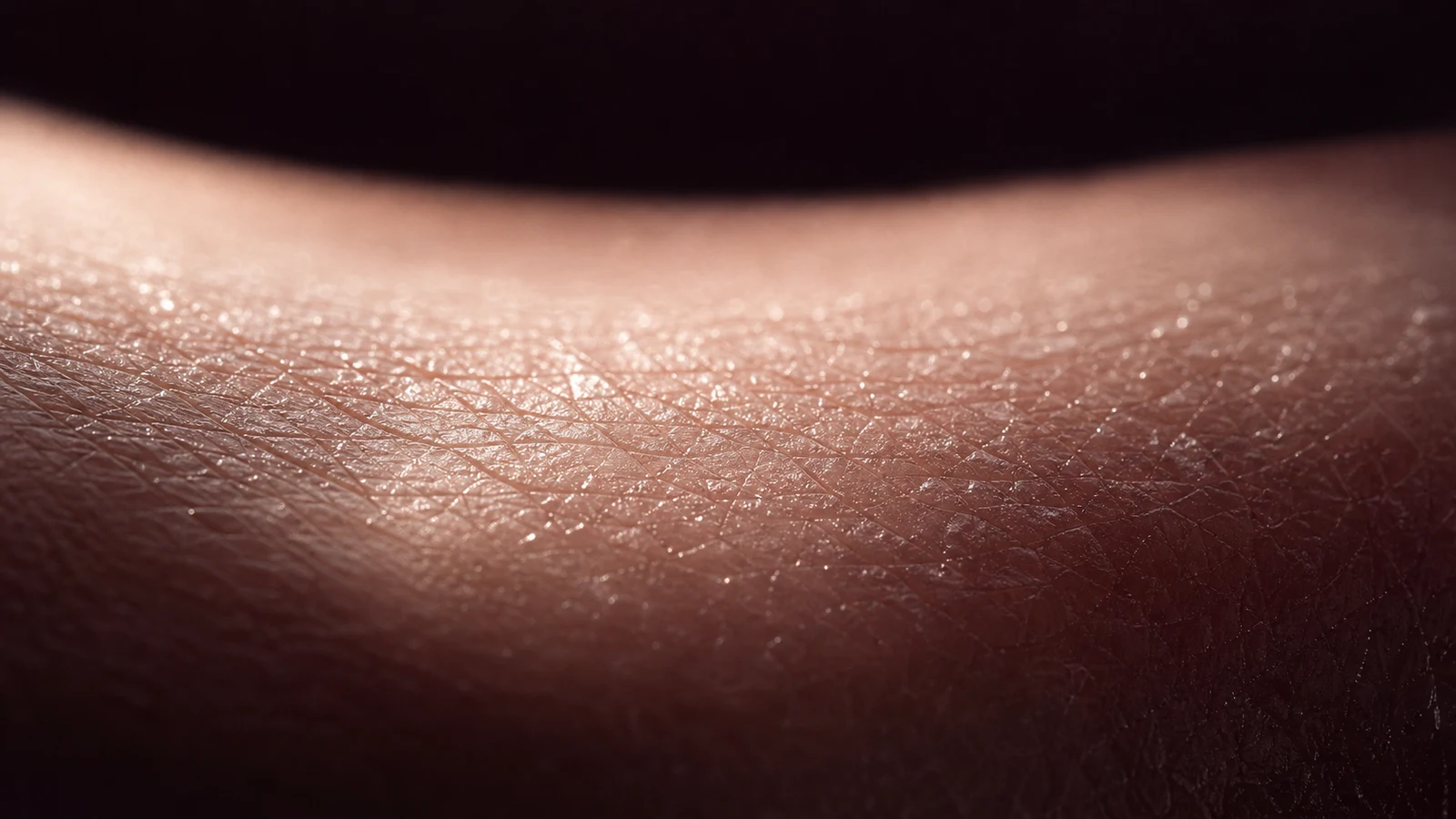
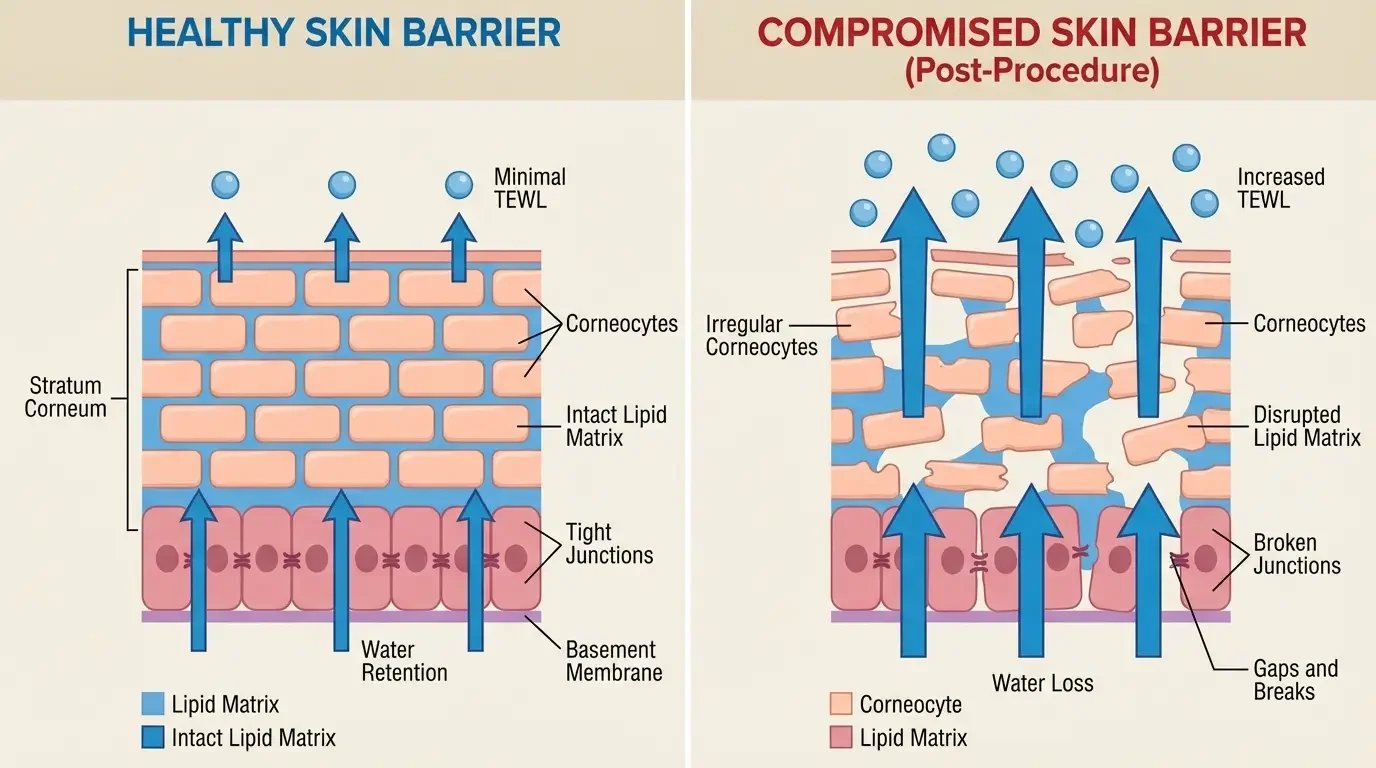
Skin is a regulated boundary. Water moves through it constantly, in both directions, and the rate at which it moves outward is what we call transepidermal water loss. In healthy skin at rest, this rate is low and stable; the barrier slows the natural movement of water enough that the deeper layers stay properly hydrated and the surface stays comfortable.
When the barrier is intact, the lipid matrix between corneocytes acts as a kind of mortar between bricks. Water travels through it slowly. When the barrier is compromised, that mortar develops gaps. Water moves through faster. The skin loses moisture from its deeper layers more quickly than the body can resupply it, and the surface registers the deficit within hours.
The measurement of TEWL is one of the most reliable proxies for barrier function in dermatology research. Higher values indicate compromise. Recovery from a procedure is, in measurable terms, the slow return of TEWL to baseline.
Why Procedures Increase It
Every procedure that produces a result also produces some degree of barrier disruption. Microneedling creates microscopic channels through the epidermis. Laser resurfacing ablates the upper layers entirely or fractionally. Chemical peels dissolve the bonds holding cells together. Even gentler procedures like dermaplaning thin the surface mechanically.
The result, in every case, is increased TEWL. The duration of the increase depends on the depth and the technology, but the principle is the same. The barrier is now more permeable than usual. Water is leaving faster. Your routine for the next several days is, in a real sense, a series of measures to slow that loss.
What Elevated TEWL Feels Like
Most people do not measure TEWL; they experience its consequences. The feelings are recognisable: tightness, particularly after washing the face. A subtle dullness in the morning. Mild stinging when applying products that previously felt fine. Increased sensitivity to temperature and wind. Visible roughness on the surface that was not there before.
None of these symptoms necessarily indicates that something has gone wrong. They are predictable signs that the barrier is in transition. The mistake people often make is to treat the symptoms with potent actives, which only further compromise an already-permeable surface.
How to Manage It Through the Recovery Window
Three principles guide TEWL management after a procedure: support the barrier, slow the loss, and avoid further damage.
Supporting the barrier means delivering ingredients that participate in its repair. Panthenol, allantoin, and the peptide matrix support the structural rebuilding of the barrier Niacinamide supports ceramide production by signaling rather than supplying.
Slowing the loss means using ingredients that form a temporary, breathable surface layer. Glycerin in a balanced formulation and biosaccharide gum-1 reduce evaporation without occluding heat or sebum. Heavy occlusive balms slow loss further but are sometimes counterproductive in the first 24 hours when the skin needs to breathe and clear inflammatory mediators.
Avoiding further damage means resisting the actives that ordinarily form your routine. Retinoids, alpha-hydroxy acids, vitamin C in high concentration, and physical exfoliation all increase TEWL. Reintroduction happens gradually, on the timeline your practitioner specifies, not on the timeline your habits suggest.
Why a Multi-Layer Architecture Matters
Single-ingredient formulations rarely produce optimal TEWL recovery. The skin needs hydration, lipid replenishment, surface protection, and metabolic support all at once, and a sequence of monolithic products rarely delivers them efficiently.
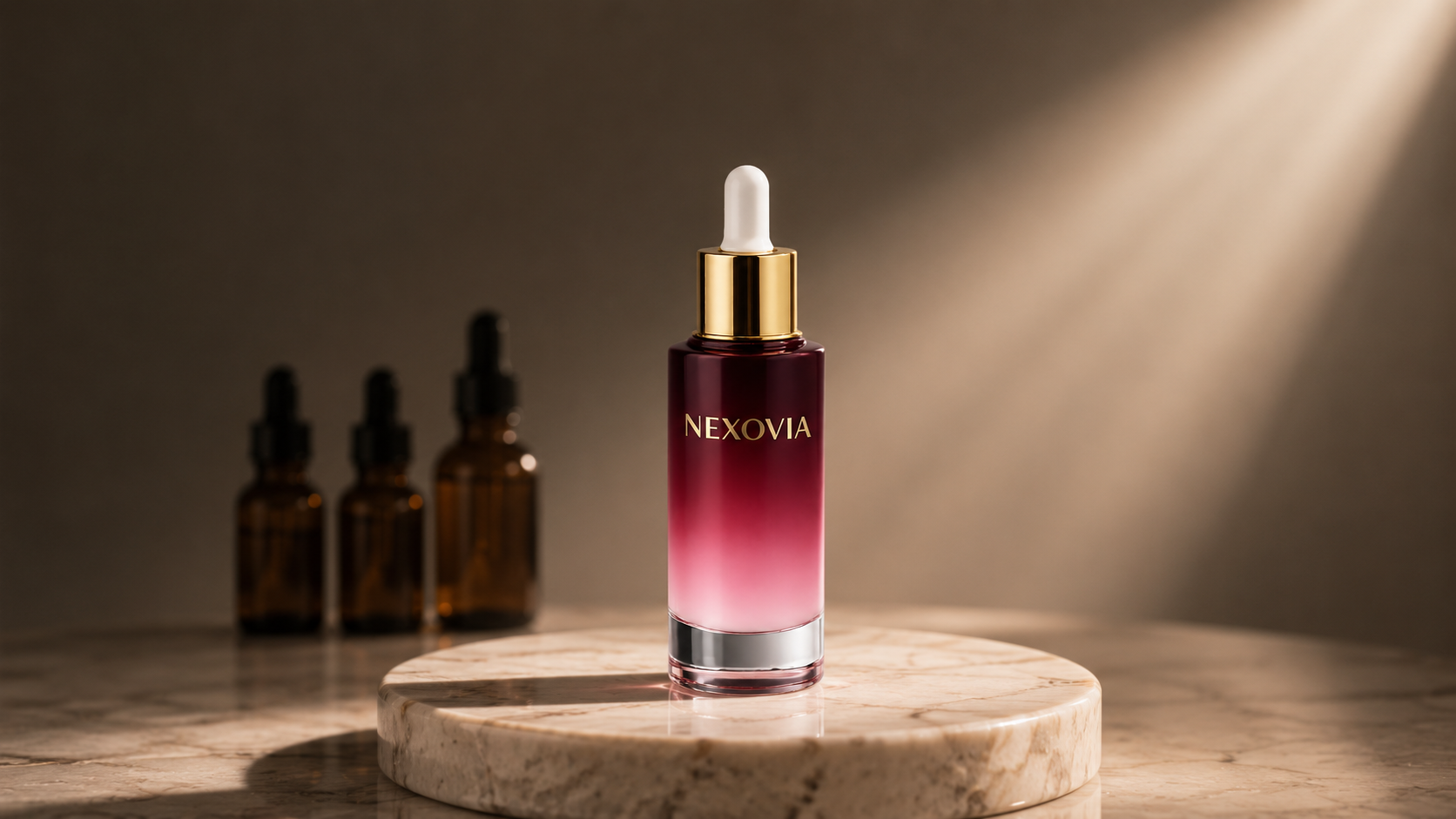
Nexovia's ABA.4 Bio-Intelligent Architecture is built around this recognition. The peptide matrix supports the structural rebuilding of the barrier. Plant exosomes at four billion particles per millilitre coordinate the cellular communication that organises repair. PDRN at one percent activates regenerative pathways through adenosine receptors. NAD+ at one percent supplies the cellular energy that all of the above demand. The hydrating and surface-comforting components ensure the skin tolerates these signals without irritation. Peptides, NAD+, and exosomes each address a different aspect of the same problem.
The result is recovery that addresses TEWL not as an isolated metric but as the surface expression of a more complex restoration. The barrier closes faster, the surface comfort returns sooner, and the visible result of the procedure becomes apparent without an extended period of compromise.
Frequently Asked Questions
How long does TEWL stay elevated after a procedure?
It depends on the depth. Superficial peels and dermaplaning typically return to baseline within 48 to 72 hours. Microneedling, depending on depth, takes three to seven days. Fractional laser resurfacing can keep TEWL elevated for one to two weeks. Your practitioner's recovery window is calibrated to this timeline.
Is heavy occlusive moisturizer always the right answer?
Not always. Heavy occlusives slow water loss most aggressively, which is useful in some cases but can trap heat and inflammatory mediators in the first 24 hours. A breathable, non-occlusive hydrator is often better immediately after a procedure, with richer formulas introduced once the skin is no longer warm to the touch.
Does drinking more water help?
Adequate hydration supports skin function generally, but TEWL is determined by the barrier, not by total body water. Drinking large quantities of water does not meaningfully reduce TEWL on its own. Topical strategies do most of the work.
Why does my skin feel worse on day two than day one?
Inflammation peaks 24 to 48 hours after most procedures, and TEWL typically peaks alongside it. The skin can feel tighter and look duller on day two even though objective recovery is progressing. Day three is usually noticeably better.
Can I measure TEWL at home?
Consumer devices for TEWL measurement exist but are generally not accurate enough to be useful. The subjective experience, tightness, dullness, sensitivity, is a reliable enough indicator for routine recovery decisions.
This content is for informational purposes only and does not constitute medical advice. Always follow the specific aftercare instructions provided by your practitioner, as recommendations may vary based on your individual treatment and skin type.
Disclaimer: This article is for educational purposes only and is not medical advice. Always follow your provider's guidance after cosmetic procedures.