Complete Guide
Microneedling Aftercare: Day-by-Day Recovery Guide
A practical microneedling aftercare plan covering what to use, what to avoid, expected redness, and when to contact your practitioner.
By Nexovia Editorial Team / Published May 9, 2026 / Updated July 22, 2026
Discover Your Skin Recovery Score
Microneedling Aftercare at a Glance
Follow the instructions from your licensed practitioner and the specific device used for your treatment. Microneedling temporarily disrupts the skin barrier, and product, washing, sun, makeup, and exercise advice can vary by device and needle depth.
- First 24 hours: Do not touch the area unnecessarily or apply makeup. Use only post-treatment products your practitioner has confirmed are compatible with the device and protocol.
- Cleansing: Follow your practitioner's timing. Once cleared, use lukewarm water and a mild, provider-approved cleanser; do not scrub, and pat dry.
- Sun and heat: Avoid intentional sun exposure during the initial recovery period. Once your provider permits sunscreen, use broad-spectrum SPF 30+ outdoors, plus shade and protective clothing.
- Actives: Do not apply retinoids, exfoliating acids, vitamin C, or other irritating actives through freshly treated skin. Resume them only after the skin has recovered and your practitioner has cleared them.
- Call your practitioner: Seek prompt advice for increasing redness, warmth, pain, itching, pus, fever, blistering, or symptoms that worsen instead of improving.
Microneedling aftercare is specific because devices, treatment depths, combination procedures, and individual skin responses differ. The safest plan is the one provided by the clinician who treated you. This guide explains common recovery patterns and questions so you can discuss them with that practitioner.
For broader guidance after aesthetic treatment, see our complete post-procedure skincare guide.
What Happens to Your Skin During Microneedling
Before diving into aftercare, understanding what just happened to your skin helps explain why certain things matter so much in the days ahead.
Microneedling works by creating controlled micro-injuries in your skin using a device equipped with fine needles. These needles puncture the epidermis and reach into the dermis, creating thousands of tiny channels. This controlled damage triggers your body's wound healing response, a cascade of biological events that ultimately leads to new collagen and elastin production.
The process happens in three overlapping phases. First comes inflammation, where your body sends blood flow to the area and immune cells arrive to begin the repair process. This is why your skin looks red and feels warm immediately after treatment. Next comes proliferation, when fibroblasts migrate to the area and begin producing new collagen and elastin while epithelial cells multiply to restore your skin's surface. Finally, remodeling occurs over weeks to months as the initial collagen gets reorganized into stronger, more structured tissue.
Microneedling creates controlled micro-injuries that temporarily disrupt the skin barrier. How long that disruption lasts varies by device, needle depth, treatment site, skin, and aftercare conditions. Do not assume that a cosmetic product is safe to deliver through fresh microchannels: the FDA notes that authorized microneedling devices are not approved for delivering cosmetics, topical medications, vitamins, drugs, or blood products into the skin.
The Microneedling Recovery Timeline: Day by Day
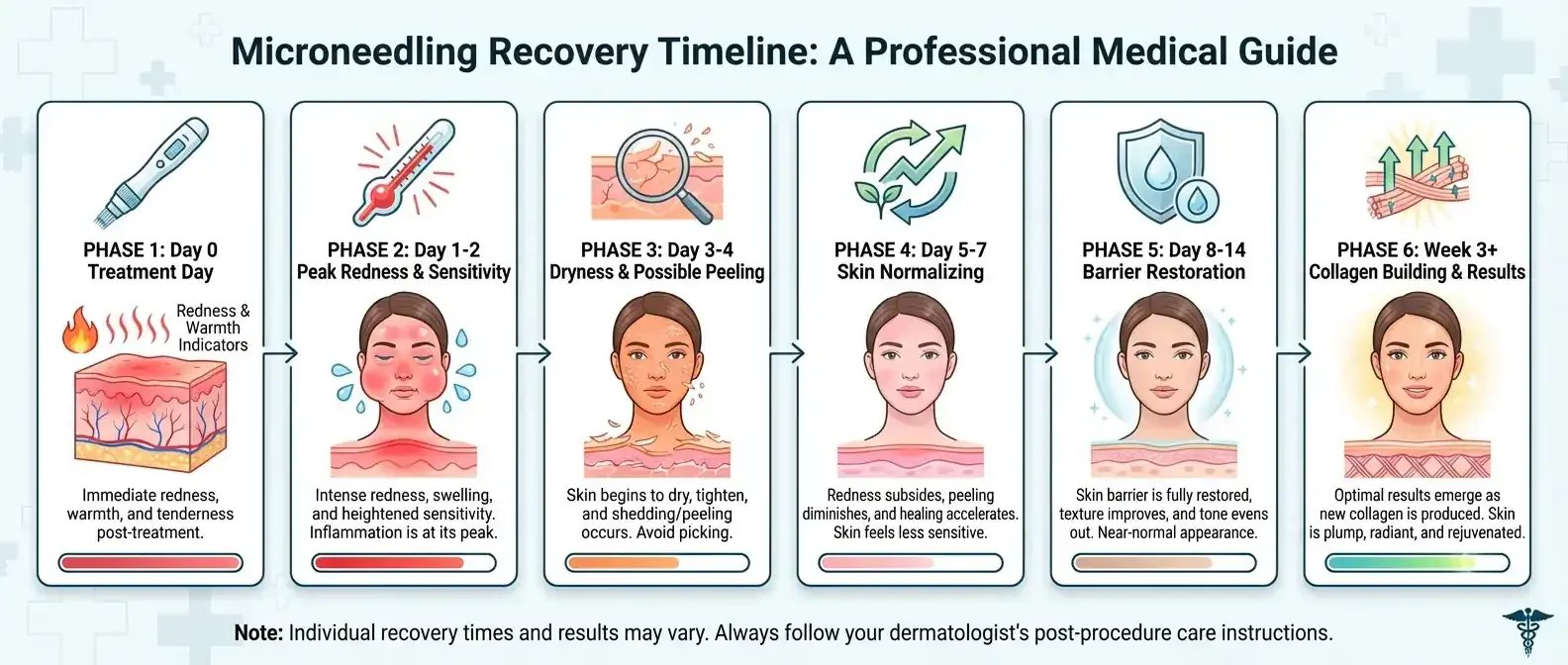
While everyone heals at their own pace, microneedling follows a fairly predictable pattern. Understanding this timeline helps you know what's normal, what to expect each day, and when something might warrant a call to your practitioner.
Day 0: Treatment Day
Immediately after microneedling, the treated skin may look red or temporarily darker and may feel warm, tight, dry, or tender. Mild swelling, pinpoint bleeding, burning, itching, or peeling can also occur. These effects often improve over several days, but the pattern varies with the device, treatment depth, and individual skin response.
The barrier is temporarily disrupted after treatment, but there is no universal closure time for every device and protocol. Do not touch the area unnecessarily, and do not add serums, cosmetics, or active products unless your licensed practitioner has confirmed that they are compatible with the device and treatment you received.
Follow your practitioner's instructions about when to wash. Once cleared to cleanse, use lukewarm water and a mild, provider-approved cleanser, avoid scrubbing, and pat the skin dry.
Day 1: Acute Inflammation
Skin may still look flushed or temporarily darker and may feel tight, dry, tender, or slightly swollen. Redness can persist or peak during the first few days, but the timing varies. Temperature sensitivity can also occur.
Continue the device-specific routine your practitioner provided. If you have been cleared to cleanse, use lukewarm water and a mild cleanser, then pat dry. Avoid intentional sun exposure. Once your provider permits sunscreen, use a broad-spectrum SPF 30+ before going outdoors, together with shade and protective clothing.
Avoid makeup, active ingredients, touching your face, strenuous exercise, saunas, steam rooms, hot showers, swimming pools, and anything that might introduce bacteria or cause sweating. Your skin's protective barrier is compromised, making infection and irritation risks higher than normal.
Days 2-3: Peak Healing
Redness may begin to diminish, although it can still be visible. Dryness, tightness, rough texture, itching, or mild peeling can occur. These symptoms should generally trend toward improvement rather than becoming more severe.
Mild peeling may begin, though this varies depending on the aggressiveness of your treatment and your individual skin response. If peeling occurs, do not pick, pull, or manually exfoliate. Let the skin shed naturally. Picking at peeling skin can cause scarring, hyperpigmentation, or infection.
Continue your minimal routine: gentle cleanser, hydrating serum, moisturizer, sunscreen when needed. You may find yourself wanting to moisturize multiple times throughout the day, this is fine and often helpful. Your skin is craving hydration as it works to restore its barrier.
Days 4-5: Peeling and Renewal
For many patients, this is when peeling or flaking reaches its peak before subsiding. The roughness you felt on days 2-3 often starts to resolve as dead skin cells slough off to reveal newer skin beneath. Some people experience very little visible peeling while others have more noticeable flaking, both are normal.
By day 4 or 5, most redness has significantly faded, though you may still notice a slight pink undertone, especially if you had a more aggressive treatment. Your skin is starting to feel more like itself, though sensitivity may linger.
Major device guidance commonly advises waiting at least 24 hours before makeup. Wait longer if the skin remains irritated or your practitioner advises it, and use clean brushes or sponges when you resume.
Days 6-7: Approaching Normal
Many people have less redness, peeling, and sensitivity by this stage, but deeper treatments and combination procedures can take longer. Do not use the calendar alone to decide that the skin is ready for actives or another procedure.
Exercise timing is device- and treatment-specific. For example, current SkinPen labeling advises avoiding sweaty exercise for 72 hours, while other protocols may differ. Follow the instructions for the device used and your practitioner's advice.
You can begin thinking about gradually reintroducing some elements of your regular skincare routine, starting with the gentlest products. However, hold off on active ingredients for a few more days.
Days 8-14: Barrier Restoration
Many people look and feel substantially recovered during the second week, but recovery time varies. Continue to follow your practitioner's restrictions until they clear you to resume your usual routine.
During this second week, you can cautiously begin reintroducing active ingredients if your skin feels ready. Start with one product at a time, at a lower frequency or concentration than you used before microneedling. For example, if you normally use retinol nightly, try every third night initially and monitor for irritation.
Continue with excellent sun protection and gentle, hydrating care. The optimization phase has begun, supporting your skin now helps maximize the collagen-building benefits of the treatment.
Week 3 and Beyond: Collagen Building
Visible healing is complete, but the real magic is happening below the surface. New collagen fibers are being deposited and organized, leading to progressive improvements in skin texture, fine lines, pore appearance, and overall firmness. You may notice your results continue to improve for 4 to 6 weeks after a single treatment, with some patients seeing continued refinement for up to 3 months.
If a treatment series is appropriate, the number of sessions and spacing should be individualized by the licensed practitioner based on the device, indication, treatment depth, and your recovery.
What to Put on Your Face After Microneedling
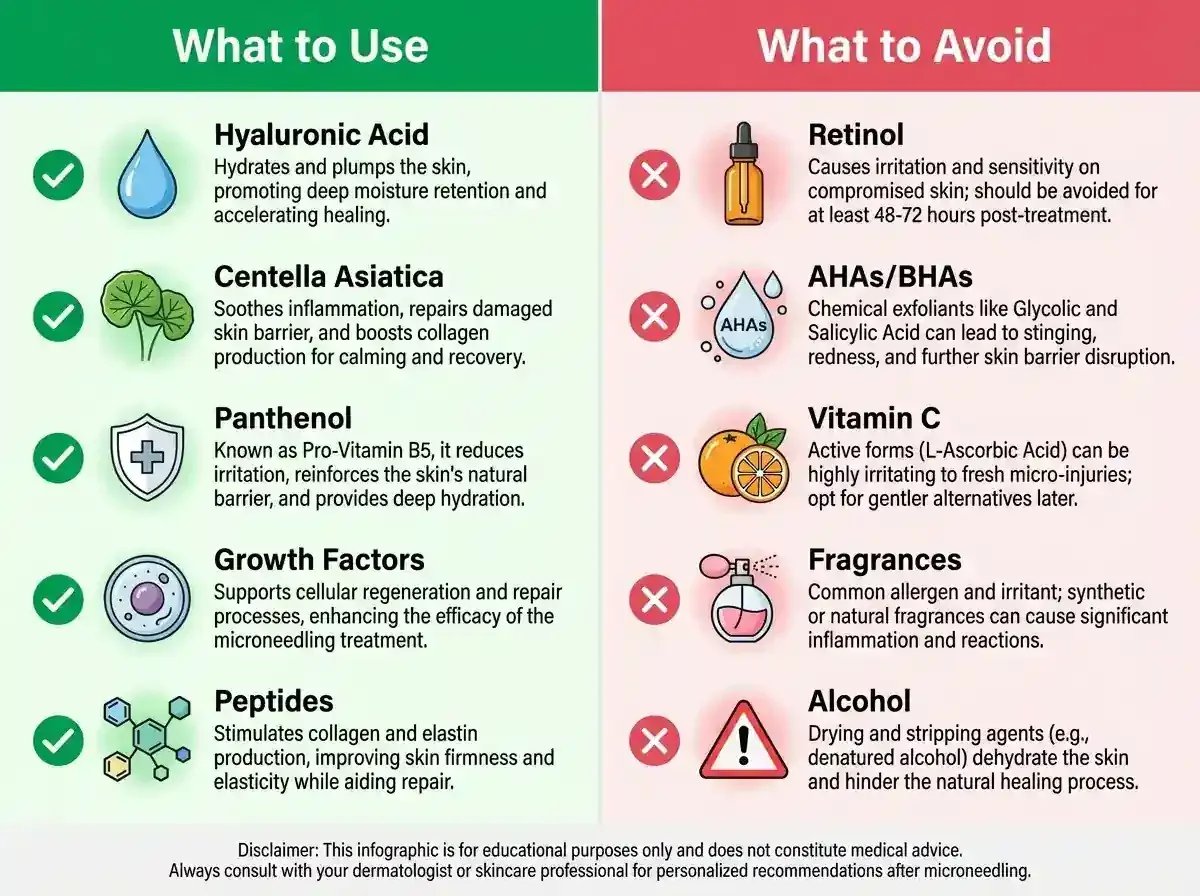
Use only the post-treatment products your licensed practitioner confirms are compatible with the specific device and protocol. A product that is appropriate on intact skin is not automatically appropriate for freshly treated skin.
Keep the Initial Routine Simple
During the initial recovery period, simpler is safer. Your practitioner may recommend a bland, fragrance-free moisturizer or another device-compatible product after cleansing, but the exact product and timing should come from the clinician who treated you.
Research into hyaluronic acid, centella, panthenol, peptides, PDRN, exosomes, and NAD+ in topical or procedure-adjacent use is still developing. That research does not establish that a specific cosmetic product will penetrate to a particular skin layer, accelerate recovery, or improve microneedling outcomes.
Do not use microneedling as a delivery method for a cosmetic, drug, vitamin, biologic, or blood product unless it is part of a legally authorized, clinician-directed protocol for the specific device and indication.
Ingredients to Avoid
Retinoids, exfoliating acids, vitamin C, benzoyl peroxide, and other potentially irritating actives should not be applied through freshly treated skin. There is no single restart day that fits every device and treatment depth. Resume them only after the skin has recovered and your practitioner has cleared them.
Rare granulomatous reactions have been reported after products not intended for intradermal use were applied with microneedling, including reports involving vitamin C. This is another reason to avoid adding unapproved products during the barrier-disrupted period.
Fragrance, whether synthetic or natural (including essential oils), should be avoided entirely during recovery. Fragrance compounds are common irritants and sensitizers, and the risk of reaction increases substantially when your barrier is compromised.
Alcohol-based products can cause stinging and further dehydrate already-compromised skin. Check ingredient lists for denatured alcohol, ethanol, and isopropyl alcohol.
Physical exfoliants including scrubs, brushes, and textured cloths are strictly off-limits. Your skin is already shedding cells as part of the healing process. Manual exfoliation on top of this can cause damage, scarring, and delayed healing.
The Day-by-Day Aftercare Routine
Use this timeline as a discussion guide, not as a replacement for the instructions supplied with your device and treatment. Your clinician may adjust the routine based on needle depth, treatment area, combination procedures, and your skin response.
Days 0-3: Protect and Hydrate
Keep the routine minimal and use only the products and washing schedule your practitioner approved for the device used. Do not add makeup, actives, or unfamiliar serums during the initial healing period.
Once cleared to wash, cleanse with lukewarm water and a mild, provider-approved cleanser, then pat dry. If your practitioner recommends a moisturizer, choose the specific product they approved rather than layering multiple products on sensitized skin.
Avoid intentional sun exposure. Once your provider permits sunscreen, use broad-spectrum SPF 30+ outdoors and add shade, a hat, and other protective clothing.
Days 4-7: Continue Device-Specific Aftercare
Redness, dryness, tightness, tenderness, or peeling often improve over several days, but recovery is not identical for every person or device. Continue the routine your practitioner supplied and contact them if symptoms worsen instead of improving.
Do not assume that visible improvement means every active product is safe to restart. Reintroduce products only after the skin has recovered and your practitioner has cleared them.
Where Nexovia Fits
Nexovia is a cosmetic product, not a medical treatment. It has not been established in product-specific controlled studies to accelerate post-microneedling healing, deliver its ingredients to a particular skin layer, or improve procedure outcomes.
Do not apply Nexovia through fresh microchannels or immediately after a procedure unless the licensed practitioner who treated you has confirmed that it is compatible with the exact device and protocol. Follow the product label and practitioner instructions; there is no universal post-microneedling dosing schedule.
Days 8-14: Gradual Reintroduction
Many people look and feel substantially recovered during the second week, but deeper treatments and combination procedures may take longer. Continue to follow your practitioner's timeline.
When your practitioner clears you to restart actives, add one product at a time so you can identify irritation. Begin less frequently than before treatment and stop if burning, worsening redness, or swelling develops.
Continue sun protection outdoors. Use broad-spectrum SPF 30+ once permitted, reapply as directed, and combine it with shade and protective clothing.
Week 3 and Beyond: Optimization
Return to your usual routine only when the treated skin has recovered and your practitioner has cleared it. There is no universal day on which retinoids, vitamin C, acids, or other actives become appropriate for every patient.
RF Microneedling Aftercare: What's Different
Radiofrequency (RF) microneedling adds heat energy to the mechanical needle treatment, so it has additional device-specific risks and requires medical aftercare from a licensed practitioner.
In October 2025, the FDA warned about reports of burns, scarring, fat loss, disfigurement, and nerve damage with certain uses of RF microneedling. This does not mean every treatment will cause these problems, but it does mean RF aftercare should not be treated as interchangeable with every non-RF protocol.
Follow the instructions for the exact RF device and treatment settings used. Contact the treating clinician promptly for concerning pain, burning, blistering, contour change, numbness, weakness, or any unexpected symptom.
Common Mistakes That Sabotage Your Results
Even well-intentioned patients sometimes make errors that compromise their microneedling results. Here are the most common mistakes and how to avoid them.
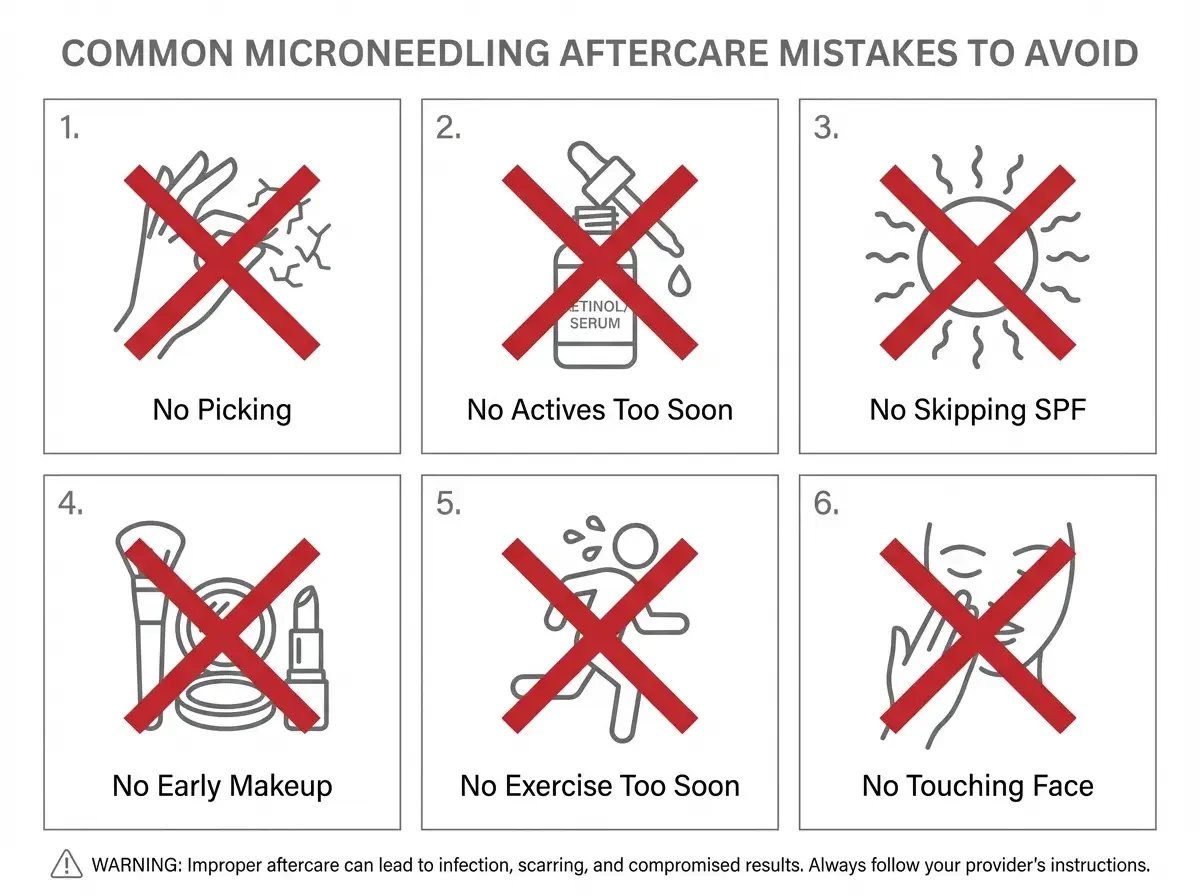
Picking at Peeling Skin
When your skin starts flaking around days 3-5, the temptation to help it along is strong. Resist. Picking at peeling skin can cause scarring, hyperpigmentation, and infection. It can also create uneven texture as some areas heal faster than others. Let your skin shed naturally, moisturize to minimize discomfort, and trust the process.
Resuming Active Ingredients Too Soon
Retinoids, vitamin C, exfoliating acids, and other actives can irritate recently treated skin. Resume them only after the skin has recovered and your practitioner has cleared them.
Skipping Sunscreen
Avoid intentional sun exposure during the initial recovery period. Once your provider permits sunscreen, use broad-spectrum SPF 30+ before outdoor exposure, reapply as directed, and add shade and protective clothing.
Applying Makeup Too Early
Wait at least 24 hours before makeup, and longer if the skin remains irritated or your practitioner advises it. Use clean brushes and sponges when you resume.
Exercising Too Soon
Follow the activity restriction for the specific device and treatment intensity. Current SkinPen labeling, for example, advises avoiding sweaty exercise for 72 hours; other protocols may differ.
Touching Your Face
Avoid touching the treated skin unnecessarily during the initial recovery period. Wash your hands before applying any practitioner-approved product.
Using Products Not Meant for Compromised Skin
Just because a product is "natural" or "gentle" doesn't mean it's appropriate for post-microneedling skin. Essential oils, some botanical extracts, and even products marketed as soothing may contain sensitizing ingredients. Stick to products specifically formulated for post-procedure recovery or verified by your practitioner.
Special Considerations
Microneedling for Acne Scars
If you had microneedling specifically to treat acne scars, your aftercare may be slightly more intensive. Treatments for scarring often use deeper needle penetration, which means more significant micro-injury and potentially longer recovery time. Follow your practitioner's specific instructions, which may include extended timelines for certain aftercare steps.
Be patient with scar improvement, collagen remodeling takes time, and you'll typically see progressive improvement over several months rather than immediate transformation.
Microneedling for Hyperpigmentation
If you were treated for melasma or another pigment concern, follow your clinician's sun-avoidance plan carefully. Once sunscreen is permitted, use broad-spectrum SPF 30+ outdoors with shade, a hat, and other protective clothing.
Some patients experience temporary darkening of pigmentation spots before they improve. If you notice significant or concerning pigmentation changes, contact your practitioner.
Combining Microneedling with PRP or Serums
If you had microneedling combined with PRP or another product, follow the specific protocol supplied by the licensed practitioner. Do not add or substitute products at home based on general online advice.
For more details read our Complete Guide to Post-Procedure Skincare
When to Be Concerned: Signs That Warrant a Call to Your Practitioner
Contact your practitioner promptly for increasing or spreading redness, warmth, pain or itching, pus or drainage, fever, blistering, unexpected pigmentation or contour change, or symptoms that worsen instead of improving.
Seek urgent medical care for facial swelling, difficulty breathing, or another sign of a severe allergic reaction.
Protect the Result Without Over-Treating the Skin
The most important aftercare step is following the device-specific plan from the clinician who treated you. More products are not necessarily better while the barrier is recovering.
If you are considering Nexovia or another cosmetic during recovery, ask the treating practitioner when it can be introduced and whether it is compatible with the device used. Nexovia has not been established in product-specific controlled studies to accelerate microneedling recovery or improve the procedure's outcome.
Frequently Asked Questions
What should I put on my face immediately after microneedling?
Use only the post-treatment product your licensed practitioner has confirmed is compatible with the specific microneedling device and protocol. Do not add serums or cosmetics during the initial healing period unless the treating practitioner explicitly instructs you to do so.
Can I wash my face after microneedling?
Washing instructions vary by device and treatment depth. Follow your practitioner's timing. Once cleared, use lukewarm water and a mild, provider-approved cleanser, do not scrub, and pat dry.
How long does redness last after microneedling?
Redness or temporary darkening, tightness, dryness, tenderness, burning, and peeling can occur and often improve over several days. Recovery varies with the device, depth, treatment site, and individual skin response. Contact your practitioner if redness spreads, intensifies, or worsens instead of improving.
When can I wear makeup after microneedling?
Wait at least 24 hours before makeup, and longer if the skin remains irritated or your practitioner advises it. Use clean brushes and sponges when you resume.
When can I use retinol after microneedling?
There is no universal restart day. Resume retinol only after the skin has recovered and your practitioner has cleared it. Start less frequently than before treatment and stop if burning, worsening redness, or swelling develops.
Can I exercise after microneedling?
Follow the activity restriction for the specific device and treatment intensity. Current SkinPen labeling advises avoiding sweaty exercise for 72 hours; other protocols may differ.
Is peeling after microneedling normal?
Light peeling or flaking can occur during recovery, although not everyone experiences it. Do not pick or pull at the skin. Contact your practitioner if peeling is severe, painful, blistered, or accompanied by worsening redness or drainage.
What should I avoid after microneedling?
Avoid unapproved serums, retinoids, exfoliating acids, vitamin C, other irritating actives, makeup for at least 24 hours, intentional sun exposure, and activities restricted by your device protocol. Resume products and activities only as your practitioner directs.
How long until I see results from microneedling?
Results and timing vary with the condition treated, device, depth, number of sessions, and individual response. Some changes develop over weeks to months. Ask your treating clinician what outcome and treatment schedule are realistic for you.
Is microneedling aftercare different for RF microneedling?
RF microneedling adds heat-related risks and requires device-specific medical aftercare. Contact the treating clinician promptly for concerning pain, burning, blistering, contour change, numbness, weakness, or another unexpected symptom.
Related Microneedling Guides
- What to put on your face after microneedling
- When to discuss restarting retinol
- How long microneedling redness can last
- RF vs. traditional microneedling recovery
- Spacing microneedling sessions safely
Sources and Editorial Disclosure
This guide was updated by the Nexovia Editorial Team on July 22, 2026 using current regulator, device-labeling, dermatology-society, and peer-reviewed sources. It has not been independently reviewed by a clinician. Your treating practitioner's instructions take priority.
- U.S. Food and Drug Administration: Microneedling Devices
- FDA Consumer Update: Benefits, Risks, and Safety
- SkinPen Precision Instructions for Use and User Manual (2025)
- American Academy of Dermatology: Microneedling
- American Society for Dermatologic Surgery: Microneedling
- FDA Safety Communication: Potential Risks of RF Microneedling (2025)
- Systematic review of microneedling safety
This content is for informational purposes only and does not constitute medical advice. Always follow the specific aftercare instructions provided by your treating practitioner, as recommendations may vary based on your individual treatment and skin type.
Explore the full Nexovia journal for more recovery guidance, ingredient education, and procedure-specific aftercare.
Back to all articles