Journal
Chemical Peel Aftercare: Healing Timeline and Product Guide
The tingling has stopped, you have left the clinic, and now you are looking at skin that appears anywhere from slightly pink to visibly frosted depending on the depth of your...
March 10, 2026 / 9 min read

The tingling has stopped, you have left the clinic, and now you are looking at skin that appears anywhere from slightly pink to visibly frosted depending on the depth of your peel. What happens next determines whether you achieve the smooth, radiant results you envisioned or face prolonged recovery and potential complications. Chemical peel aftercare is not simply about waiting for your skin to heal. It requires active support with the right products at the right times.
Chemical peels work by creating controlled damage that forces your skin to shed damaged outer layers and regenerate fresh, healthier tissue beneath. The products you apply, the ingredients you avoid, and the way you protect your healing skin all influence your outcome. Understanding your specific healing timeline and knowing exactly which products support each phase gives you the roadmap for successful recovery.
For a broader overview of caring for skin after any aesthetic treatment, see our complete post-procedure skincare guide.
How Chemical Peels Affect Your Skin
Chemical peels use acidic solutions to dissolve the bonds between skin cells, causing controlled exfoliation of the outer layers. The depth of this exfoliation depends on the type of acid used, its concentration, and how long it remains on your skin.
Superficial peels affect only the outermost layer of skin, the epidermis. They cause mild redness and flaking but minimal downtime. Medium-depth peels penetrate through the epidermis into the upper dermis, causing more significant peeling and requiring longer recovery. Deep peels reach the mid-dermis and create substantial controlled injury that requires the most intensive aftercare and extended healing time.
Regardless of depth, all chemical peels compromise your skin barrier, trigger inflammation, increase transepidermal water loss, and leave new skin vulnerable to environmental damage. Your aftercare approach must address each of these challenges.
Chemical Peel Healing Timeline by Peel Depth
Your recovery experience depends significantly on the depth of your peel. Understanding what to expect helps you prepare appropriately and recognize normal healing versus potential problems.
Superficial Peel Timeline
Superficial peels using glycolic acid, lactic acid, or low-concentration salicylic acid produce the mildest recovery experience.
- Days 1 to 2: Skin appears slightly pink or has a mild glow. You may notice tightness or a dry feeling as the treated layers begin responding to the peel. Sensitivity is minimal for most patients.
- Days 3 to 4: Light flaking or peeling begins, often subtle and similar to dry skin shedding. Some patients experience minimal visible peeling with superficial treatments.
- Days 5 to 7: Peeling completes and fresh skin is revealed. New skin may appear slightly pink temporarily but quickly normalizes. Most patients can resume normal activities and makeup within this timeframe.
Medium-Depth Peel Timeline
Medium-depth peels using TCA or higher-concentration combination acids create more visible recovery.
- Days 1 to 2: Skin appears red and may feel tight, warm, or slightly swollen. A brownish tint may develop as the treated skin begins changing. Discomfort is manageable but noticeable.
- Days 3 to 4: Treated skin darkens and becomes leathery or papery in texture. Peeling begins, often starting around the mouth and progressing outward. Do not pull or pick at peeling skin.
- Days 5 to 7: Active peeling continues. Large sheets of skin may shed, revealing pink, fresh skin beneath. The contrast between peeling and new skin can appear dramatic during this phase.
- Days 8 to 14: Peeling completes for most patients. New skin remains pink and sensitive. This pinkness gradually fades over the following weeks.
Deep Peel Timeline
Deep peels using phenol or high-concentration TCA require the most extensive recovery and are typically performed only by physicians.
- Days 1 to 3: Significant swelling, redness, and discomfort. Skin may ooze or weep. Bandages or ointments are typically applied. Most patients remain home during this phase.
- Days 4 to 7: Swelling begins subsiding. Treated skin forms a crust or thick peeling layer. New skin begins forming beneath.
- Days 7 to 14: Crusting separates and peeling completes. New skin is very pink and delicate. Strict sun avoidance is critical.
- Weeks 3 to 8: Pinkness gradually fades but may persist for several months. New skin continues maturing. Sun protection remains essential throughout this extended period.
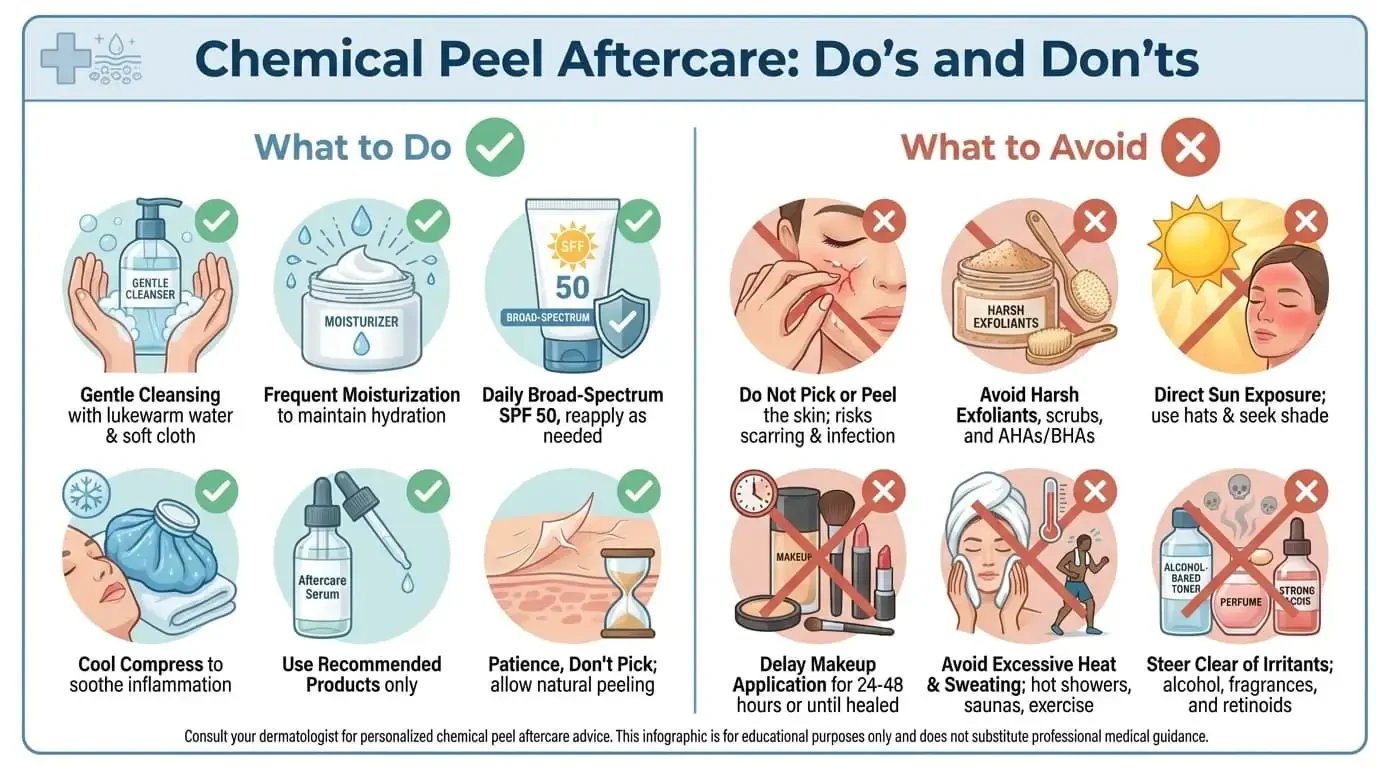
Best Products to Use During Chemical Peel Recovery
The right products support each phase of healing and help you achieve optimal results.
Gentle Cleansers
Your cleanser should be non-foaming, fragrance-free, and pH-balanced. Foaming cleansers strip moisture from already-compromised skin. Fragrances can trigger irritation on sensitive, healing tissue. Cleanse with lukewarm water using gentle motions without rubbing or scrubbing.
Hydrating and Healing Serums
Serums deliver concentrated active ingredients to support recovery. Look for formulations containing multiple complementary technologies rather than single-ingredient products.
Hyaluronic acid provides essential hydration, drawing moisture into depleted skin cells and helping counteract increased transepidermal water loss. Your compromised barrier cannot retain moisture effectively, making external hydration support critical.
Plant exosomes derived from Centella Asiatica and Panax Ginseng help modulate inflammation and support intercellular communication during healing. These microscopic lipid vesicles deliver bioactive compounds that help your skin cells coordinate repair efforts efficiently.
PDRN, formulated as Sodium DNA, activates tissue regeneration pathways while reducing inflammation. This ingredient has been used extensively in Korean aesthetic medicine for wound healing and is particularly valuable during the active healing phase after chemical peels.
NAD+ fuels cellular energy production, supporting the intensive repair work your skin is undertaking. As your cells work overtime to regenerate tissue, adequate cellular energy is essential for efficient healing.
Peptides and growth factors signal your skin cells to produce collagen and rebuild the extracellular matrix. These signaling molecules accelerate the regenerative response your peel initiated.
For a full breakdown of post-procedure ingredients, see our guide on what to put on your face after microneedling. The ingredient principles apply across all post-procedure recovery.
Barrier-Supporting Moisturizers
Moisturizers seal in hydration and support barrier repair. Choose fragrance-free formulas with ingredients like ceramides, panthenol, and niacinamide that actively support barrier function rather than simply sitting on top of skin.
During the acute healing phase, particularly for medium and deep peels, your practitioner may recommend occlusive ointments like petroleum jelly to prevent skin from drying out or cracking. Follow their specific guidance on when to use ointments versus lighter moisturizers.
Broad-Spectrum Sunscreen
Sun protection is non-negotiable after chemical peels. New skin lacks the protective melanin of mature skin and is extremely vulnerable to UV damage. Sun exposure during recovery can cause permanent hyperpigmentation that is difficult or impossible to correct.
Once your practitioner approves sun protection products, apply SPF 50 or higher every morning. Physical sunscreens containing zinc oxide or titanium dioxide are often better tolerated by sensitive post-peel skin. Reapply every two hours if outdoors.
Products to Avoid During Chemical Peel Recovery
Certain products can compromise healing or cause complications.
Retinoids and retinol are too harsh for peeling or newly revealed skin. Wait at least two weeks after superficial peels and longer after deeper treatments before reintroducing.
Alpha hydroxy acids and beta hydroxy acids provide additional exfoliation your skin does not need. The peel has already exfoliated your skin. Adding more acids causes irritation and can damage delicate new tissue.
Vitamin C in active forms can be irritating to healing skin. Wait until your barrier has recovered before reintroducing.
Fragranced products including those with essential oils can trigger reactions on sensitized skin. Stick with fragrance-free formulations throughout recovery.
Physical exfoliants like scrubs or cleansing brushes can damage peeling or newly formed skin. Let the shedding process happen naturally.
Common Chemical Peel Aftercare Mistakes
Protect your results by avoiding these frequent errors.
Picking or pulling at peeling skin causes damage to the delicate new tissue forming beneath and can result in scarring or hyperpigmentation. Let skin shed naturally, even when the peeling edges are tempting.
Skipping moisturizer because skin looks oily from ointments leads to dehydration of the underlying tissue. Keep skin consistently hydrated throughout recovery.
Returning to active ingredients too soon overwhelms healing skin. Patience with product reintroduction protects your results.
Neglecting sun protection after visible peeling completes leaves vulnerable new skin exposed to damage. Continue strict SPF application for at least four weeks.
Not sure which products are right for your skin during chemical peel recovery?
Frequently Asked Questions
How long after a chemical peel can I wear makeup?
For superficial peels, you can typically wear mineral makeup after 24 to 48 hours once any initial sensitivity subsides. For medium peels, wait until active peeling completes, usually seven to ten days. For deep peels, follow your physician's guidance, which may recommend waiting two weeks or longer. Always use clean applicators and fragrance-free formulas when resuming makeup.
Is it normal for my skin to look worse before it looks better?
Yes, this is expected, particularly with medium and deep peels. Your skin will darken, become papery or leathery, and peel visibly before revealing fresh skin beneath. This dramatic shedding phase is normal and indicates successful treatment. The end result is worth the temporary appearance during active peeling.
What should I do if the peeling is uneven or patchy?
Uneven peeling is normal, especially around areas with more movement like the mouth. Different facial zones often peel at different rates. Continue your gentle aftercare routine and allow all areas to shed naturally. Do not try to even out peeling by picking at stubborn areas.
Can I exercise after a chemical peel?
Avoid exercise that causes sweating for at least 48 to 72 hours after superficial peels and longer after medium or deep peels. Sweat can irritate healing skin and increase discomfort. Heat and increased blood flow may also intensify redness. Resume activity gradually once your practitioner approves.
When will I see final results from my chemical peel?
Initial improvement is visible once peeling completes and redness fades. For superficial peels, this may be within one to two weeks. Medium peels show results within two to four weeks. Deep peels require several months for complete healing and final results. Collagen remodeling continues for months after all peel depths, progressively improving skin texture and tone.
What is the best serum to use after a chemical peel?
The best post-peel serum addresses hydration, inflammation, barrier repair, and tissue regeneration at the same time. Nexovia Skin Serum was formulated specifically for post-procedure recovery, combining plant exosomes, PDRN, NAD+, and a peptide matrix in its ABA.4 Bio-Intelligent Architecture to support every phase of healing in one product. Take our Skin Recovery Assessment to see if it is right for your skin.
This content is for informational purposes only and does not constitute medical advice. Always follow the specific aftercare instructions provided by your practitioner, as recommendations may vary based on your individual treatment and skin type.


