Journal
Plant Exosomes in Skincare: How They Work and Why They Matter
The skincare industry constantly introduces new ingredients, but few represent a genuine leap forward in how we approach skin health. Plant exosomes are one of those rare...
February 19, 2026 / 11 min read

The skincare industry constantly introduces new ingredients, but few represent a genuine leap forward in how we approach skin health. Plant exosomes are one of those rare exceptions. These microscopic messengers represent a fundamental shift from simply applying beneficial compounds to the skin's surface toward actually communicating with skin cells in their own language.
If you have been following advances in regenerative medicine or aesthetic skincare, you may have encountered the term exosomes. Initially, the excitement centered on human-derived exosomes used in clinical settings. Now, plant-derived exosomes are emerging as a powerful, accessible, and sustainable alternative that delivers remarkable benefits for skin recovery and rejuvenation.
This is not another incremental improvement in skincare technology. Plant exosomes offer something genuinely new: the ability to modulate cellular behavior and support intercellular communication in ways that traditional ingredients cannot.
What Are Exosomes?
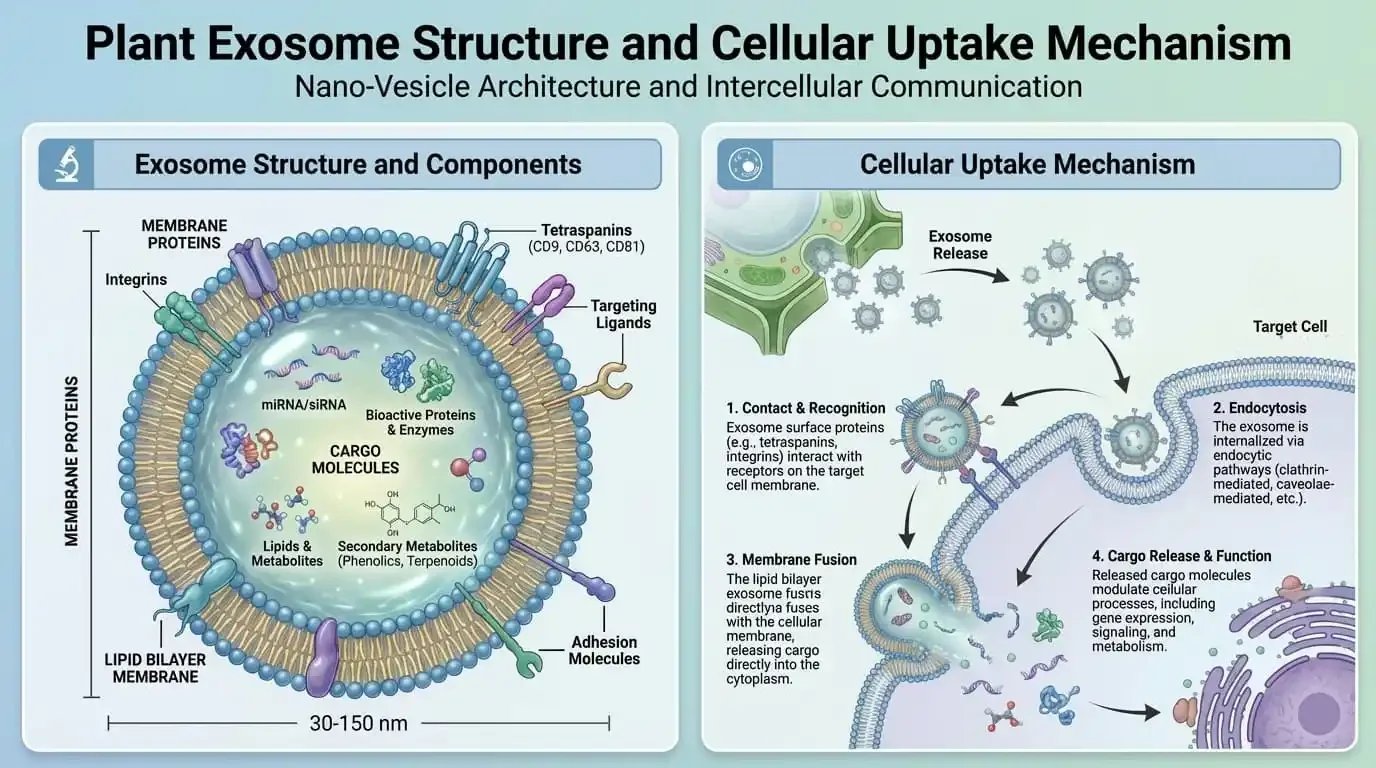
Before exploring plant exosomes specifically, it helps to understand exosomes in general. Exosomes are tiny vesicles, essentially microscopic bubbles, that cells naturally produce and release. These nanovesicles are enclosed by a lipid bilayer membrane, the same type of structure that forms cell membranes, making them highly compatible with cellular biology.
What makes exosomes remarkable is not their structure but their cargo. Inside these tiny vesicles, cells package bioactive molecules including proteins, lipids, and genetic material like microRNA. When exosomes are released by one cell and taken up by another, they transfer this cargo, effectively delivering messages and instructions between cells.
This intercellular communication system exists throughout nature. Cells use exosomes to coordinate responses, regulate inflammation, signal for repair, and maintain tissue homeostasis. When we harness exosomes in skincare, we are tapping into this natural communication network to support skin health and recovery.
What Are Plant Exosomes?
Plant exosomes, sometimes called plant-derived nanovesicles or phytoexosomes, are produced by plant cells just as animal and human cells produce their own exosomes. These lipid bilayer nanovesicles carry plant-specific bioactive compounds that can interact with human skin cells and influence their behavior.
The plant exosomes used in advanced skincare formulations are typically derived from botanicals with established benefits for skin health. Centella Asiatica, known for centuries for its wound healing properties, yields exosomes rich in compounds that support skin recovery. Panax Ginseng, valued in traditional medicine for its regenerative properties, produces exosomes carrying bioactive molecules that support cellular vitality.
Inside these plant exosomes, you find phyto-miRNAs (small RNA molecules that can influence gene expression in recipient cells), lipids that support membrane function and barrier health, and proteins with various bioactive effects on skin cells.
When applied to skin, plant exosomes can be taken up by human skin cells, delivering their cargo and influencing cellular behavior. This cross-kingdom communication represents a fascinating frontier in skincare science, one where botanical wisdom meets cellular biology.
How Plant Exosomes Work in Your Skin
The mechanisms through which plant exosomes benefit skin involve several interconnected processes.
Intercellular Communication Support
Your skin is not a collection of isolated cells but a community of cells that must communicate and coordinate their activities. When skin is injured or stressed, effective communication between cells determines how efficiently repair proceeds.
Plant exosomes support this intercellular communication by delivering signaling molecules that help coordinate cellular responses. Think of them as messengers carrying instructions that help your skin cells work together more effectively, particularly during the healing process when coordination is critical.
Inflammation Modulation
Inflammation is a necessary part of healing, but prolonged or excessive inflammation causes problems ranging from persistent redness to increased risk of scarring and hyperpigmentation. Plant exosomes help modulate inflammatory responses, supporting your skin in moving through the inflammatory phase efficiently rather than getting stuck in a prolonged reactive state.
The phyto-miRNAs and other bioactive compounds within plant exosomes interact with inflammatory pathways in skin cells, helping to regulate the intensity and duration of the inflammatory response. This modulation supports healing without suppressing the inflammation entirely, which would impair recovery.
Oxidative Stress Reduction
Oxidative stress occurs when reactive oxygen species overwhelm your skin's antioxidant defenses. This stress damages cells, accelerates aging, and impairs healing. Plant exosomes carry compounds that help counteract oxidative stress, protecting cells from damage and supporting healthier function.
This antioxidant support is particularly valuable after aesthetic procedures, when controlled injury generates oxidative stress as part of the healing cascade. By helping manage this stress, plant exosomes support more efficient recovery.
Barrier Homeostasis Support
Your skin barrier is a complex structure that requires continuous maintenance and repair. Plant exosomes support barrier homeostasis by delivering lipids and signaling molecules that help maintain barrier integrity and support rapid repair when the barrier is compromised.
After procedures that disrupt the barrier, such as microneedling, laser treatments, or chemical peels, this support for barrier homeostasis accelerates the restoration of healthy barrier function.
Plant Exosomes vs. Human-Derived Exosomes
The exosome conversation in skincare often centers on human-derived exosomes, typically sourced from stem cells. While human-derived exosomes have shown results in clinical research, plant exosomes offer distinct advantages that make them better suited for topical skincare formulations, especially for post-procedure recovery.
Human-derived exosomes face significant challenges. Regulatory scrutiny is increasing, with the FDA issuing warnings about exosome products making unsubstantiated claims. Sourcing raises ethical questions. Production costs are high, limiting accessibility. And stability in consumer skincare formulations remains a concern.
Plant exosomes solve these challenges while delivering powerful skin benefits. They are sustainably sourced from botanicals with centuries of documented skin healing use. Their lipid bilayer structure is naturally compatible with human cell membranes, allowing efficient uptake by skin cells. They carry bioactive cargo including phyto-miRNAs, lipids, and proteins that interact with human cellular pathways to modulate inflammation, support barrier repair, and promote healing. And they can be produced at meaningful concentrations (billions of particles per milliliter) in stable, consumer-ready formulations.
The botanical sources matter as much as the delivery system. Centella Asiatica and Panax Ginseng have been used for wound healing and skin regeneration across cultures for centuries. Plant exosomes do not just deliver generic plant material. They deliver the specific bioactive compounds from these healing botanicals in a form that can actually enter skin cells and influence their behavior, something no traditional extract can achieve.
For post-procedure aftercare specifically, plant exosomes are the ideal delivery technology. They combine the inflammation-modulating, barrier-supporting, and repair-signaling properties that healing skin needs with a safety profile, sustainability, and formulation stability that make them practical for daily use during recovery.
Anti-Aging Benefits of Centella Asiatica and Panax Ginseng Exosomes
Beyond recovery, plant exosomes from these two sources offer significant anti-aging properties.
Centella Asiatica Exosomes
Centella Asiatica, also known as Cica or Gotu Kola, has been revered in traditional medicine for its regenerative properties. Exosomes derived from this plant carry triterpenes including asiaticoside and madecassoside, which stimulate collagen synthesis in fibroblasts. They also contain antioxidant compounds that protect against free radical damage, one of the primary drivers of premature aging.
Centella exosomes support microcirculation as well, improving nutrient delivery to skin cells and promoting a healthier, more radiant complexion. The combination of collagen support, antioxidant protection, and improved circulation contributes to visibly firmer, more youthful skin over time.
Panax Ginseng Exosomes
Panax Ginseng has been used for thousands of years in traditional Asian medicine as a rejuvenating tonic. Ginseng exosomes contain ginsenosides, bioactive compounds known for their ability to support cellular energy production and metabolism. When skin cells function more efficiently, they maintain healthier structure and appearance over time.
These exosomes also support the extracellular matrix, the structural scaffolding that gives skin its firmness and elasticity. Research suggests that ginseng-derived compounds may also help regulate melanin production, contributing to more even skin tone and reduced appearance of age spots.
The combination of Centella Asiatica and Panax Ginseng exosomes provides comprehensive anti-aging support addressing collagen production, antioxidant protection, cellular energy, matrix integrity, and skin tone. This makes them valuable not only for post-procedure recovery but for ongoing skin rejuvenation.
Why Plant Exosomes Excel for Post-Procedure Recovery
The properties of plant exosomes make them exceptionally well-suited for post-procedure skincare, where their mechanisms directly address the challenges healing skin faces.
After aesthetic procedures, your skin experiences controlled injury that triggers inflammation, compromises the barrier, generates oxidative stress, and requires coordinated cellular response for optimal repair. Plant exosomes address each of these challenges simultaneously.
Their ability to modulate inflammation helps reduce prolonged redness and supports the transition from inflammation to active repair. Their oxidative stress reduction protects healing cells from additional damage. Their support for barrier homeostasis accelerates the restoration of protective function. Their enhancement of intercellular communication helps your skin cells coordinate their repair efforts efficiently.
This multi-faceted support explains why plant exosomes have become a cornerstone of advanced post-procedure formulations.
Concentration and Delivery Matter
As with any active ingredient, the effectiveness of plant exosomes depends on concentration and formulation quality.
Effective plant exosome formulations deliver billions of particles per milliliter. At this concentration, meaningful numbers of exosomes can interact with skin cells and deliver their bioactive cargo. Products with lower concentrations may not provide sufficient exosome density to produce significant effects.
The source botanicals also matter. Exosomes from plants with established skin benefits, like Centella Asiatica and Panax Ginseng, carry cargo specifically relevant to skin health. These plants have evolved compounds that happen to benefit human skin, and their exosomes deliver these compounds in highly bioavailable form.
Formulation stability is another consideration. Exosomes must remain intact to deliver their cargo effectively. Quality formulations protect exosome integrity throughout the product's shelf life.
Why Plant Exosomes Work Best With Complementary Technologies
While plant exosomes are powerful, they deliver optimal results as part of a comprehensive formulation that addresses multiple aspects of skin recovery.
PDRN complements plant exosomes by activating tissue regeneration pathways through adenosine receptor signaling. While exosomes support cellular communication and modulate inflammation, PDRN directly promotes repair processes and collagen synthesis through a completely different mechanism.
NAD+ addresses cellular energy needs. Healing requires significant energy, and NAD+ fuels the cellular work that exosome signaling initiates.
Peptides and growth factors provide additional regenerative signals, amplifying the repair response and supporting matrix rebuilding.
This synergistic approach reflects the complexity of skin healing. Multiple ingredients working through complementary mechanisms deliver more comprehensive support than any single technology alone. Nexovia Skin Serum was formulated with this exact philosophy: plant exosomes at 4 billion particles per milliliter from Centella Asiatica and Panax Ginseng working alongside PDRN at 1%, NAD+ at 1%, and a peptide matrix in the ABA.4 Bio-Intelligent Architecture. Each technology amplifies the others rather than simply coexisting in the same bottle.
Want to see how plant exosome technology can support your skin recovery?
Frequently Asked Questions
Are plant exosomes safe for sensitive skin?
Plant exosomes have an excellent safety profile for sensitive skin. Because they work by supporting natural cellular processes rather than introducing harsh actives, they are well-tolerated even by reactive skin types. Their anti-inflammatory properties actually help calm sensitive skin rather than triggering irritation.
How are plant exosomes different from plant extracts?
Traditional plant extracts contain beneficial compounds but rely on passive absorption through the skin. Plant exosomes are structured nanovesicles that can be actively taken up by skin cells, delivering their cargo directly inside cells where it can influence cellular behavior. This represents a more sophisticated and effective delivery system than conventional extracts.
Can I use plant exosome products every day?
Yes, plant exosome products are appropriate for daily use. Their benefits for cellular communication, inflammation modulation, and barrier support contribute to ongoing skin health, not just recovery from specific treatments. Consistent use supports healthier, more resilient skin over time while providing cumulative anti-aging benefits.
Do plant exosomes replace other skincare ingredients?
Plant exosomes complement rather than replace other beneficial ingredients. They work through unique mechanisms involving cellular communication and signaling that differ from how ingredients like hyaluronic acid, retinoids, or antioxidants function. The most effective approach combines plant exosomes with complementary technologies for comprehensive skin support.
Why are Centella Asiatica and Panax Ginseng common sources for plant exosomes?
These botanicals have centuries of documented use for skin healing and vitality. Their cells produce exosomes containing bioactive compounds specifically relevant to skin health, including molecules that support wound healing, reduce inflammation, promote regeneration, and combat signs of aging. Exosomes from these sources deliver the benefits of these traditional botanicals in a highly bioavailable, cell-compatible form.
This content is for informational purposes only and does not constitute medical advice. Always follow the specific aftercare instructions provided by your practitioner, as recommendations may vary based on your individual treatment and skin type.


