Complete Guide
Laser Treatment Aftercare: From Recovery to Results
Complete laser treatment aftercare guide covering CO2, fractional, non-ablative, and IPL recovery. Learn day-by-day timelines, what to avoid, and how to get the best results from...
Discover Your Skin Recovery Score
Your laser treatment is complete. The light has done its work beneath your skin, and now the real transformation begins. Whether you just had CO2 resurfacing, a fractional laser session, IPL photofacial, or a gentler non-ablative treatment, one truth applies to all: the care you give your skin over the coming days and weeks will determine whether you achieve the remarkable results laser technology can deliver, or fall short of your expectations.
Laser aftercare isn't one-size-fits-all. The intensity of your treatment dramatically affects what your skin needs and how long recovery takes. An ablative CO2 laser that removes layers of skin requires very different care than a non-ablative treatment that works beneath the surface without wounding. Understanding which category your treatment falls into, and what that means for your healing journey, is the foundation of successful recovery.
This guide covers everything you need to know about caring for your skin after any type of laser treatment. You'll learn what to expect day by day, which products support healing, what to avoid, and how to recognize when something needs professional attention. Your laser created the opportunity for transformation. Proper aftercare ensures you capture it.
For general principles that apply to all aesthetic procedures, see our complete post-procedure skincare guide. If you had microneedling instead, see our dedicated microneedling aftercare guide.
Understanding Different Types of Laser Treatments
Before diving into aftercare specifics, you need to understand which category your laser treatment falls into. This determines your recovery timeline, the intensity of side effects you can expect, and the specific care your skin requires.
Ablative Lasers
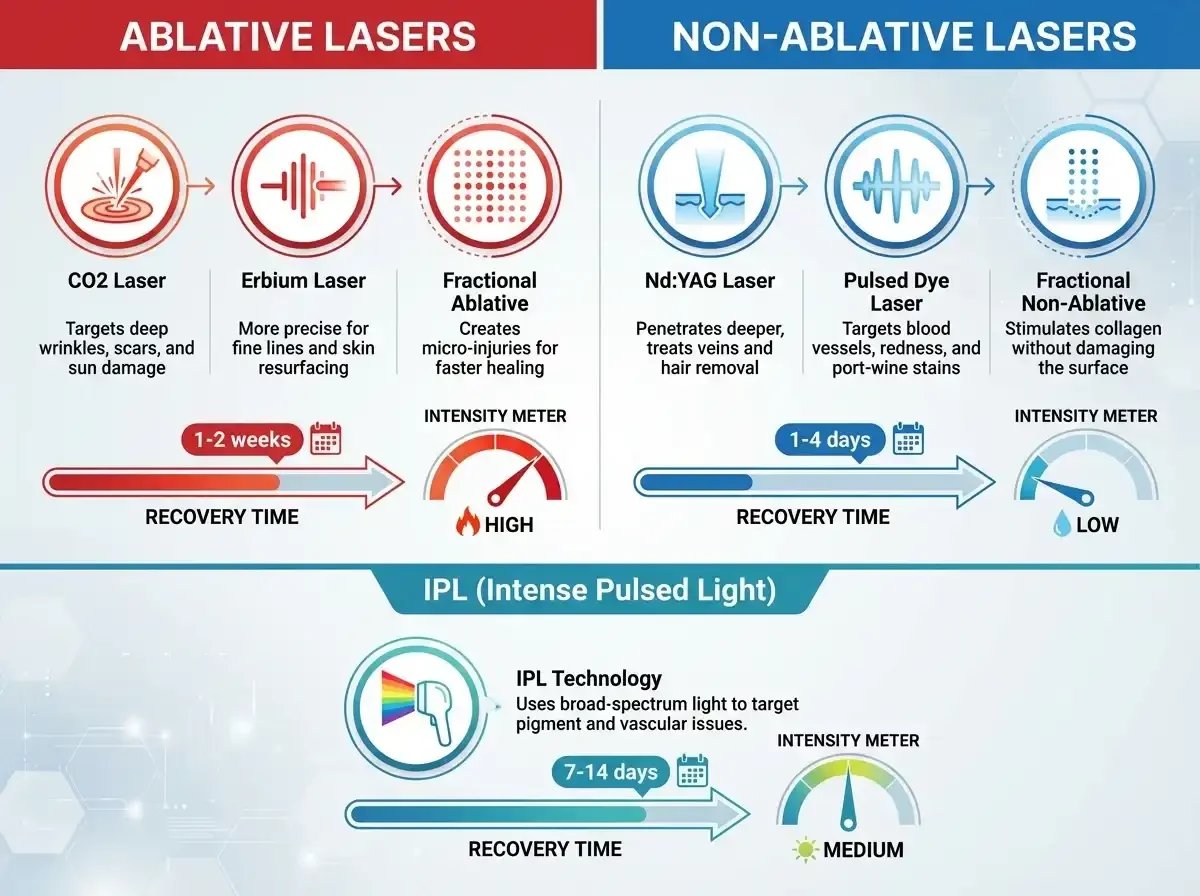
Ablative lasers work by removing the outer layers of skin. The word "ablative" literally means to remove or vaporize. These are the most intensive laser treatments, producing dramatic results but requiring significant downtime and careful aftercare.
CO2 (carbon dioxide) lasers are the most powerful ablative option. They vaporize thin layers of skin with precision, treating deep wrinkles, significant sun damage, scars, and skin laxity. Recovery typically takes 1 to 2 weeks for initial healing, with redness potentially lasting several weeks to months. Full results develop over 3 to 6 months as collagen remodels.
Erbium lasers are another ablative option that removes surface-level skin with somewhat less thermal damage to surrounding tissue than CO2. This often means faster healing, approximately one week, while still delivering significant resurfacing benefits.
If your practitioner mentioned CO2 laser, erbium laser, or described your treatment as "ablative" or "resurfacing," you had an ablative treatment and should expect the most intensive recovery process.
Fractional Lasers
Fractional lasers, whether ablative or non-ablative, treat only a fraction of the skin surface at a time, leaving islands of untreated skin between treated zones. This dramatically speeds healing because the untreated areas help regenerate the treated zones.
Fractional ablative lasers (like Fraxel Re:pair or fractional CO2) still remove tissue but in a microscopic grid pattern rather than removing entire layers. Recovery is faster than traditional ablative, typically 5 to 7 days of significant downtime rather than 1 to 2 weeks.
Fractional non-ablative lasers (like Fraxel Dual or Clear + Brilliant) create microscopic zones of thermal injury beneath intact skin. There's no open wound, so recovery is much faster, typically 1 to 4 days of redness and swelling with minimal peeling.
Non-Ablative Lasers
Non-ablative lasers heat the deeper layers of skin to stimulate collagen production without removing or wounding the surface. The epidermis remains intact, which means minimal downtime and much easier recovery.
Common non-ablative lasers include Nd:YAG lasers, pulsed dye lasers, and various wavelength-specific devices targeting pigmentation or redness. Recovery typically involves redness and mild swelling for 24 to 72 hours, with most patients able to return to normal activities the same day or the next day.
If your practitioner described your treatment as "no downtime," "lunchtime laser," or non-ablative, you can expect the easiest recovery process.
IPL (Intense Pulsed Light)
While technically not a laser (it uses broad-spectrum light rather than a single wavelength), IPL photofacials are often grouped with laser treatments and require similar aftercare considerations.
IPL targets pigmentation and redness by delivering light energy that's absorbed by melanin and hemoglobin. It's commonly used for sun damage, age spots, rosacea, and broken capillaries. Recovery is relatively gentle, expect redness and warmth for 24 to 48 hours, with treated pigmented spots often darkening before flaking off over 7 to 14 days.
The Laser Recovery Timeline: What to Expect
Your recovery experience will vary significantly based on your treatment type. Here's what to expect across different laser categories.
Ablative Laser Recovery (CO2, Erbium)
Ablative laser recovery is the most intensive and requires dedicated downtime. Plan to take at least one to two weeks off from social and professional commitments.
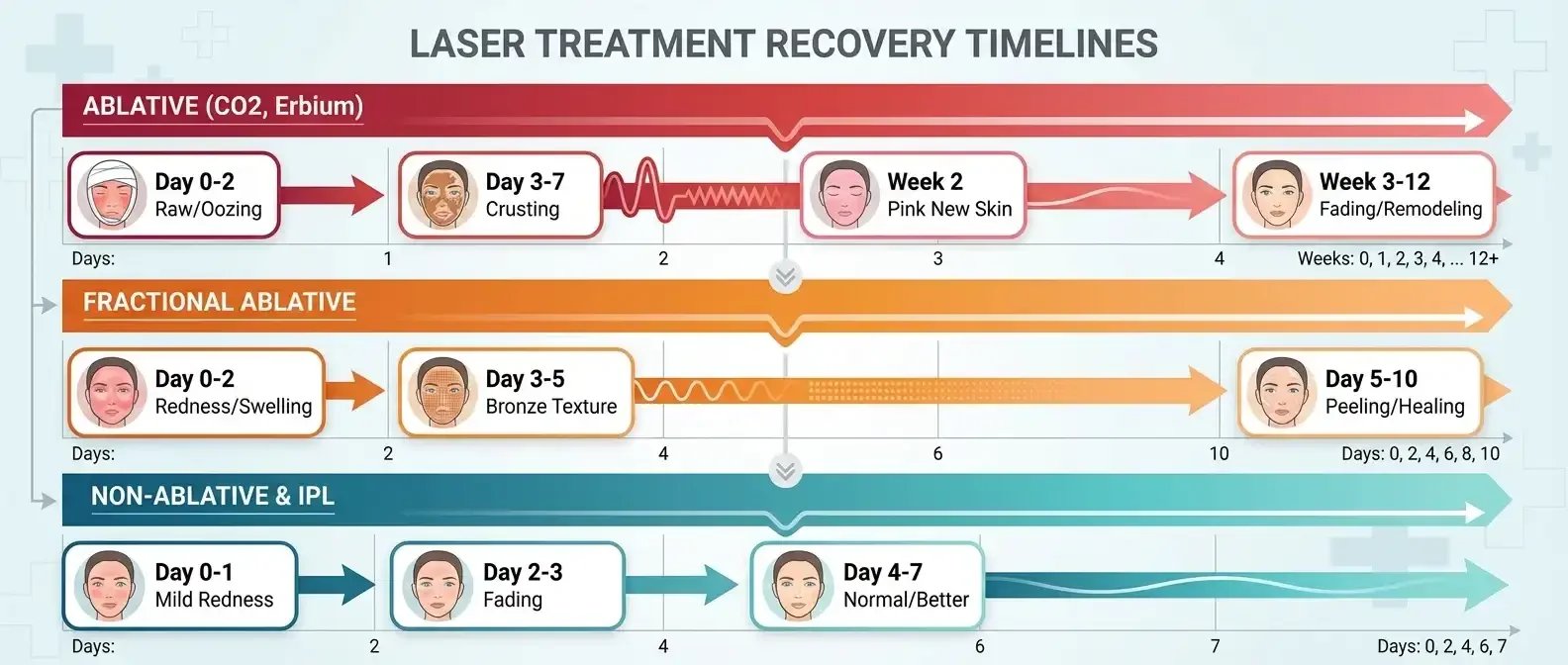
During the first 24 to 48 hours, your skin will be raw, red, and may ooze a clear or yellowish fluid. This is normal, your body is initiating the wound healing response. Swelling can be significant, particularly around the eyes. Your skin may feel like a severe sunburn, with warmth and discomfort. Your practitioner may prescribe pain medication for these initial days.
From days 3 through 7, oozing typically subsides and a crust or film may form over the treated area. This protective layer is part of the healing process, do not pick at it. Your skin underneath is regenerating. Redness remains intense, and the treated area may feel very tight and dry.
During the second week, crusting typically resolves and new pink skin emerges beneath. This new skin is extremely delicate and photosensitive. Redness remains but begins to lighten. Most patients feel comfortable returning to work with makeup camouflage by day 10 to 14, though individual healing varies.
From weeks 3 through 12, your skin continues to heal internally. The pink color gradually fades, this can take several weeks to several months depending on your skin type and treatment intensity. Collagen remodeling continues, with full results often not visible for 3 to 6 months.
Fractional Ablative Laser Recovery
Fractional ablative treatments create a grid of microscopic wounds with intact skin between them, dramatically speeding recovery compared to traditional ablative lasers.
During the first 24 to 48 hours, expect significant redness and swelling, similar to a severe sunburn. The grid pattern may be visible on your skin. Some oozing may occur but is typically less than with traditional ablative treatment.
From days 3 through 5, skin begins to develop a bronze or sandpaper-like texture as the treated zones heal and microscopic scabs form. Redness diminishes but remains noticeable. The texture you feel is the damaged skin being pushed to the surface.
During days 5 through 10, the bronzed, rough skin begins to flake and peel, revealing newer, smoother skin beneath. Most patients can return to work with makeup by day 5 to 7. Continued mild redness may persist for 1 to 2 weeks.
Non-Ablative Laser Recovery
Non-ablative treatments have the easiest recovery profile because the skin surface remains intact.
During the first 24 hours, expect mild to moderate redness and possible swelling, similar to a mild sunburn. Your skin may feel warm and tight. Most side effects peak within the first few hours and begin resolving quickly.
From days 2 through 3, redness fades significantly. You may notice some mild dryness or flaking. Most patients can apply makeup and resume normal activities within 24 hours.
From days 4 through 7, your skin should feel and look normal or better. Some patients notice an immediate glow as mild swelling creates a temporary plumping effect. Full results develop over the following weeks as collagen production increases.
IPL Recovery
IPL recovery has unique characteristics because of how it targets pigmentation.
During the first 24 to 48 hours, expect redness and warmth similar to a mild sunburn. Treated pigmented spots (sun spots, freckles, age spots) will often appear darker immediately after treatment, this is expected and indicates the pigment was successfully targeted.
From days 3 through 7, darkened spots may develop a "coffee ground" appearance and begin to flake off. This is the targeted pigment being shed from your skin. Do not pick at these spots, let them fall off naturally.
From days 7 through 14, most darkened pigment has flaked away, revealing clearer, more even-toned skin beneath. Some spots may take multiple treatments to fully resolve.
Essential Aftercare: What to Do After Any Laser Treatment
While specific protocols vary by treatment type, certain aftercare principles apply universally to all laser treatments. Understanding these principles, and the science behind them, will help you make informed choices about how to support your skin's recovery.
Cleansing
Keeping treated skin clean prevents infection and supports healing, but cleansing must be gentle. For ablative treatments, your practitioner may recommend cleaning with saline solution or a diluted vinegar solution (typically one teaspoon white vinegar in two cups water) multiple times per day for the first week. This prevents bacterial buildup without introducing irritating cleansers.
For non-ablative and IPL treatments, gentle cleansing with a mild, fragrance-free cleanser is typically appropriate starting the day after treatment. Use lukewarm water, never hot, and pat dry rather than rubbing.
Regardless of treatment type, avoid foaming cleansers, cleansers with active ingredients, exfoliating cleansers, and anything with fragrance during the initial healing phase.
Moisturizing and Barrier Support
Laser-treated skin loses moisture at an accelerated rate. Keeping skin well-hydrated is essential for comfort, healing speed, and optimal results.
For ablative treatments, your practitioner may recommend an ointment-based approach initially, products like petroleum jelly or specialized healing ointments create an occlusive barrier that prevents moisture loss and protects raw skin. This "wet healing" approach is standard for the first several days after ablative resurfacing.
As healing progresses, you can transition to lighter moisturizers while maintaining adequate hydration. For non-ablative and IPL treatments, hydrating serums and gentle moisturizers are typically appropriate from day one.
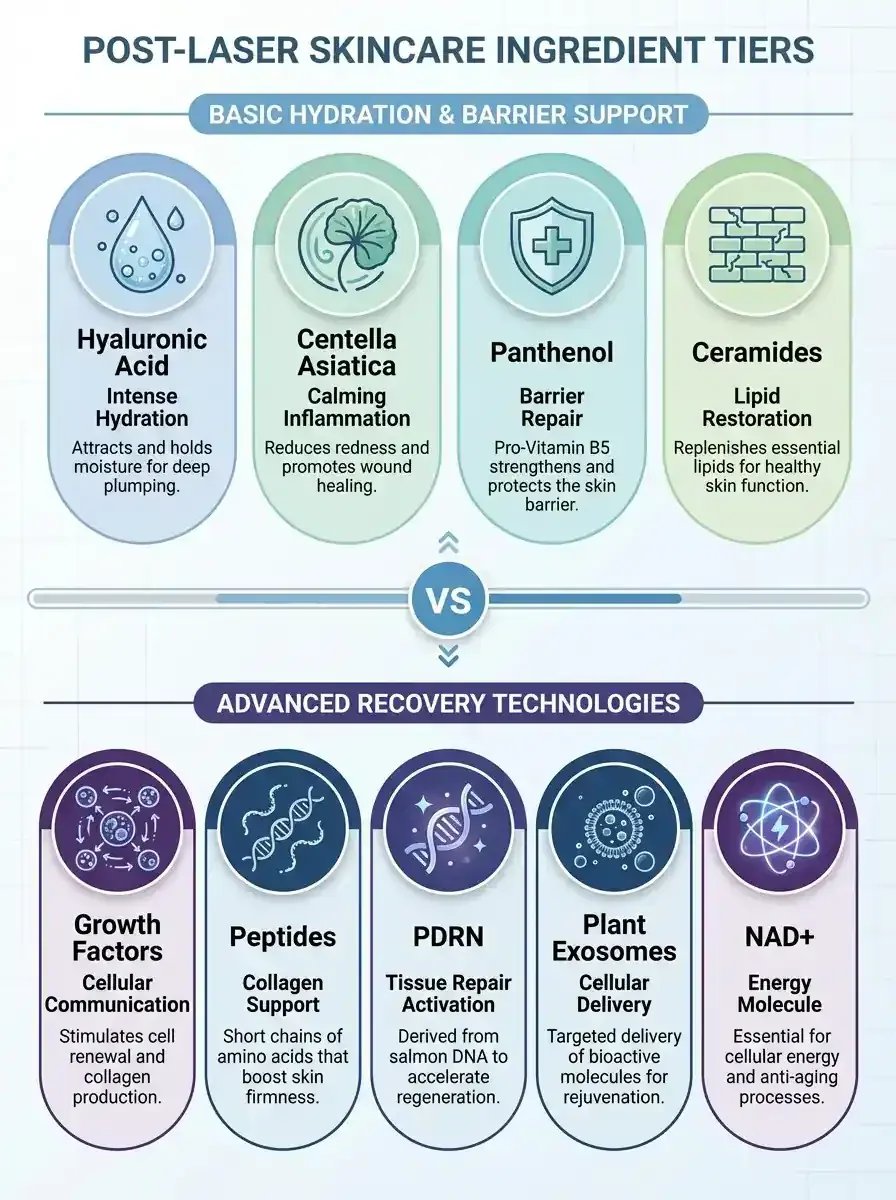
Key ingredients to look for in post-laser moisturizing products include hyaluronic acid for intense hydration, centella asiatica (cica) for calming inflammation, panthenol for barrier repair, and ceramides for restoring the skin's lipid barrier. These ingredients address the immediate comfort needs of laser-treated skin.
However, basic hydration and barrier support represent the minimum standard of care, not the optimal approach. As we'll explore below, advanced ingredients can do far more than maintain moisture.
Sun Protection
Sun protection after laser treatment is non-negotiable. This is arguably the most critical element of your aftercare routine.
Laser-treated skin is dramatically more susceptible to UV damage and hyperpigmentation. Even brief sun exposure during the healing period can cause permanent pigmentation changes, particularly in patients with darker skin tones or those treating pigmentation concerns.
Apply a broad-spectrum SPF 50 sunscreen daily, even if you're staying indoors, UV rays penetrate windows. Reapply every two hours if you're outside. Wear a wide-brimmed hat and seek shade whenever possible. Many practitioners recommend mineral (zinc oxide or titanium dioxide) sunscreens during initial healing because they're less likely to irritate sensitive skin.
This heightened sun sensitivity can persist for weeks to months after treatment. Continue vigilant sun protection long after visible healing is complete.
Supporting Active Healing: Beyond Basic Moisturization
Here's what most aftercare advice misses: basic cleansing, moisturizing, and sun protection keep your skin safe and comfortable during recovery, but they don't actively accelerate healing or enhance your results. They're defensive measures, not optimization strategies.
The science of post-procedure recovery has advanced significantly. We now understand that certain ingredients can do more than maintain the status quo, they can actively support and potentially accelerate the healing process. Understanding these technologies helps you recognize the difference between adequate aftercare and optimal aftercare.
Growth factors and peptides are signaling molecules that communicate with your cells. After laser treatment, your skin is primed for regeneration, growth factors and peptides can help direct that regeneration process, signaling fibroblasts to produce collagen and supporting the cellular communication that coordinates healing. Products containing EGF-mimetics and matrikines provide these rebuilding instructions.
PDRN (polydeoxyribonucleotide) represents a sophisticated approach to tissue repair support. Originally developed for wound healing and regenerative medicine, PDRN works by activating adenosine A2A receptors, triggering pathways that promote angiogenesis (new blood vessel formation to nourish healing tissue), reduce inflammation, and support collagen synthesis. For laser-treated skin, where thermal injury creates significant repair demands, PDRN offers targeted support for the body's regeneration processes.
Plant exosomes are an emerging technology that's transforming post-procedure care. These nanoscale vesicles act as cellular messengers, delivering bioactive compounds directly to skin cells and helping modulate inflammatory responses. Exosomes derived from sources like Centella Asiatica and Panax Ginseng can support barrier recovery and cellular communication during the critical healing window. Unlike ingredients that sit on the skin's surface, exosomes communicate with cells at a fundamental level.
NAD+ (nicotinamide adenine dinucleotide) addresses a challenge specific to healing skin: energy demand. Cellular repair requires significant ATP, your cells are working overtime to rebuild tissue, repair DNA damage from thermal injury, and restore normal function. NAD+ is a critical coenzyme for ATP production and a rate-limiting substrate for repair enzymes. Providing NAD+ helps ensure your cells have the fuel to heal effectively rather than being limited by energy availability.
The most sophisticated approach to post-laser recovery combines these technologies rather than relying on any single ingredient. Healing skin has multiple simultaneous needs: inflammation must be modulated, barrier function must be restored, cellular energy must be supplied, collagen production must be supported, and new blood vessels must form to nourish healing tissue. A formulation that addresses all of these needs, working synergistically, creates optimal conditions for recovery.
As you'll see in the protocol section below, the difference between basic aftercare and advanced aftercare can meaningfully impact both your recovery experience and your final results.
What to Avoid After Laser Treatment
Knowing what not to do is as important as knowing what to do. Certain products and behaviors can interfere with healing, cause complications, or diminish your results.
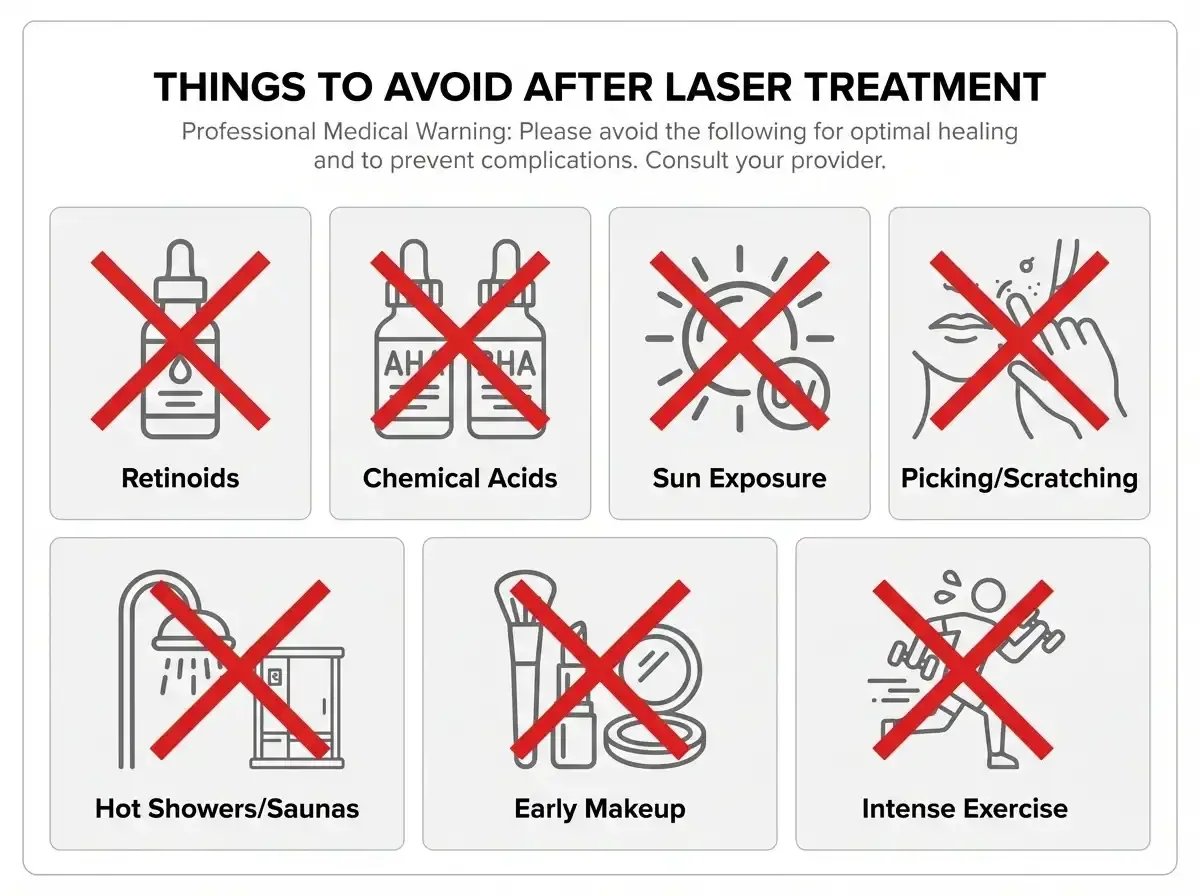
Active Skincare Ingredients
Avoid retinoids (retinol, tretinoin, adapalene) for at least 2 weeks after ablative treatments and 1 week after non-ablative treatments. Some practitioners recommend waiting until you resume your Retin-A at the 6-week mark. Retinoids increase cell turnover and can cause significant irritation on healing skin.
Alpha-hydroxy acids and beta-hydroxy acids (glycolic, lactic, salicylic acid) should be avoided for the same timeframes. These exfoliating acids can burn sensitized skin and disrupt healing.
Vitamin C serums may be too acidic and potentially irritating during initial healing. Wait at least 1 week for non-ablative treatments and 2 weeks or more for ablative treatments before reintroducing vitamin C.
Benzoyl peroxide is too harsh for healing skin, pause acne treatments during recovery.
Physical Irritation
Do not pick, scratch, peel, or rub treated skin. This is perhaps the most important rule. Picking at crusting or peeling skin can cause scarring, infection, and uneven healing. Let everything slough off naturally.
Avoid physical exfoliants (scrubs, brushes, washcloths) entirely during recovery. Your skin is already shedding cells as part of the healing process.
Skip facial treatments, professional peels, and other procedures until fully healed and cleared by your practitioner.
Heat and Sweat
Avoid hot showers, baths, saunas, steam rooms, and hot tubs for at least 48 to 72 hours after any laser treatment, and longer after ablative treatments. Heat dilates blood vessels, worsens swelling, and can impair healing.
Avoid strenuous exercise and activities that cause sweating for at least 48 hours after non-ablative treatments and up to 2 weeks after ablative treatments. Sweat can introduce bacteria, irritate healing skin, and increase inflammation.
Makeup
Makeup timelines vary significantly by treatment type. After ablative treatments, avoid makeup until the skin has fully re-epithelialized (new skin has formed over the treated area), typically 7 to 14 days minimum. After non-ablative treatments, most patients can apply mineral makeup after 24 to 48 hours. After IPL, mineral makeup is usually safe the next day.
When you do resume makeup, ensure your brushes and applicators are freshly cleaned, and choose mineral-based, non-comedogenic formulas. Green-based color correctors can help neutralize redness.
Other Considerations
Avoid swimming pools, hot tubs, and natural bodies of water until fully healed. The chemicals and bacteria can cause irritation or infection.
Avoid alcohol consumption for at least 48 hours, alcohol dehydrates the body and can increase inflammation and swelling.
If you have a history of cold sores (herpes simplex), inform your practitioner before treatment. Laser treatment around the mouth can trigger outbreaks. Your practitioner may prescribe antiviral medication before and after your procedure.
Treatment-Specific Aftercare Protocols
CO2 Laser Resurfacing Aftercare
CO2 laser resurfacing is the most intensive treatment and requires the most careful aftercare.
During days 1 through 5, your job is wound care. Clean the treated area 4 to 6 times daily with saline or diluted vinegar solution as directed by your practitioner. Apply a generous layer of the ointment or healing product prescribed, typically petroleum jelly or a specialized wound-healing ointment. Keep the skin moist at all times; do not let it dry out and form a hard scab. Sleep on your back with your head elevated to minimize swelling.
During days 5 through 10, as the skin re-epithelializes, you may transition from ointment to lighter moisturizers as directed. Continue gentle cleansing. Peeling and flaking are normal, do not pick. Most patients can apply mineral makeup by day 10 to 14 if the skin has fully healed.
During weeks 2 through 6 and beyond, continue diligent sun protection. Redness will gradually fade over weeks to months. You may resume retinoids and active ingredients around week 6 or as directed by your practitioner. Full results develop over 3 to 6 months.
Fractional Laser Aftercare
Fractional lasers (both ablative and non-ablative) have an easier recovery than full-field ablative treatments.
During days 1 through 3, keep skin clean and well-moisturized. For fractional ablative, your practitioner may recommend a similar (though shorter duration) ointment protocol as CO2. For fractional non-ablative, gentle cleanser and hydrating serums/moisturizers are typically appropriate from day one. Apply SPF if leaving the house.
During days 3 through 7, as the bronze/rough texture develops and begins to flake, continue moisturizing to ease the shedding process. Do not pick. Most patients can resume makeup and normal activities by day 5 to 7 for fractional ablative, or day 2 to 3 for fractional non-ablative.
During week 2 and beyond, skin should appear relatively normal. Continue sun protection. Resume active ingredients gradually, starting around day 7 for non-ablative and day 14 for ablative treatments.
Non-Ablative Laser Aftercare
Non-ablative treatments have the simplest aftercare protocol.
On day 1, cleanse gently, apply a hydrating serum and moisturizer, and use SPF if going outdoors. Redness and mild swelling are normal and typically peak within hours of treatment.
On days 2 through 3, most side effects have resolved. Continue your gentle routine. Most patients can apply makeup and resume normal activities.
On days 4 through 7 and beyond, skin should feel and look normal. Continue sun protection. You may resume active ingredients by day 5 to 7 unless otherwise directed.
IPL Photofacial Aftercare
IPL aftercare focuses on managing the pigment darkening and shedding process.
During days 1 through 3, cleanse gently with a mild cleanser. Apply a calming moisturizer. Apply SPF religiously, IPL-treated skin is highly photosensitive. Expect treated pigmented spots to appear darker. This is normal.
During days 3 through 10, darkened spots develop a "coffee ground" texture and begin to flake off. This is the pigment shedding, do not pick or scrub at it. Continue gentle cleansing and moisturizing. Let the spots fall off naturally.
During days 10 through 14 and beyond, most pigmented spots have shed, revealing clearer skin. Some spots may require multiple treatments. Continue sun protection indefinitely to prevent new sun damage. Resume active ingredients by day 7 to 10.
Building Your Post-Laser Routine
Here's how to structure your skincare routine during each phase of laser recovery. The intensity of your treatment determines how long each phase lasts, but the principles remain consistent: protect, hydrate, support healing, and eventually optimize with advanced ingredients that can enhance your final results.
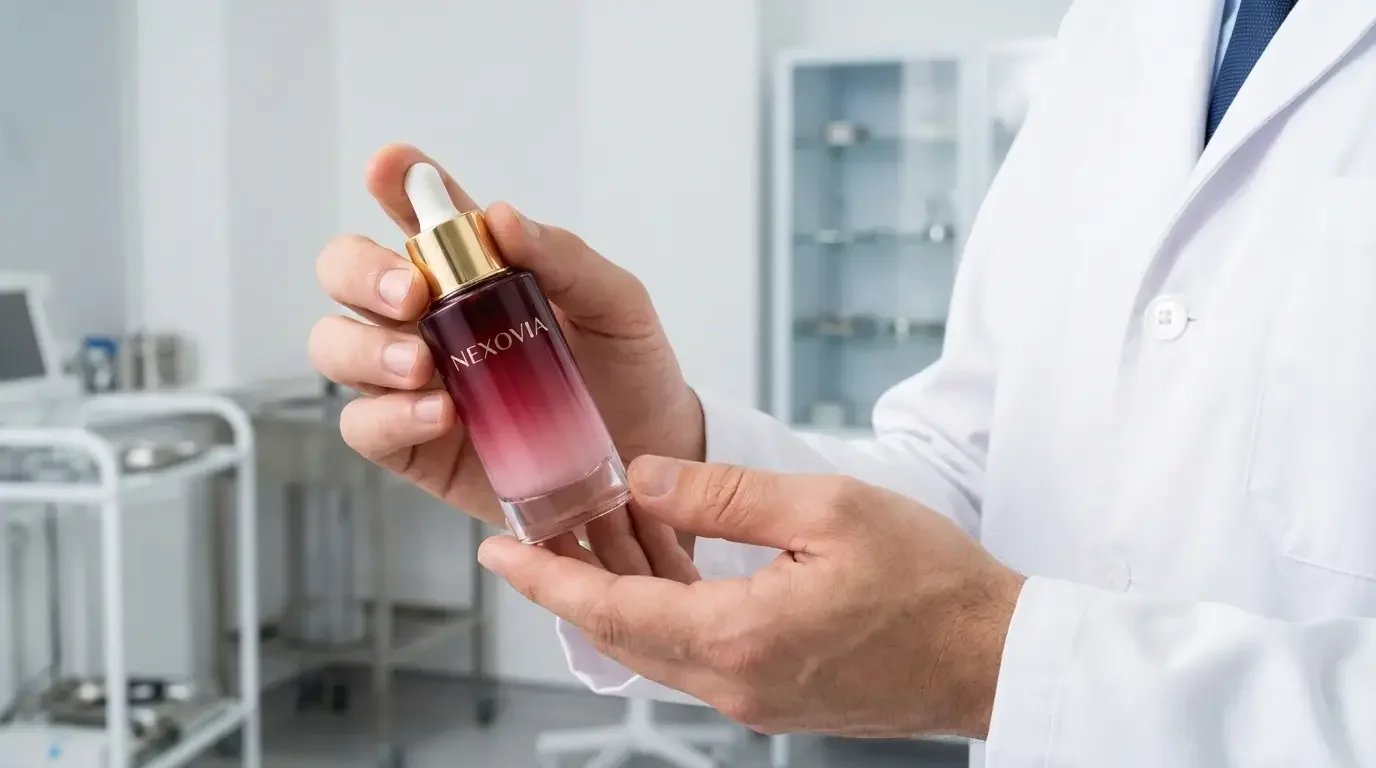
Phase 1: Acute Healing
This phase lasts 1 to 2 weeks for ablative treatments, 3 to 7 days for fractional lasers, and 1 to 3 days for non-ablative treatments and IPL. Your skin is at its most vulnerable during this window, and your routine should focus on protection and basic hydration.
In the morning, cleanse gently with your approved cleanser or solution (for ablative treatments, this may be saline or diluted vinegar solution as directed by your practitioner). Apply a hydrating serum. Apply healing ointment or moisturizer as appropriate for your treatment type, ablative treatments often require occlusive ointment-based care initially, while non-ablative treatments can use lighter moisturizers from day one. Apply mineral SPF 50 if leaving the house.
In the evening, cleanse gently. Apply your hydrating serum. Apply healing ointment or barrier-supporting moisturizer. For ablative treatments, a slightly heavier occlusive helps overnight when transepidermal water loss is highest.
Throughout the day, reapply moisturizer as needed when skin feels dry or tight. Reapply SPF every 2 hours if outdoors. Do not touch, pick, or rub the treated area under any circumstances.
During this acute phase, your skin needs intensive hydration to compensate for dramatically increased water loss, protection from environmental irritants and pathogens, gentle calming of inflammation, and support for barrier reconstruction. Most products address only one of these needs, requiring you to layer multiple products on extremely sensitive skin, and hope the combination doesn't cause irritation.
Phase 2: Barrier Restoration: The Critical Window
This is where your aftercare choices have the greatest impact on your final results.
Your barrier is rebuilding. Collagen production is ramping up. The cellular repair processes triggered by your laser treatment are in full swing. Your skin is still more permeable than usual, meaning active ingredients can penetrate more effectively. What you apply during this phase doesn't just maintain comfort, it can genuinely accelerate healing and enhance outcomes.
The question is: what formulation can actually deliver comprehensive support to skin recovering from laser treatment?
Laser recovery is particularly demanding because the thermal injury creates needs beyond what microneedling or peels require. Your skin needs continued barrier support, inflammation modulation, cellular energy to power intensive repair, signaling molecules to guide collagen production, and support for the angiogenesis (new blood vessel formation) that nourishes healing tissue.
Single-ingredient products, a hyaluronic acid serum here, a peptide serum there, address pieces of the puzzle. But laser-treated skin needs the complete picture.
Why Nexovia's ABA.4 Formula Is Engineered for Laser Recovery
We developed Nexovia because we understood that post-procedure skin, especially after laser treatments, has complex, simultaneous needs that require a sophisticated, multi-modal approach.
The ABA.4 Bio-Intelligent Architecture combines four powerful technologies specifically designed to address the full spectrum of laser recovery:
- Plant Exosomes at 4 billion particles per milliliter, derived from Centella Asiatica and Panax Ginseng, serve as cellular messengers that modulate inflammation and support barrier homeostasis. After laser treatment, controlling inflammation is critical, too much prolongs redness and increases hyperpigmentation risk; too little impairs healing. Exosomes help your skin calibrate the inflammatory response appropriately while delivering bioactive compounds that support recovery.
- PDRN at 1% concentration is particularly valuable for laser recovery. By activating adenosine A2A receptors, PDRN triggers the cAMP PKA VEGF pathway, promoting angiogenesis (new blood vessel formation) that's essential for nourishing laser-treated tissue. It also supports soft tissue repair and de novo collagen synthesis. Laser treatments work by triggering collagen remodeling; PDRN helps amplify and optimize that response.
- NAD+ at 1% concentration addresses the intense energy demands of post-laser healing. Your cells are working overtime, repairing DNA damage from thermal injury, producing new proteins, rebuilding tissue structure. NAD+ is a critical coenzyme for ATP production and a rate-limiting substrate for repair enzymes like PARPs. Providing NAD+ helps ensure your cells have the fuel to heal effectively.
- Peptide Matrix with EGF-mimetics and Matrikines provides the signaling your fibroblasts need to rebuild properly. These bioactive peptides instruct cells to reinforce the extracellular matrix, the collagen and elastin scaffolding that determines your skin's firmness, texture, and resilience. The enhanced penetration during recovery means these peptides reach the dermal fibroblasts doing the rebuilding work.
These four technologies work synergistically. The exosomes enhance cellular communication and targeted delivery. The PDRN supports the vascular and tissue repair processes. The NAD+ fuels cellular machinery. The peptides provide rebuilding instructions. Together, they address laser recovery comprehensively-not just symptom management, but active support for optimal healing.
Your Post-Laser Protocol with Nexovia
Here's how to integrate Nexovia into your laser recovery routine:
Day 0 (Treatment Day): Your practitioner applies 5 mL immediately after your procedure in a controlled clinical environment. For non-ablative and IPL treatments, follow with moisturizer and SPF. For ablative treatments, your practitioner will advise on subsequent wound care.
Days 1-7 (Acute Recovery):
- Non-ablative/IPL: Apply 1 mL morning + 1 mL evening (2 mL daily). Your skin's enhanced receptivity means the PDRN, NAD+, and peptides can penetrate effectively to support recovery.
- Ablative: Follow your practitioner's wound care protocol. Once your skin has re-epithelialized (new skin has formed, typically around day 5-7), introduce Nexovia as your serum step at 1 mL morning + 1 mL evening.
Days 8-14 (Barrier Restoration): Apply 0.5 mL morning + 0.5 mL evening (1 mL daily). This is when Nexovia delivers exceptional value for all laser types, the PDRN supports continued tissue repair, NAD+ fuels collagen production, and the peptide matrix guides fibroblasts in rebuilding the extracellular matrix.
Day 15 until your next procedure: Apply 0.5 mL daily for ongoing anti-aging benefits and to support continued collagen remodeling over the following 3-6 months.
If starting Nexovia at home (no in-clinic application):
- Non-ablative/IPL: Days 0-7: Apply 1 mL morning + 1 mL evening (2 mL daily)
- Ablative: Follow your practitioner's wound care protocol until skin has re-epithelialized, then begin Nexovia at 1 mL morning + 1 mL evening
Days 8-14: Apply 0.5 mL morning + 0.5 mL evening (1 mL daily).
Day 15 until your next procedure: Apply 0.5 mL daily for ongoing benefits.
Phase 3: Optimization: Protecting and Enhancing Your Results
Once your skin has fully healed, confirmed by absence of redness, peeling, and sensitivity, you can begin reintroducing your regular routine if desired.
Many patients find that Nexovia simplifies their routine. The comprehensive formula addresses hydration, barrier health, collagen support, and anti-aging in one step, functions that previously required layering multiple serums. Whether you return to your full pre-laser routine or streamline around Nexovia is your choice.
If you do reintroduce active ingredients, do so one at a time, several days apart, to identify any that cause irritation. Start with lower concentrations or frequencies than pre-treatment. Build back up gradually. Your newly resurfaced skin may react differently to products you previously tolerated.
Continue using Nexovia for ongoing support. The collagen remodeling triggered by your laser continues for 3 to 6 months, the PDRN, NAD+, and peptide matrix continue supporting that process throughout.
Maintain excellent sun protection indefinitely. This is non-negotiable. Laser treatments create skin that's particularly susceptible to UV damage and hyperpigmentation. The improvements you gained from your investment can be preserved with consistent SPF application, or undone by careless sun exposure.
How to Speed Up Laser Recovery
While you can't rush biology, you can optimize conditions for the fastest possible healing.
Keep Skin Moist
Moist wound healing has been shown to speed recovery compared to letting skin dry out. This doesn't mean waterlogged, it means maintaining adequate hydration with appropriate products. For ablative treatments, this means following the ointment protocol. For all treatments, it means consistent use of hydrating serums and moisturizers.
Don't Skip Applications
Consistency matters. Cleansing, hydrating, and protecting skin multiple times daily, especially in the first week, creates optimal healing conditions. Skipping applications extends recovery time.
Stay Hydrated Internally
Drink plenty of water. Your body needs adequate hydration to support tissue repair. Aim for at least 8 glasses daily during recovery.
Sleep Well
Your body does significant repair work during sleep. Growth hormone release during deep sleep supports tissue regeneration. Prioritize 7 to 9 hours nightly, and sleep on your back to avoid friction on treated skin.
Eat to Support Healing
Protein provides amino acids for collagen synthesis. Vitamin C supports collagen production and immune function. Zinc supports wound healing. Omega-3 fatty acids provide anti-inflammatory benefits. Focus on nutrient-dense foods and consider avoiding excessive sugar and alcohol, which can impair healing.
Use Advanced Post-Procedure Products
Products formulated specifically for post-procedure recovery contain ingredients chosen to actively support healing, not just maintain moisture. Growth factors, peptides, PDRN, exosomes, and other advanced actives can optimize the healing environment and potentially accelerate recovery.
Follow Instructions Precisely
Your practitioner knows your specific treatment parameters and your skin. If they provide aftercare instructions that differ from general guidelines, follow their specific advice.
When to Contact Your Practitioner
Most laser side effects are expected and resolve on their own. However, certain signs warrant professional attention.
Contact your practitioner immediately if you experience signs of infection including increasing pain, spreading redness, pus or yellow/green discharge (different from the normal clear or yellow oozing in early ablative recovery), warmth that increases rather than decreases, or fever.
Also contact your practitioner if you experience severe or worsening pain not controlled by prescribed or over-the-counter medication, swelling that worsens after the first 48 hours rather than improving, blistering or severe burns that weren't expected based on your treatment, significant color changes (very dark or very light patches), cold sore outbreak (herpes), or any symptom that seems abnormal or concerns you.
When in doubt, call your practitioner. It's always better to ask and learn something is normal than to ignore a problem that needs treatment.
Long-Term Results: What to Expect
Laser treatments produce results through collagen remodeling, a process that continues for months after your treatment.
Immediately after healing completes, you may notice improvements in skin texture and tone. However, the most significant results develop over time as new collagen is produced and organized.
At 4 to 6 weeks post-treatment, collagen production is actively underway. You'll likely notice continued improvement in skin quality.
At 3 to 6 months, optimal results from ablative treatments typically become apparent. Wrinkles continue to soften, scars continue to improve, and overall skin quality reaches its peak improvement.
Results from non-ablative treatments may require multiple sessions, typically a series of 3 to 6 treatments spaced several weeks apart, to achieve optimal outcomes.
Maintaining results requires ongoing sun protection and good skincare habits. The improvements you gain can be preserved with proper care or lost to continued UV damage and aging.
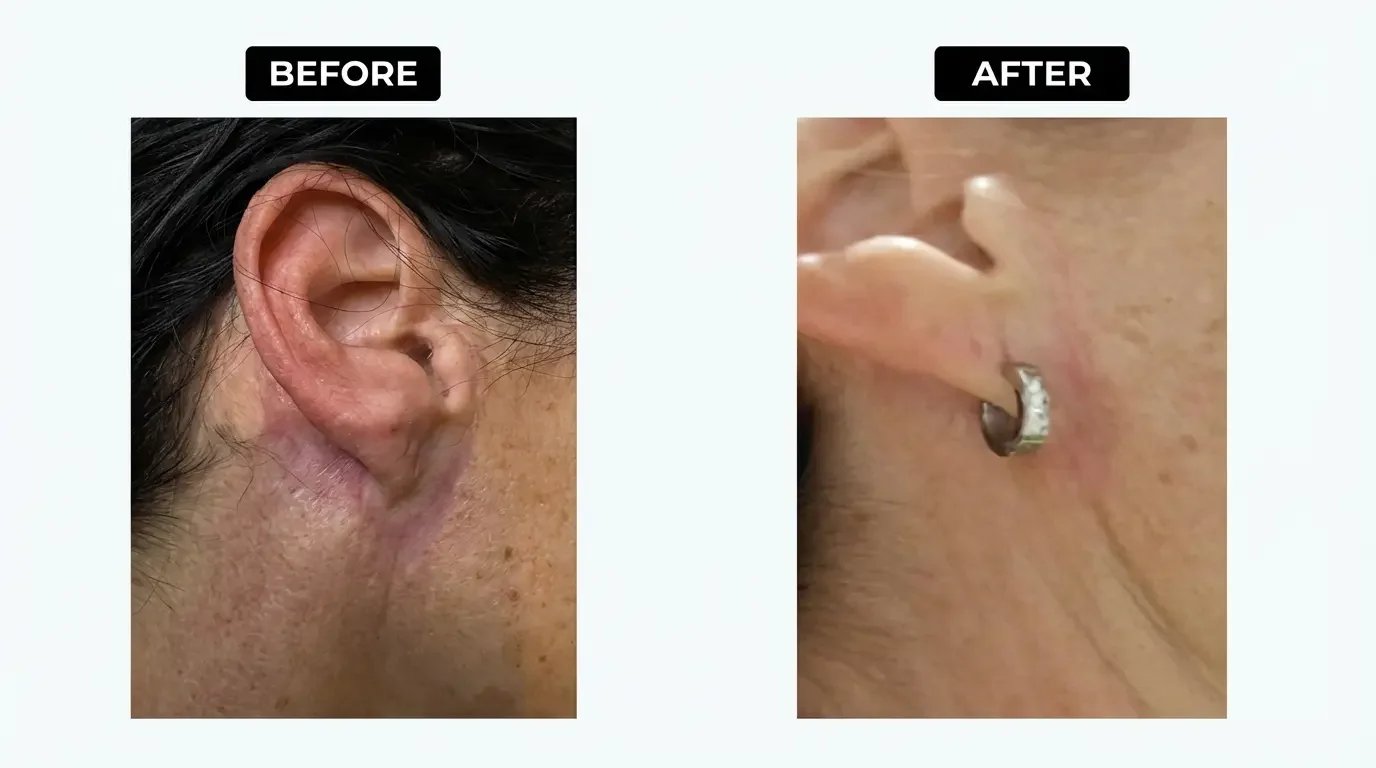
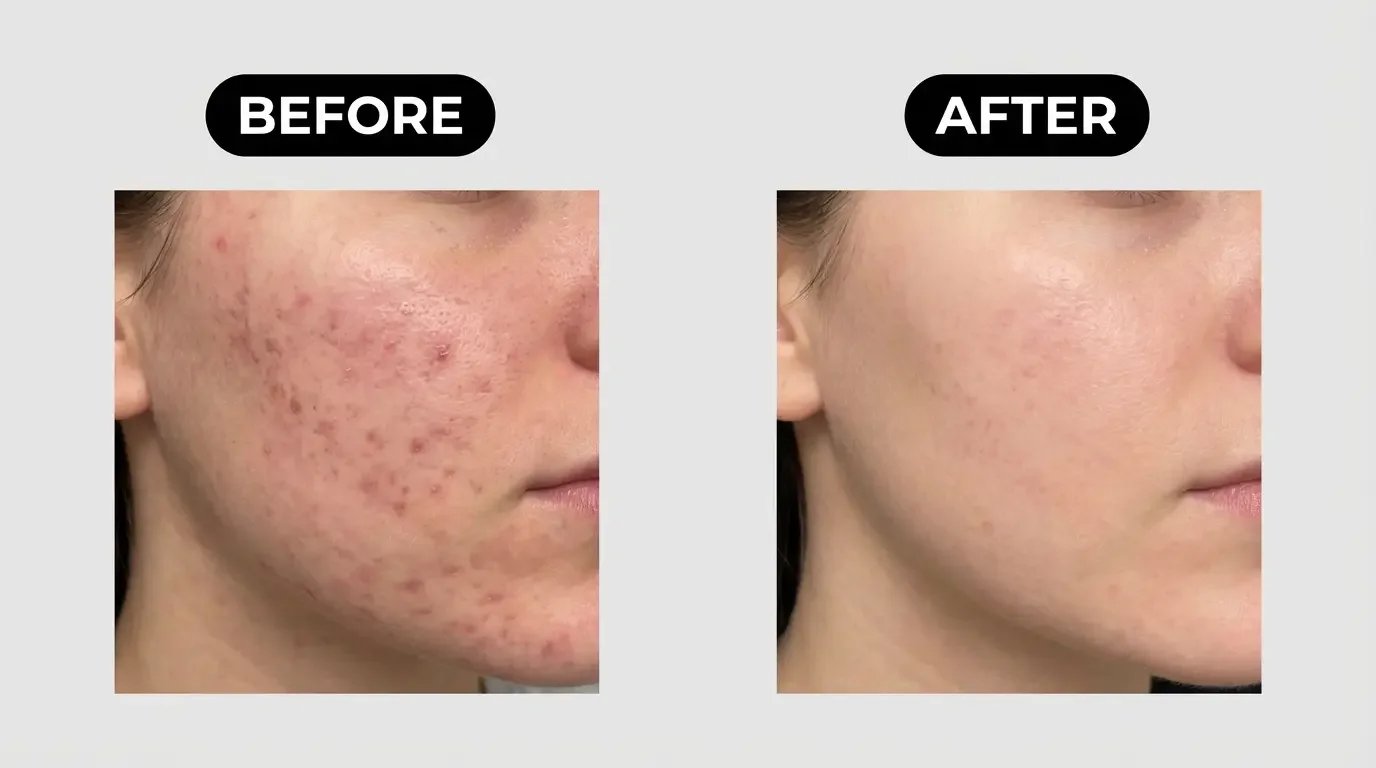
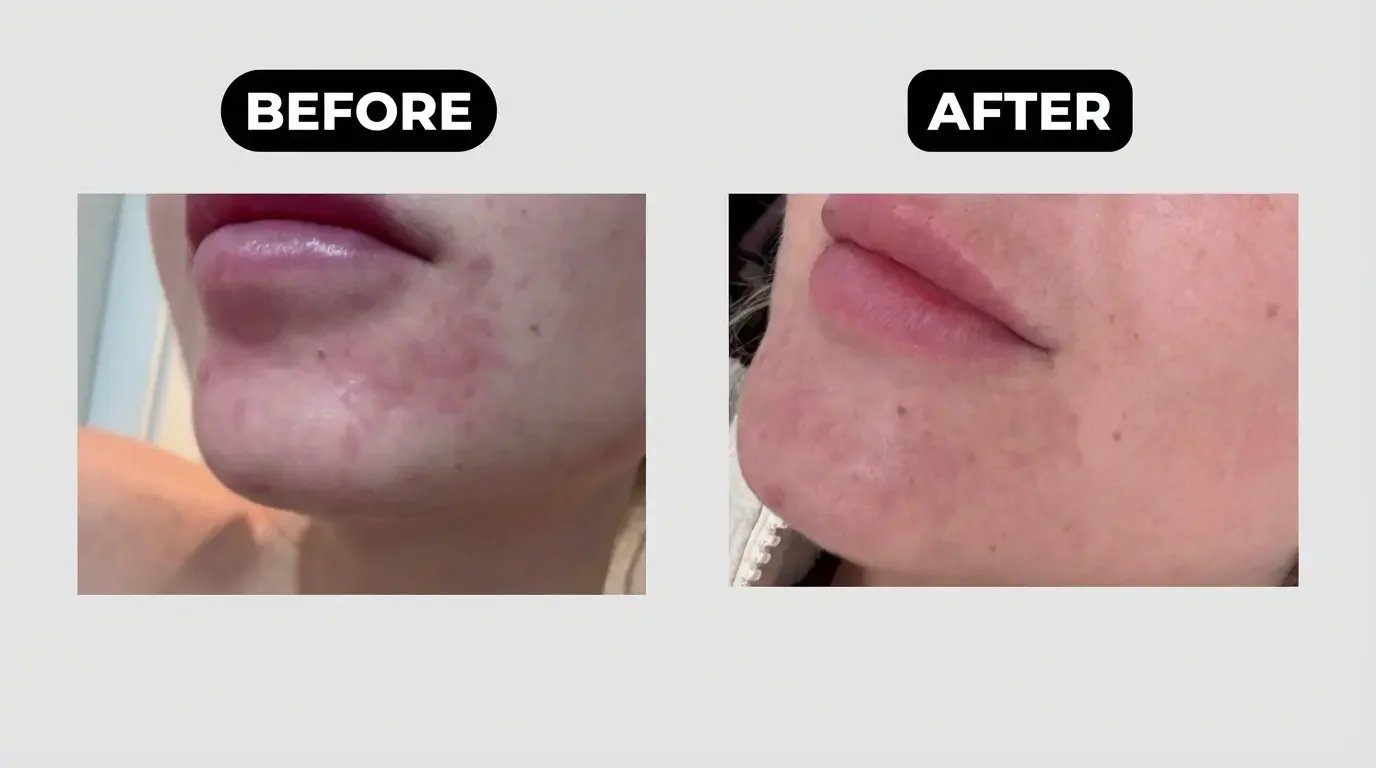
Preliminary results from ongoing clinical evaluation. Full study data with standardized efficacy endpoints expected April 2026.
Advanced Aftercare for Superior Results
Your laser treatment was an investment in your skin's future. The technology created the opportunity for remarkable transformation. Now it's time to ensure you capture every bit of that potential.
Nexovia's Skin Serum was formulated specifically for the unique demands of post-procedure recovery. The ABA.4 Bio-Intelligent Architecture combines four powerful technologies that work synergistically to support your healing skin: plant exosomes at 4 billion particles per milliliter to modulate inflammation and support barrier recovery, PDRN at 1% concentration to activate tissue repair pathways, NAD+ at 1% concentration to fuel cellular energy and repair, and a peptide matrix with growth factors to support collagen production and structural repair.
Frequently Asked Questions
How long does it take to recover from laser skin resurfacing?
Recovery time varies significantly by treatment type. Ablative CO2 laser resurfacing typically requires 1 to 2 weeks for initial healing, with redness potentially lasting several weeks to months. Erbium ablative lasers heal in approximately one week. Fractional ablative treatments require 5 to 7 days of significant downtime. Fractional non-ablative treatments have 1 to 4 days of mild redness and swelling. Non-ablative treatments typically involve 24 to 72 hours of mild side effects with minimal downtime. Full results from any laser treatment develop over 3 to 6 months as collagen remodels.
What is the fastest way to heal after laser treatment?
The fastest healing comes from following your aftercare protocol precisely: keep skin clean and adequately moisturized (moist wound healing is faster than dry), protect from sun exposure, avoid picking or scratching, stay well-hydrated, get adequate sleep, and eat nutrient-dense foods that support healing. Using products specifically formulated for post-procedure recovery, with ingredients like growth factors, peptides, and PDRN, can optimize the healing environment.
What should I put on my face after laser treatment?
For ablative treatments, your practitioner will likely prescribe an ointment-based approach initially (petroleum jelly or specialized healing ointments) followed by gentle moisturizers. For non-ablative and IPL, hydrating serums (especially hyaluronic acid), calming ingredients (centella asiatica, panthenol), gentle moisturizers, and mineral SPF 50 sunscreen are appropriate from day one. Avoid active ingredients (retinol, acids, vitamin C) until fully healed.
When can I wear makeup after laser treatment?
After ablative treatments, avoid makeup until skin has fully re-epithelialized, typically 7 to 14 days minimum, sometimes longer. After fractional ablative treatments, makeup is usually safe by day 5 to 7. After non-ablative treatments and IPL, most patients can apply mineral makeup after 24 to 48 hours. Always use freshly cleaned brushes and mineral-based, non-comedogenic formulas when you resume.
Why do dark spots get darker after IPL?
Darkening of treated pigmented spots after IPL is normal and expected. The light energy targets melanin in the pigmented areas, causing the pigment to rise to the surface and appear darker. Over the following 7 to 14 days, this darkened pigment develops a "coffee ground" texture and flakes off, revealing clearer skin beneath. Do not pick at the darkened spots, let them shed naturally.
How long should I avoid the sun after laser treatment?
You should avoid direct sun exposure and wear SPF 50 sunscreen daily for a minimum of 2 weeks after any laser treatment, and longer after ablative procedures. However, heightened sun sensitivity can persist for weeks to months. Many practitioners recommend vigilant sun protection for at least 3 to 6 months after significant resurfacing procedures. Continuing excellent sun protection indefinitely helps maintain your results.
Can I exercise after laser treatment?
Avoid strenuous exercise and activities that cause sweating for at least 24 to 48 hours after non-ablative treatments and IPL. For ablative treatments, avoid exercise for at least one week, and some practitioners recommend waiting until initial healing is complete (up to 2 weeks). Sweating can irritate healing skin, introduce bacteria, and worsen inflammation.
What should I avoid after laser treatment?
Avoid active skincare ingredients (retinoids, AHAs, BHAs, vitamin C) for at least 1 to 2 weeks. Avoid picking, scratching, or rubbing treated skin. Avoid hot showers, saunas, and steam rooms. Avoid strenuous exercise and sweating. Avoid sun exposure without protection. Avoid makeup until cleared by your practitioner. Avoid swimming pools and hot tubs until fully healed. Avoid alcohol for at least 48 hours.
Is redness after laser treatment normal?
Yes, redness is a normal and expected part of laser recovery. The duration varies by treatment type: non-ablative treatments typically have redness for 24 to 72 hours; fractional treatments may have redness for 3 to 10 days; ablative treatments often have significant redness for 2 to 4 weeks, with pink undertones potentially lasting several months. If redness is worsening rather than improving after the first few days, or is accompanied by signs of infection, contact your practitioner.
What is the difference between ablative and non-ablative laser aftercare?
Ablative laser aftercare is more intensive because the treatment removes layers of skin, creating an open wound. It requires wound care protocols including frequent cleansing with saline or vinegar solution, ointment-based moisturizing, and longer periods avoiding makeup, exercise, and active ingredients. Non-ablative aftercare is simpler because the skin surface remains intact, it primarily involves gentle cleansing, hydration, sun protection, and avoiding irritating products for a shorter duration. Both require strict sun protection.
This content is for informational purposes only and does not constitute medical advice. Always follow the specific aftercare instructions provided by your treating practitioner, as protocols vary based on treatment type, settings, and individual patient factors.
Explore the full Nexovia journal for more recovery guidance, ingredient education, and procedure-specific aftercare.
Back to all articles