Journal
Centella Asiatica for Post-Procedure Skin: What the Research Says
Explore the scientific validation behind Centella asiatica for post-procedure skincare. Discover its potent anti-inflammatory, barrier-restoring, and wound-healing properties for enhanced recovery.
August 6, 2026 / 8 min read
In the evolving landscape of post-procedure skincare, certain botanical extracts distinguish themselves through both traditional wisdom and contemporary scientific validation. Centella asiatica, often recognized as cica or gotu kola, stands as a notable example. This ancient herb, indigenous to wetlands in Asia, has been revered for centuries in traditional medicine for its profound healing properties.

Today, its application extends into advanced dermatological recovery protocols. For skin compromised by aesthetic treatments, the unique compounds within centella asiatica offer a sophisticated approach to soothing irritation, accelerating repair, and fortifying the skin’s inherent resilience. Understanding its mechanisms provides clarity on its indispensable role in sophisticated aftercare.
The Core Components of Centella Asiatica
The therapeutic efficacy of centella asiatica is largely attributed to its concentration of triterpenoid compounds, primarily asiaticoside, madecassoside, asiatic acid, and madecassic acid. These bioactive molecules, collectively known as centelloids, work synergistically to orchestrate a complex cascade of cellular responses beneficial for compromised skin. Each component contributes distinct yet complementary actions, forming a robust profile for post-procedure care, addressing everything from immediate irritation to long-term structural integrity.
Asiaticoside and madecassoside, for instance, are glycosides known for their profound ability to stimulate collagen synthesis, particularly types I and III, and promote cellular proliferation. This action is vital for the remodeling and strengthening of new tissue. Asiatic acid and madecassic acid, on the other hand, exhibit potent anti-inflammatory effects by modulating immune responses and contribute significantly to the structural integrity of the dermal matrix. This precise molecular architecture underscores centella asiatica’s capacity to address multiple facets of skin recovery simultaneously, offering a comprehensive healing solution.
Anti-Inflammatory Efficacy in Post-Procedure Recovery
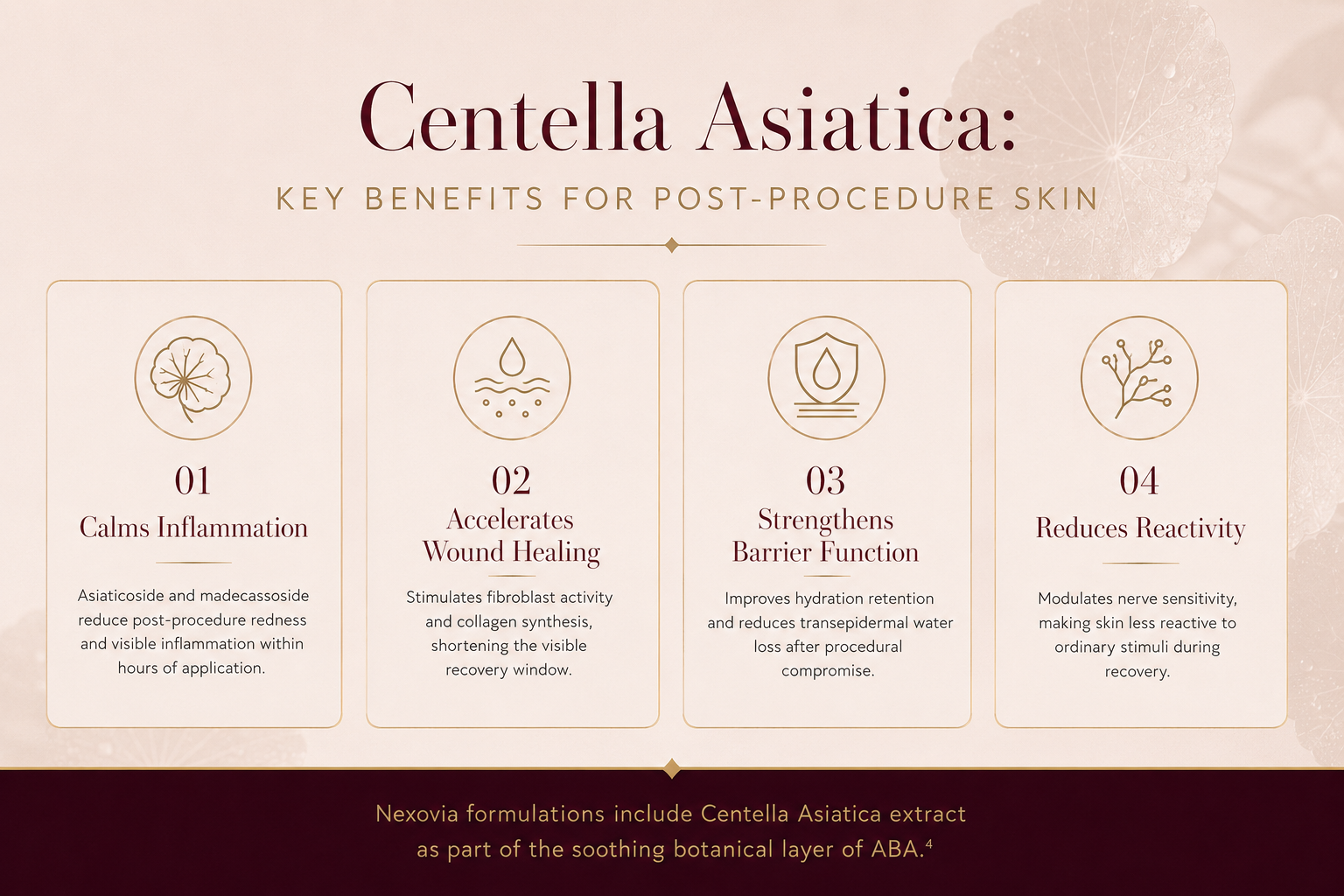
Post-procedure skin often presents with varying degrees of inflammation, manifesting as redness, swelling, and discomfort. Centella asiatica’s triterpenes have demonstrated a remarkable ability to modulate inflammatory pathways. They achieve this by inhibiting the production of pro-inflammatory mediators such as cytokines, interleukins, and prostaglandins, thereby reducing the intensity and duration of the inflammatory response. This targeted action helps to calm irritated skin, alleviate sensations of heat, and minimize post-treatment sequelae, ensuring a more comfortable healing experience. Understanding the duration of redness after microneedling highlights the need for effective anti-inflammatory agents.
The soothing effect of centella asiatica is not merely superficial. By attenuating the inflammatory cascade at a cellular level, it helps prevent a prolonged inflammatory state that can impede optimal healing and potentially contribute to undesirable outcomes such as post-inflammatory hyperpigmentation. Incorporating centella asiatica post procedure is a strategic step towards mitigating immediate discomfort and fostering a more serene, controlled recovery environment, allowing the skin to focus its energy on repair rather than reaction.
Supporting Skin Barrier Restoration
A fundamental consequence of many aesthetic procedures is temporary compromise to the skin barrier. This disruption can lead to increased trans-epidermal water loss (TEWL), heightened sensitivity, and vulnerability to environmental aggressors. Centella asiatica plays a pivotal role in fortifying and restoring this crucial protective layer. Its compounds aid in the synthesis of ceramides, cholesterol, and fatty acids—the key lipids essential for robust barrier function—thereby enhancing the skin’s intrinsic ability to retain moisture and defend itself against external stressors.
By reinforcing the skin barrier, centella asiatica helps to alleviate the common sensation of tightness, dryness, and discomfort experienced after treatments. This action is critical for preventing further irritation, reducing the risk of infection, and supporting optimal healing conditions. Understanding the science behind skin barrier compromise underscores the profound importance of ingredients that actively support its diligent repair, making centella asiatica an invaluable ally in post-procedure care.
Enhancing Collagen Synthesis and Wound Healing
Beyond its anti-inflammatory and barrier-supporting attributes, centella asiatica is celebrated for its profound capacity to accelerate wound healing and promote healthy tissue regeneration. The triterpenes, particularly asiaticoside and madecassoside, stimulate fibroblasts to synthesize collagen, especially type I and type III collagen, which are vital for skin strength, elasticity, and the structural integrity of new tissue. This pro-collagen activity is crucial in the proliferative and remodeling phases of healing, helping to improve the overall texture, firmness, and aesthetic appearance of newly formed skin. It contributes to a more refined and resilient complexion post-treatment.
Furthermore, centella asiatica aids in angiogenesis, the formation of new blood vessels, which is essential for supplying vital nutrients and oxygen to the healing tissue, thereby optimizing cellular metabolism and repair. Its ability to modulate fibroblast activity also contributes to minimizing the risk of hypertrophic scar formation and keloid development, ensuring a smoother, more refined healing outcome. This multifaceted action makes centella asiatica a cornerstone ingredient for comprehensive post-procedure recovery, aiming for both functional and cosmetic excellence.
Clinical Evidence for Centella Asiatica Post-Procedure
The therapeutic benefits of centella asiatica are not solely anecdotal; they are increasingly substantiated by rigorous clinical research and dermatological studies. These investigations have consistently demonstrated its efficacy in accelerating wound closure, significantly reducing inflammation, and improving the cosmetic outcome following various invasive and non-invasive dermatological procedures. For instance, topical applications of standardized centella extracts have been shown to significantly reduce erythema, edema, and overall discomfort after treatments such as laser resurfacing, chemical peels, and microneedling, contributing to a smoother and faster recovery trajectory. This is particularly relevant for those navigating a comprehensive post-procedure skincare guide.
Research also highlights its utility in mitigating post-peel sensitivity, promoting robust epidermal repair, and enhancing the tensile strength of newly formed skin. The consistent findings across diverse studies, encompassing both in vitro and in vivo models, underscore centella asiatica’s role as a scientifically credible and indispensable ingredient for supporting skin through the delicate post-procedure phase. Its integration into sophisticated aftercare regimens is a testament to its proven ability to enhance healing, protect aesthetic investments, and contribute to superior patient satisfaction.
Why Centella Asiatica Works Best With Complementary Technologies
While centella asiatica offers substantial benefits individually, its true potential for profound skin recovery is realized when synergistically combined with advanced bio-intelligent architectures. Nexovia’s ABA.4 Bio-Intelligent Architecture exemplifies this principle, integrating centella asiatica within a sophisticated matrix precisely designed for optimal post-procedure healing. This proprietary blend elevates recovery by targeting multiple cellular pathways simultaneously, creating an environment where the skin’s natural regenerative capacities are fully optimized.
Within ABA.4, a meticulously crafted peptide matrix works to signal skin cells for accelerated repair, enhanced barrier function, and fortified structural integrity, creating an ideal environment for centella’s triterpenes to perform their specific actions with amplified efficacy. Concurrently, plant exosomes, delivered at an unprecedented concentration of 4 billion particles per milliliter, act as sophisticated cellular messengers, facilitating intercellular communication, reducing inflammation, and amplifying regenerative processes at a foundational level. Understanding plant exosomes in skincare reveals their capacity to optimize healing and cellular communication.
Further enhancing this synergy, PDRN (Polydeoxyribonucleotide) at a 1% concentration supports vital DNA repair mechanisms, stimulates cell growth, and promotes tissue regeneration, particularly beneficial for compromised dermal structures. Simultaneously, NAD+ (Nicotinamide Adenine Dinucleotide) at 1% provides crucial cellular energy, powering the skin’s intrinsic repair mechanisms, boosting antioxidant defenses, and ensuring cells have the necessary fuel for rapid recovery. The profound role of PDRN and the benefits of NAD+ for skin are critical in this sophisticated recovery blend. This comprehensive approach ensures that centella asiatica’s restorative properties are not merely present but are actively optimized and propelled by a network of cutting-edge ingredients, leading to a more efficient, complete, and resilient recovery with superior aesthetic outcomes.
Frequently Asked Questions
What types of procedures benefit most from centella asiatica aftercare?
Centella asiatica is beneficial after a wide range of aesthetic procedures that compromise the skin barrier or induce controlled injury. This includes treatments such as microneedling, laser resurfacing, chemical peels, IPL, and even less invasive procedures that cause temporary sensitivity. Its anti-inflammatory and wound-healing properties are universally valuable for accelerating recovery and minimizing discomfort across various modalities.
How quickly can I expect to see results from using centella asiatica post procedure?
The soothing and anti-inflammatory effects of centella asiatica can often be observed relatively quickly, sometimes within hours to a few days, as redness and irritation subside. Its benefits for collagen synthesis and barrier repair are more cumulative, manifesting over weeks as the skin heals and strengthens. Consistent use as part of a dedicated aftercare regimen is key to optimizing these long-term outcomes.
Are there any specific forms of centella asiatica to look for in skincare products?
When selecting products, look for standardized extracts that specify the concentration of key triterpenes like asiaticoside, madecassoside, asiatic acid, and madecassic acid. These are often listed as "Centella Asiatica Extract" or "Cica." Products formulated with a balanced blend of these active compounds ensure maximum efficacy. Nexovia’s formulations integrate a refined centella asiatica extract within a comprehensive bio-intelligent architecture for optimal delivery and action.
Can centella asiatica help prevent post-inflammatory hyperpigmentation (PIH)?
Yes, by significantly reducing inflammation, centella asiatica can play a crucial role in preventing or minimizing post-inflammatory hyperpigmentation. PIH is often a direct consequence of prolonged or excessive inflammation following skin injury. By calming the skin and supporting barrier repair, centella asiatica helps to mitigate the triggers that lead to melanin overproduction, thereby contributing to a more even skin tone post-procedure. For further strategies, consult preventing hyperpigmentation after aesthetic procedures.
Is centella asiatica suitable for all skin types, including sensitive or acne-prone skin?
Centella asiatica is generally well-tolerated across various skin types, including sensitive and acne-prone skin, due to its gentle yet potent anti-inflammatory and healing properties. Its ability to calm irritation and support barrier function makes it particularly beneficial for sensitive skin. For acne-prone skin, its non-comedogenic nature and wound-healing attributes can assist in the recovery from breakouts or procedures targeting acne scars. However, as with any new ingredient, a patch test is always advisable.
This content is for informational purposes only and does not constitute medical advice. Always follow the specific aftercare instructions provided by your practitioner, as recommendations may vary based on your individual treatment and skin type.
Disclaimer: This article is for educational purposes only and is not medical advice. Always follow your provider's guidance after cosmetic procedures.