Journal
How Long Does Redness Last After Microneedling? Timeline and Tips
You catch a glimpse of yourself in the mirror after your microneedling appointment and your face looks like you spent the afternoon in the sun without sunscreen. The redness is...
March 3, 2026 / 9 min read

You catch a glimpse of yourself in the mirror after your microneedling appointment and your face looks like you spent the afternoon in the sun without sunscreen. The redness is more intense than you expected, and now you are wondering whether this is normal and, more importantly, how long it will last.
This concern is one of the most common questions patients have after microneedling. The good news is that redness is a completely normal part of the healing process and a sign that your skin is responding exactly as it should. The controlled micro-injuries created during treatment trigger an inflammatory response, which is essential for stimulating collagen production and cellular renewal. That flushed appearance is your body doing its job.
Understanding how long redness lasts after microneedling helps set realistic expectations and reduces the anxiety that often accompanies the recovery period. This guide walks you through the typical timeline, explains what influences healing speed, and shares actionable tips to support your skin through each stage of recovery.
Why Redness Happens After Microneedling
To understand the timeline, it helps to know why your skin turns red in the first place. Microneedling creates thousands of tiny punctures in the skin using fine needles. These controlled micro-injuries trigger your body's wound healing cascade, which unfolds in three overlapping phases: inflammation, proliferation, and remodeling.
The inflammatory phase begins immediately after treatment. Blood flow increases to the treated area, bringing immune cells and growth factors that initiate the repair process. This increased circulation is what causes the characteristic redness and warmth you see and feel. Your skin may also appear slightly swollen, and the treated area can feel sensitive to the touch.
This inflammatory response is not a complication. It is the mechanism through which microneedling delivers its benefits. Without this controlled inflammation, the collagen stimulation and skin renewal you are seeking would not occur. The key is supporting this natural process while helping your skin move through it efficiently.
The Typical Redness Timeline After Microneedling
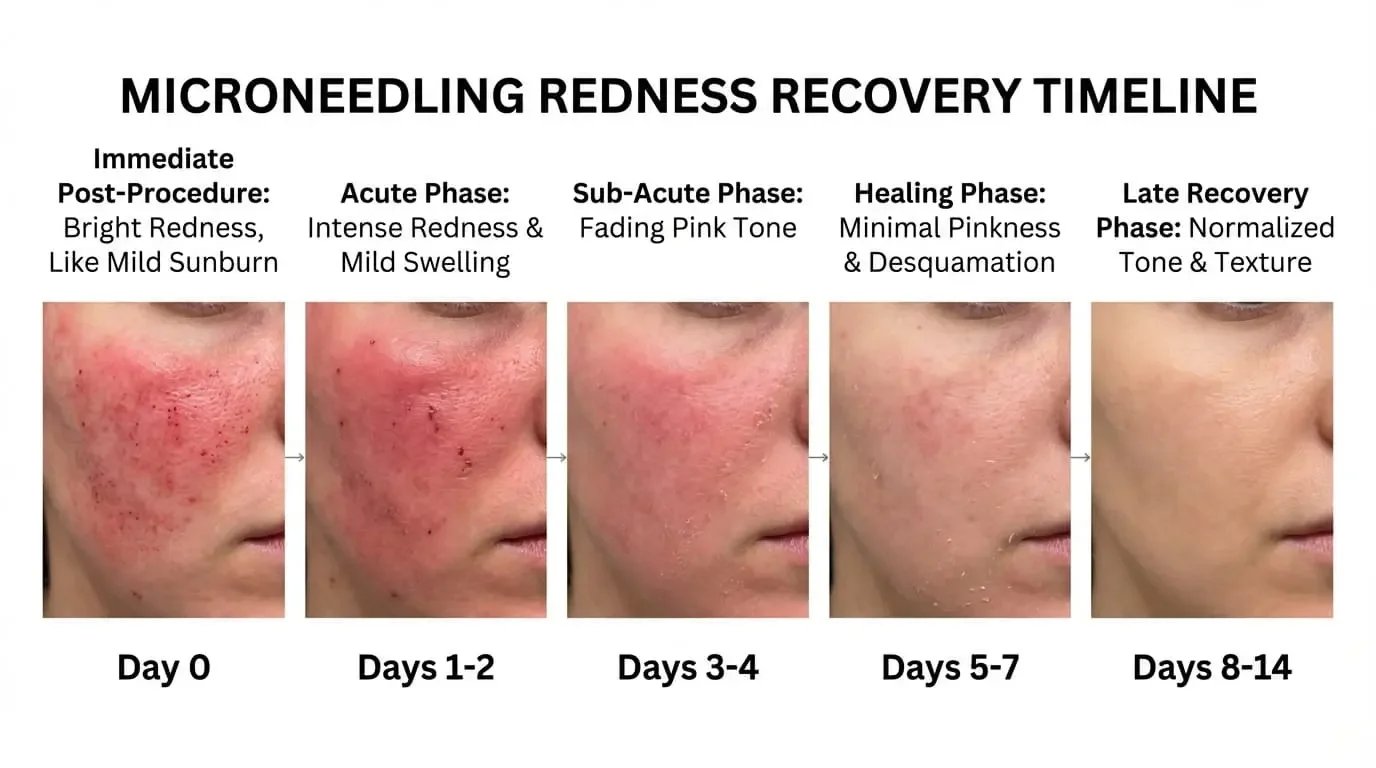
While individual experiences vary based on several factors, most patients follow a predictable pattern of redness resolution. Here is what you can generally expect.
Day 0: Immediately After Treatment
Right after your session, your skin will appear noticeably red, similar to a moderate sunburn. The intensity depends on the needle depth and number of passes your practitioner performed. Some patients also experience mild pinpoint bleeding during treatment, though this typically stops within minutes. You may notice your skin feels warm, tight, and sensitive. This is the peak of visible redness for most people.
Days 1 Through 2: Acute Redness
The sunburn-like appearance typically continues through the first 24 to 48 hours. You may notice that redness appears more intense in certain areas, particularly where your practitioner focused on specific concerns like acne scars or deeper wrinkles. Mild swelling is common during this phase, especially around the eyes and forehead. Your skin may feel dry and tight as transepidermal water loss increases through the compromised barrier.
Days 3 Through 4: Redness Begins Fading
For most patients, this is when visible improvement begins. The intense sunburn appearance transitions to a milder pinkish tone. Swelling typically resolves by this point, and your skin starts feeling less sensitive. You may notice some dryness or light flaking as your skin begins its renewal process. Many patients feel comfortable returning to work and social activities by day three or four, though some residual pinkness may remain.
Days 5 Through 7: Significant Improvement
By the end of the first week, the majority of visible redness has typically resolved. Your skin may still have a slightly pink undertone, but this is usually subtle enough to cover with mineral makeup if desired. The tight, sensitive feeling should be subsiding, and your skin is beginning to feel more like itself again.
Days 8 Through 14: Final Resolution
Any remaining pinkness generally fades completely during this period. Your skin is in the restoration phase, rebuilding its barrier and continuing the collagen remodeling process beneath the surface. While visible redness is largely gone, your skin is still healing internally, which is why continued gentle care remains important.
Factors That Influence How Long Redness Lasts
Not everyone follows the same timeline. Several factors can extend or shorten your redness duration.
Treatment Intensity
The depth of needle penetration and the number of passes significantly impact redness duration. Superficial treatments using shorter needles typically result in redness that resolves within 24 to 48 hours. Deeper treatments targeting acne scars or more significant skin concerns may cause redness lasting five to seven days or longer.
Your Skin Type and Tone
Fair skin tends to show redness more visibly, though it often resolves at a similar rate to other skin types. Those with sensitive skin or conditions like rosacea may experience prolonged redness. Darker skin tones may show less visible redness but can be more prone to post-inflammatory hyperpigmentation, making proper aftercare especially important.
Aftercare Choices
What you put on your skin after microneedling significantly influences healing speed. Using appropriate ingredients that calm inflammation, support barrier repair, and provide hydration can help reduce visible redness faster. Conversely, using irritating products, touching your face excessively, or exposing treated skin to heat and sun can prolong redness and potentially cause complications.
For a detailed breakdown of which ingredients help and which to avoid, see our guide on what to put on your face after microneedling.
Overall Health and Lifestyle
Factors like hydration levels, sleep quality, stress, and nutrition all influence your body's healing capacity. Smoking and alcohol consumption can impair circulation and slow recovery. Giving your body optimal conditions for healing supports faster redness resolution.
Tips to Reduce Redness and Heal Faster After Microneedling
While you cannot eliminate the inflammatory phase entirely, you can support your skin through it more effectively with the right approach.
Choose Ingredients That Calm and Repair
The most effective strategy for managing post-microneedling redness is using products formulated with ingredients that address inflammation while supporting tissue repair. Look for formulations containing multiple complementary technologies rather than single-ingredient products.
Plant exosomes derived from botanicals like Centella Asiatica help modulate inflammation and oxidative stress at the cellular level. These microscopic lipid vesicles support intercellular communication, helping your skin cells coordinate their healing efforts more efficiently.
PDRN, formulated as Sodium DNA, activates signaling pathways that promote tissue regeneration while reducing inflammation. This ingredient has been used extensively in Korean aesthetic medicine for its wound healing and barrier repair benefits.
NAD+ supports cellular energy production, fueling the intensive repair work your skin cells are undertaking. It also helps counteract oxidative stress generated during the healing process.
Peptides and growth factors signal your skin cells to ramp up repair and regeneration, accelerating the natural healing response triggered by microneedling.
Protect Against UV Exposure
Post-procedure skin is significantly more vulnerable to UV damage, which can worsen redness and cause hyperpigmentation. Apply broad-spectrum SPF 50 or higher every morning, even if staying indoors. Reapply every two hours if you are spending time outside. Wear a hat when possible.
Avoid Common Mistakes That Prolong Redness
Certain behaviors can extend your redness duration or cause additional complications. Avoid touching your face unnecessarily, as this introduces bacteria and irritation. Skip hot showers, saunas, and intense workouts for at least 48 to 72 hours, as heat and sweat can aggravate inflammation. Do not pick at any flaking or peeling skin. Do not apply makeup for at least 24 hours, and when you resume, choose mineral formulas.
For a full recovery routine covering every phase of healing, see our complete microneedling aftercare guide.
When to Be Concerned About Redness After Microneedling
While redness is normal, certain signs may indicate a problem that warrants attention. Contact your practitioner if redness intensifies rather than improves after day three, if you develop signs of infection such as increasing pain, pus, or fever, if you notice unusual discoloration or darkening of the skin, or if redness persists beyond two weeks without improvement.
Not sure if your recovery is on track?
Frequently Asked Questions
Is it normal for redness to be worse on the second day after microneedling?
Yes, this is common. Some patients notice that redness appears most intense on day one or day two before beginning to fade. The inflammatory response continues working during this period, and factors like sleep position or room temperature can influence how flushed your skin appears. As long as redness begins improving by day three or four, you are likely progressing normally.
Can I use ice to reduce redness after microneedling?
While cold compresses may provide temporary relief, applying ice directly to freshly microneedled skin is not recommended as it can be too harsh on the compromised barrier. If your practitioner approves, you may use a clean, cool compress gently on the skin. Focus instead on using calming, anti-inflammatory skincare ingredients like plant exosomes and PDRN to address redness from within.
Will makeup cover the redness after microneedling?
Most practitioners recommend waiting at least 24 hours before applying any makeup. After this initial period, mineral-based, non-comedogenic makeup can help camouflage residual pinkness. Avoid heavy liquid foundations or products containing irritating ingredients during the first week of recovery.
Does darker skin experience less redness after microneedling?
Redness may be less visibly apparent on darker skin tones, but the inflammatory process occurs the same way regardless of skin color. Those with darker skin should pay particular attention to aftercare, as they may be more susceptible to post-inflammatory hyperpigmentation. Using products that support barrier repair and contain brightening ingredients like niacinamide can help manage this risk.
How can I speed up redness recovery after microneedling?
The fastest path to redness resolution is using aftercare products that address inflammation, barrier damage, and tissue repair simultaneously. Single-ingredient products like a standalone hyaluronic acid serum will hydrate but won't actively calm inflammation or support tissue regeneration. Nexovia Skin Serum was formulated specifically for this purpose, combining plant exosomes, PDRN, NAD+, and a peptide matrix in its ABA.4 architecture to support every phase of post-microneedling recovery. Pair that with strict sun protection, gentle cleansing, and avoiding the common mistakes listed above.
This content is for informational purposes only and does not constitute medical advice. Always follow the specific aftercare instructions provided by your practitioner, as recommendations may vary based on your individual treatment and skin type.


