Journal
What to Know About Combining Microneedling With Exosome Therapy
Microneedling and exosome therapy are increasingly paired for amplified results. Here is how the combination works, what to expect, and how to recover.
September 3, 2026 / 6 min read
Microneedling has been part of mainstream aesthetic practice for over a decade. Exosome therapy, by comparison, is a younger and considerably more sophisticated category, and it is increasingly being paired with microneedling as a way to amplify results. The combination is more than the sum of its parts, but it requires understanding what each component contributes before the pairing makes sense.
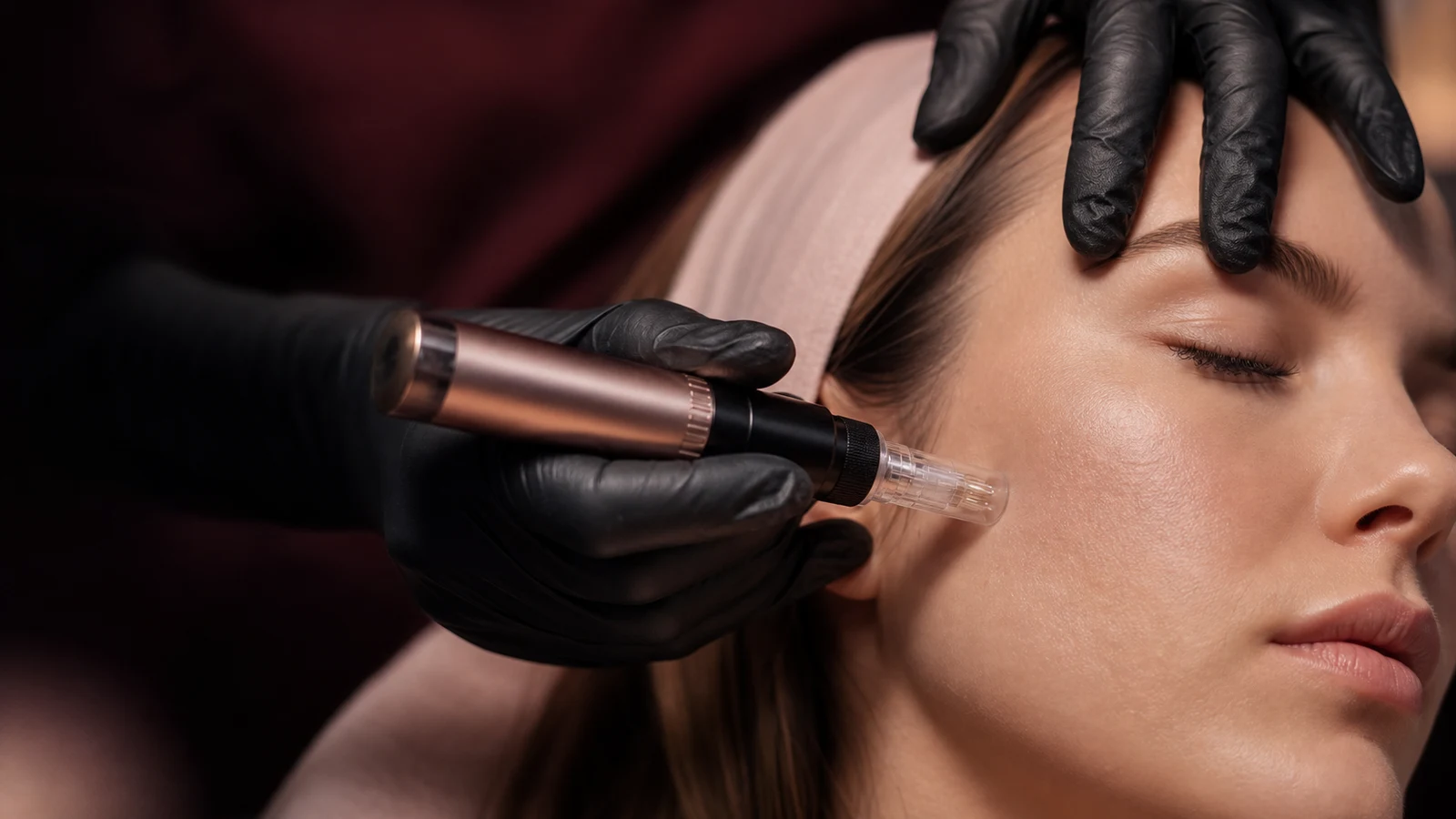
This article walks through the rationale for the combination, what to expect during the procedure, and how the recovery differs from microneedling alone.
What Each Component Does on Its Own
Microneedling produces controlled, microscopic injury to the skin. Fine needles penetrate to a calibrated depth, creating channels that the body responds to as wounds. The healing response that follows includes collagen and elastin synthesis, a remodeling of the extracellular matrix, and a turnover of the epidermis. Over a series of treatments, the cumulative effect is improved skin texture, reduced scarring, and a refined surface.
Exosome therapy delivers nano-sized vesicles, packets of proteins, lipids, and signaling RNA, that participate in the cellular communication networks that govern repair and regeneration. Applied topically or injected, exosomes deliver instructions to skin cells: produce collagen, reduce inflammation, accelerate epithelial migration. The signals are biologically familiar to the cells receiving them, which is part of what makes the therapy effective without irritation.
Why the Combination Works
The microscopic channels that microneedling creates do two things relevant to exosome therapy. First, they trigger the body's repair response, which means the skin's cells are already in a state of heightened activity. Second, they create transient pathways through the barrier that allow large molecules to penetrate further than they could otherwise. Topically applied exosomes immediately after microneedling can reach the deeper layers where their signaling is most useful.
The result, in clinical observation, is faster recovery and more visible improvement than either modality produces alone. The microneedling provides the trigger; the exosomes provide the choreography that organizes the response. Exosomes versus growth factors is a useful comparison to understand the distinct mechanism at play.
What the Procedure Looks Like
The procedure itself differs from microneedling alone by the addition of an exosome serum applied immediately during or after the needling. The microneedling portion takes 20 to 40 minutes depending on the area treated. The exosome application is typically applied during the procedure, with the open channels still receptive, and may be reapplied at the end.
Practitioners may also offer an injected exosome protocol, where the exosome serum is delivered through small intradermal injections rather than topically. The injected protocol delivers the exosomes deeper but extends the recovery window slightly.
The Immediate Recovery Period
The first 24 hours after combined microneedling and exosome therapy are similar to microneedling alone, with one notable difference: the visible recovery often begins faster. Redness and swelling that would typically peak at 24 to 48 hours often appear less pronounced, and the skin returns to baseline appearance sooner. Day-by-day microneedling recovery applies as the baseline framework, with the exosome-supported version progressing somewhat ahead of the standard timeline.

The post-procedure routine is otherwise the same. Hydration, soothing botanicals, sun avoidance, no actives. The skin is receptive in the first 12 to 24 hours and benefits from continued exposure to barrier-supportive ingredients during this window.
The Days That Follow
Days two through five generally show faster surface recovery with the combination. The visible flaking that some patients experience after deeper microneedling tends to be less pronounced, and the underlying flush resolves sooner. Skin tone often appears more uniform earlier in the recovery cycle.
The longer-term results, the collagen remodeling that develops over weeks, are more consistent and often more visible. Patients who undergo a series of three to six combined sessions over a quarter or two typically report noticeably more visible improvement than those who undergo microneedling alone, though direct comparisons are difficult to make in routine clinical practice.
How a Layered Recovery Architecture Maximises Results
The exosome therapy delivered during the procedure is a single moment of intervention. The architecture of recovery in the days that follow determines how much of that signal the cells can act on. Cells that receive a sophisticated signal but lack the energy, hydration, or barrier integrity to act on it produce a diminished result.
This is where a multi-mechanism recovery formulation becomes particularly relevant. Nexovia's ABA.4 Bio-Intelligent Architecture combines plant exosomes at four billion particles per millilitre, which extend the cellular communication that the procedure initiated, with PDRN at one percent to activate regenerative pathways through adenosine receptors, NAD+ at one percent to supply the cellular energy that signaling demands, and a peptide matrix to deliver the structural building blocks for new tissue. Together, these elements amplify and extend the work the procedure began. Plant exosomes work synergistically with the procedure-delivered signal.
The result is recovery that is not just faster in surface terms but more complete in structural terms. The collagen remodeling has the energy and the building blocks it needs. The skin's surface comfort is supported throughout. The visible improvement at the four- and six-week mark reflects work that the procedure made possible and the routine made real.
Frequently Asked Questions
Is exosome therapy safe?
Topical exosome therapy has a strong safety profile in published research, with no significant adverse events reported in mainstream clinical use. As with any therapy, the source and quality of the exosome product matters significantly. Discuss the specific product your practitioner uses if you have concerns.
How many sessions are typically needed?
For meaningful improvement, three to six sessions spaced four to six weeks apart is the typical protocol. Maintenance sessions every three to six months are common after the initial series.
Is it more expensive than microneedling alone?
Yes, typically two to three times the cost of microneedling alone. The exosome serum is the principal cost driver. Whether the additional cost is justified depends on the magnitude of improvement you are seeking and the result you would otherwise achieve.
Are plant-derived exosomes equivalent to mesenchymal-derived exosomes?
They are not equivalent but they are both useful. Mesenchymal-derived exosomes are typically used in clinical procedures. Plant-derived exosomes are more common in topical formulations and have a different but complementary signaling profile. Both have evidence supporting their use.
How soon can I have a second session?
Most practitioners recommend at least four weeks between sessions to allow the collagen remodeling from the first session to mature. Some sensitive skin types benefit from six-week intervals.
This content is for informational purposes only and does not constitute medical advice. Always follow the specific aftercare instructions provided by your practitioner, as recommendations may vary based on your individual treatment and skin type.
Disclaimer: This article is for educational purposes only and is not medical advice. Always follow your provider's guidance after cosmetic procedures.