Journal
How to Travel Safely After an Aesthetic Procedure: A Recovery Checklist
Travel and post-procedure recovery do not always coexist gracefully. Here is how to plan, what to pack, and what to skip on the road.
September 10, 2026 / 6 min read
Travel and post-procedure recovery do not always coexist gracefully. The cabin air on a long flight, the unfamiliar climate at your destination, the schedule disruption, the hotel pillow you did not choose: each of these is a small additional stress on skin that is already in repair. Planning travel around your treatment series, and packing intelligently for the trips you cannot avoid, makes the difference between a mild inconvenience and a noticeably interrupted recovery.
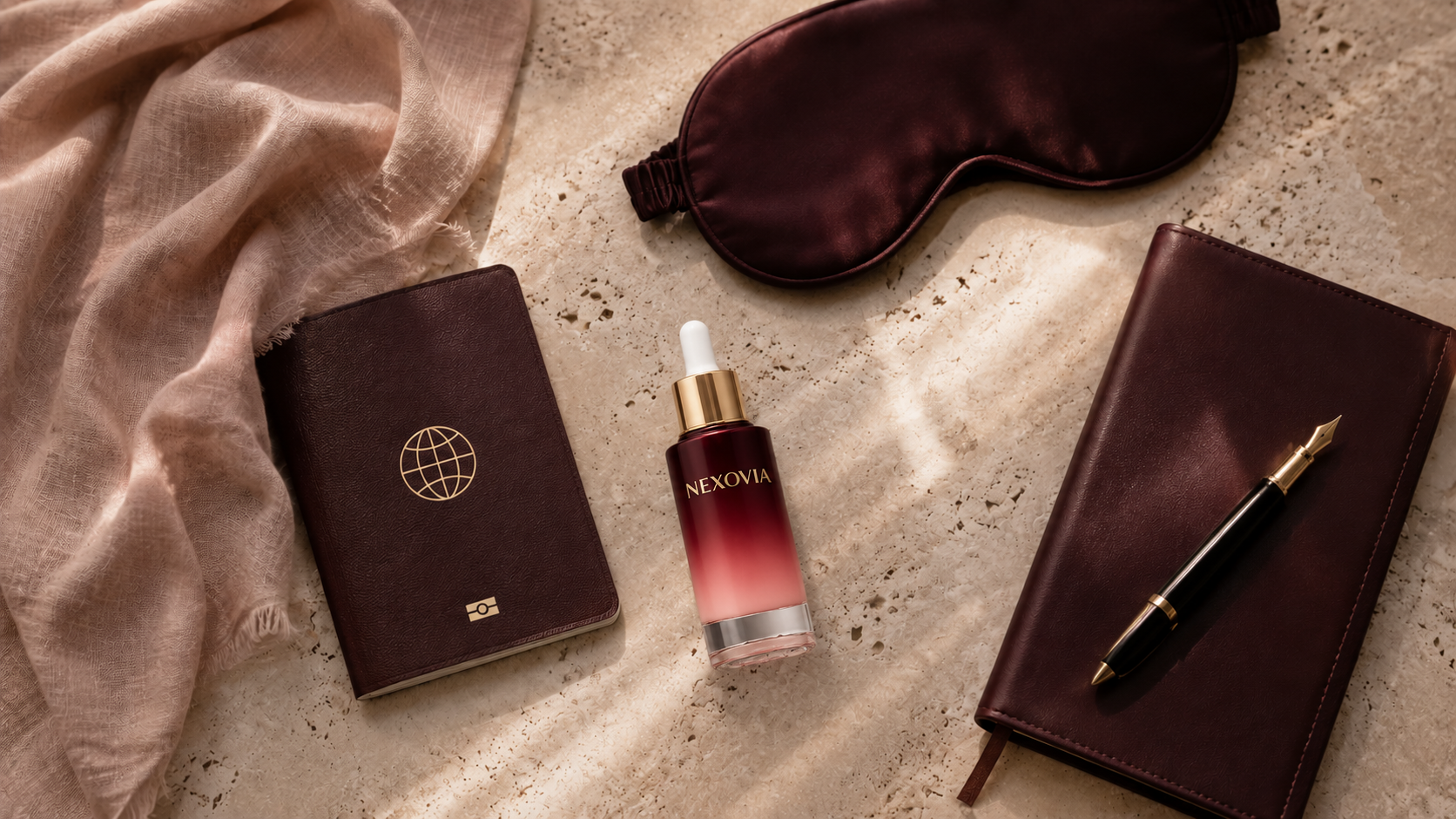
This article is a practical checklist for travelling safely in the days and weeks after a treatment, with attention to the variables that are most likely to compromise your results.
The First Question: Should You Travel at All?
For superficial procedures like dermaplaning or a light HydraFacial, travel within 24 hours is generally fine. For microneedling, mild light therapies, and superficial peels, give yourself 48 to 72 hours of stable environment before flying. For deeper procedures including fractional laser, deeper peels, or anything involving significant initial swelling, plan for at least four to seven days of grounded recovery before air travel.
The reasoning is partly practical: cabin pressure, low humidity, and the inability to control your immediate environment all compound the recovery challenge. The reasoning is also aesthetic: if a procedure is meant to deliver visible results in time for an event, scheduling it within seven days of the event is a frequent miscalculation.
Cabin Air: The Single Biggest Stressor
Aircraft cabin humidity is typically below 20 percent, often closer to 10 percent. For comparison, a comfortable indoor environment is usually 40 to 60 percent. The skin loses water rapidly in this environment, particularly skin that is already experiencing elevated transepidermal water loss from a recent treatment.
The mitigation is straightforward but requires forethought. Drink water consistently through the flight. Apply a humectant serum every two hours. Use a small amount of a film-forming hydrator on top of the humectant to slow the loss. Avoid relying on heavy occlusive balms in flight; they can trap heat in cabin conditions and produce more discomfort than they prevent.
What to Pack: A Minimal Travel Routine
Travel is not the moment to bring your full home routine. Bring what is essential and well-tolerated; leave the actives, the new products, and the experiments at home.
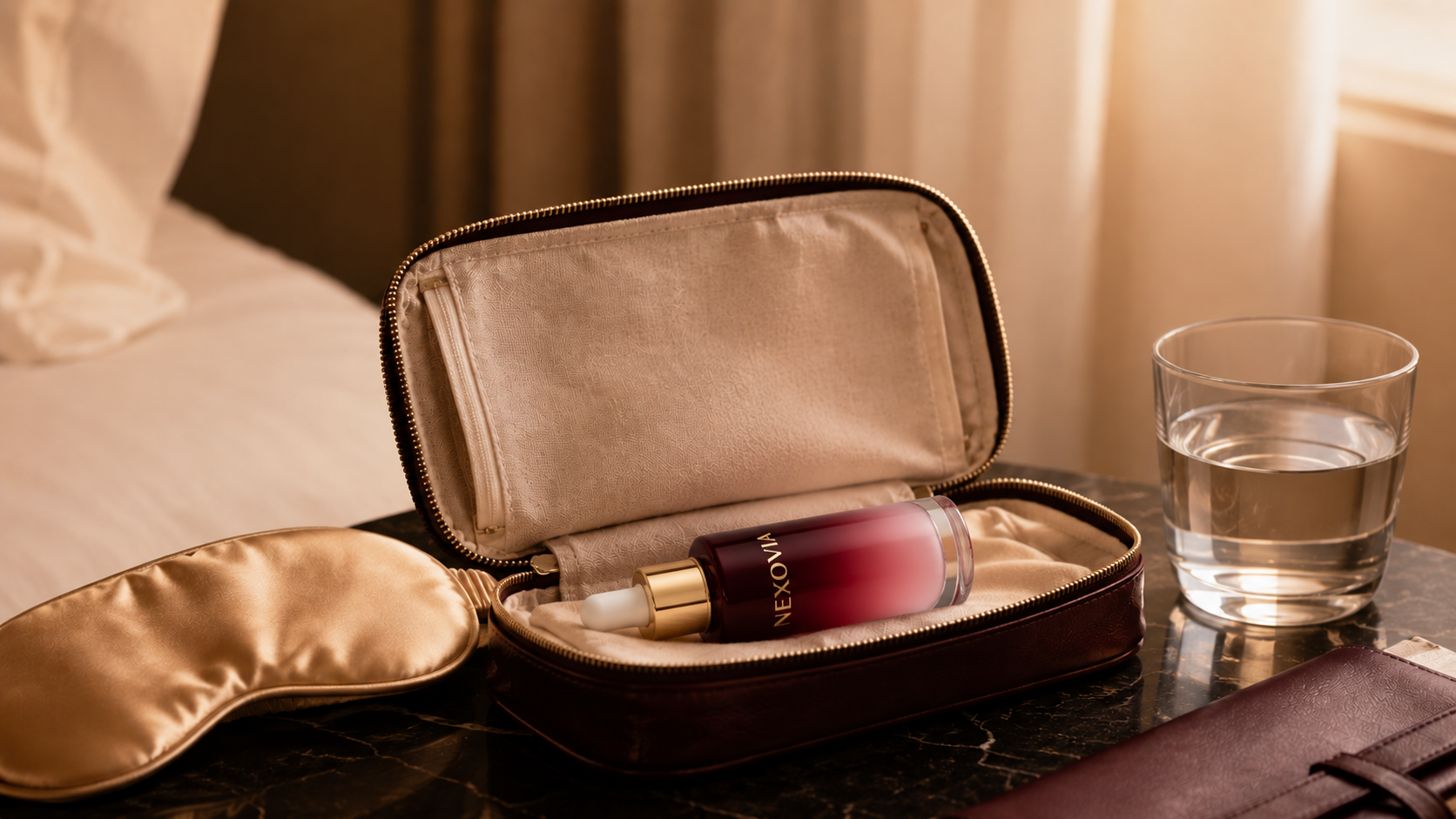
The minimal recovery travel kit: a gentle cleanser in travel size; a humectant serum (hyaluronic acid or similar); a barrier-supporting moisturizer; a high-quality broad-spectrum sunscreen; a soothing balm or recovery serum that you have used before and trust. That is six or seven items. Anything beyond this is optional and probably unnecessary.
Decant into travel-sized containers if your full-sized products are not airline-compliant. Avoid the temptation to buy "travel skincare" sets composed of products you have never used; reactive skin does not benefit from product novelty during travel.
The Destination Variables
Your destination introduces its own variables. A drier climate increases TEWL further. A more humid climate can challenge formulations that were balanced for dryness. Higher altitudes increase ultraviolet exposure. Different water mineral content affects how cleansers behave on skin.
The principle is to acclimatize your routine to the destination rather than forcing the home routine to perform identically. In a drier climate, layer your hydrators more aggressively. In a humid climate, lighten the moisturizer. At higher altitudes, increase the frequency of sunscreen reapplication. Sun discipline matters more in unfamiliar environments where your usual cues may not apply.
Hotel Routines and Sleep
Hotel bedding is not your bedding. Different fabrics, different detergents, different mineral content in the water of the hotel laundry: any of these can produce micro-irritation on already sensitive skin. The mitigation is simple: bring a clean silk or cotton pillowcase from home if your trip is long enough that this matters. Sleep is when the skin does most of its repair work, and the surface against which you sleep is part of the equation.
Hotel water also varies significantly. If your destination has notably hard water, consider rinsing your face with bottled or filtered water on the most sensitive days. This sounds excessive in the abstract; it is sometimes the difference between a smooth recovery and a flare.
Why a Compact Recovery Architecture Helps
Travel rewards skincare that does multiple things at once. A formulation that combines hydration, soothing, regenerative signaling, and barrier support reduces the number of products you need to pack and the number of layering decisions you have to make in unfamiliar conditions.
This is part of why Nexovia's ABA.4 Bio-Intelligent Architecture suits travel particularly well. The peptide matrix supports structural recovery. Plant exosomes at four billion particles per millilitre coordinate cellular communication. PDRN at one percent activates regenerative pathways. NAD+ at one percent supplies cellular energy. The combination delivers what would otherwise require multiple products, in a single application that is well tolerated in transit. Peptides and exosomes together produce a more compact effective routine.
Frequently Asked Questions
How soon can I fly after microneedling?
For light microneedling, 24 hours is usually fine. For deeper or RF microneedling, 48 to 72 hours is more typical. Discuss specifically with your practitioner if your travel is unavoidable on a tight timeline.
What about long international flights?
Long-haul flights compound the cabin-air stress. Add a midflight reapplication of humectant and hydrating mist. Avoid alcohol on the flight, as it dehydrates further. Drink water consistently, not just at meals.
Should I do a procedure right before a vacation for the post-procedure glow?
Generally not. The visible improvement from procedures often arrives days or weeks after the appointment, not immediately. Scheduling a procedure two to three weeks before a trip is more likely to give you the result you are looking for than scheduling one in the days before.
Is wearing a mask during the flight helpful for the skin?
It can help by preventing direct exposure to the very dry cabin air, but it can also cause friction and trap heat. If you choose to wear one, use a soft, well-fitted mask and apply your hydrator before putting it on rather than after.
What if I am traveling to a beach destination after a procedure?
Beach destinations introduce significant sun exposure that compromises recovering skin. Plan to keep facial skin in shade for the first three to seven days, depending on procedure depth. Sunscreen is non-negotiable, but shade plus sunscreen is more effective than sunscreen alone.
This content is for informational purposes only and does not constitute medical advice. Always follow the specific aftercare instructions provided by your practitioner, as recommendations may vary based on your individual treatment and skin type.
Disclaimer: This article is for educational purposes only and is not medical advice. Always follow your provider's guidance after cosmetic procedures.