Journal
How Adenosine Supports Skin Recovery and Anti-Aging
Adenosine, a vital cellular compound, provides profound benefits for skin recovery and anti-aging. Its capacity to modulate inflammation and support cellular regeneration makes it a cornerstone in advanced post-procedure skincare.
August 11, 2026 / 8 min read
In the intricate landscape of dermatological science, certain compounds emerge as fundamental to skin vitality. Adenosine, a nucleoside naturally present in every cell of the human body, plays a pivotal role in cellular energy transfer and signaling. Its profound implications for skin health extend across both restorative and age-defying applications, making it a compelling ingredient in advanced skincare formulations.
Initially recognized for its cardioprotective properties, adenosine has garnered significant attention in dermatology for its capacity to modulate cellular functions critical to skin recovery and regeneration. For those navigating the delicate period following aesthetic procedures, or simply seeking to maintain a youthful complexion, understanding the multifaceted benefits of adenosine is essential.
This exploration delves into the scientific mechanisms through which adenosine supports the skin's intrinsic healing processes, mitigates signs of aging, and enhances overall dermal resilience. We examine its efficacy in calming post-procedure reactivity and its contribution to a visibly more refined and supple complexion.
The Cellular Foundation of Adenosine
At its core, adenosine is a purine nucleoside, a building block of DNA and RNA, and a precursor to adenosine triphosphate (ATP), the primary energy currency of the cell. This fundamental role in cellular energetics underscores its widespread biological importance. In the context of skin, adenosine acts as a signaling molecule, interacting with specific receptors on the surface of various skin cells, including fibroblasts, keratinocytes, and immune cells.
These interactions initiate a cascade of biochemical responses that influence cellular proliferation, differentiation, and overall metabolic activity. When applied topically, adenosine can penetrate the epidermis, engaging with these receptors to orchestrate responses that are beneficial for both immediate recovery and long-term dermal health. Its ability to communicate with cells at a foundational level allows it to exert a broad spectrum of positive effects.
Adenosine's Role in Skin Recovery
For skin undergoing stress, whether from environmental aggressors or aesthetic procedures, adenosine offers significant restorative capabilities. Its influence on cellular signaling pathways makes it particularly valuable during the post-procedure healing phase, where the skin's natural repair mechanisms are activated.
Modulating Inflammation
One of the most critical adenosine skincare benefits for recovery is its potent anti-inflammatory action. Post-procedure skin often exhibits redness, swelling, and sensitivity, indicative of an inflammatory response. Adenosine works by binding to A2A receptors on immune cells, which in turn reduces the release of pro-inflammatory cytokines and mediators. This calming effect helps to mitigate the visible signs of irritation and discomfort, fostering a more serene healing environment.
By dampening excessive inflammation, adenosine helps prevent potential complications such as post-inflammatory hyperpigmentation and supports the skin in regaining its equilibrium. This is particularly relevant when the skin barrier is compromised, as it aids in soothing reactivity and promoting a more harmonious recovery.
Supporting Barrier Integrity
Beyond inflammation control, adenosine contributes to the restoration of the skin barrier. A healthy skin barrier is crucial for protecting against external aggressors and preventing transepidermal water loss. Adenosine has been shown to enhance the production of structural proteins and lipids necessary for barrier function. This reinforcement helps to rebuild the skin's protective shield, reducing sensitivity and improving its capacity to retain moisture.
The strengthening of the skin barrier is a foundational element of effective post-procedure care, ensuring that the skin remains resilient and hydrated throughout the healing journey. It complements the action of other barrier-supporting ingredients such as peptides, creating a more robust defense.
Adenosine and Anti-Aging Pathways
The utility of adenosine extends beyond recovery into the realm of advanced anti-aging. Its capacity to influence cellular metabolism and collagen synthesis positions it as a key ingredient for addressing visible signs of aging, such as fine lines, wrinkles, and loss of firmness.
Collagen and Elastin Synthesis
A primary mechanism through which adenosine exerts its anti-aging effects is by stimulating fibroblast activity. Fibroblasts are the cells responsible for producing collagen and elastin, the structural proteins that provide the skin with its firmness, elasticity, and youthful contour. By boosting the synthesis of these vital components, adenosine helps to reinforce the dermal matrix.
This increased production of collagen and elastin leads to a measurable improvement in skin density and resilience, which in turn contributes to a reduction in the appearance of sagging and the formation of new wrinkles. The sustained cellular rejuvenation promoted by adenosine supports a more structured and robust skin architecture.
Improving Skin Elasticity and Smoothness
Regular application of adenosine-containing products can lead to a visible enhancement in skin elasticity and overall smoothness. As collagen and elastin fibers are replenished and organized more efficiently, the skin regains a more supple and pliable quality. This translates to a reduction in the depth of existing wrinkles and a finer texture across the complexion.
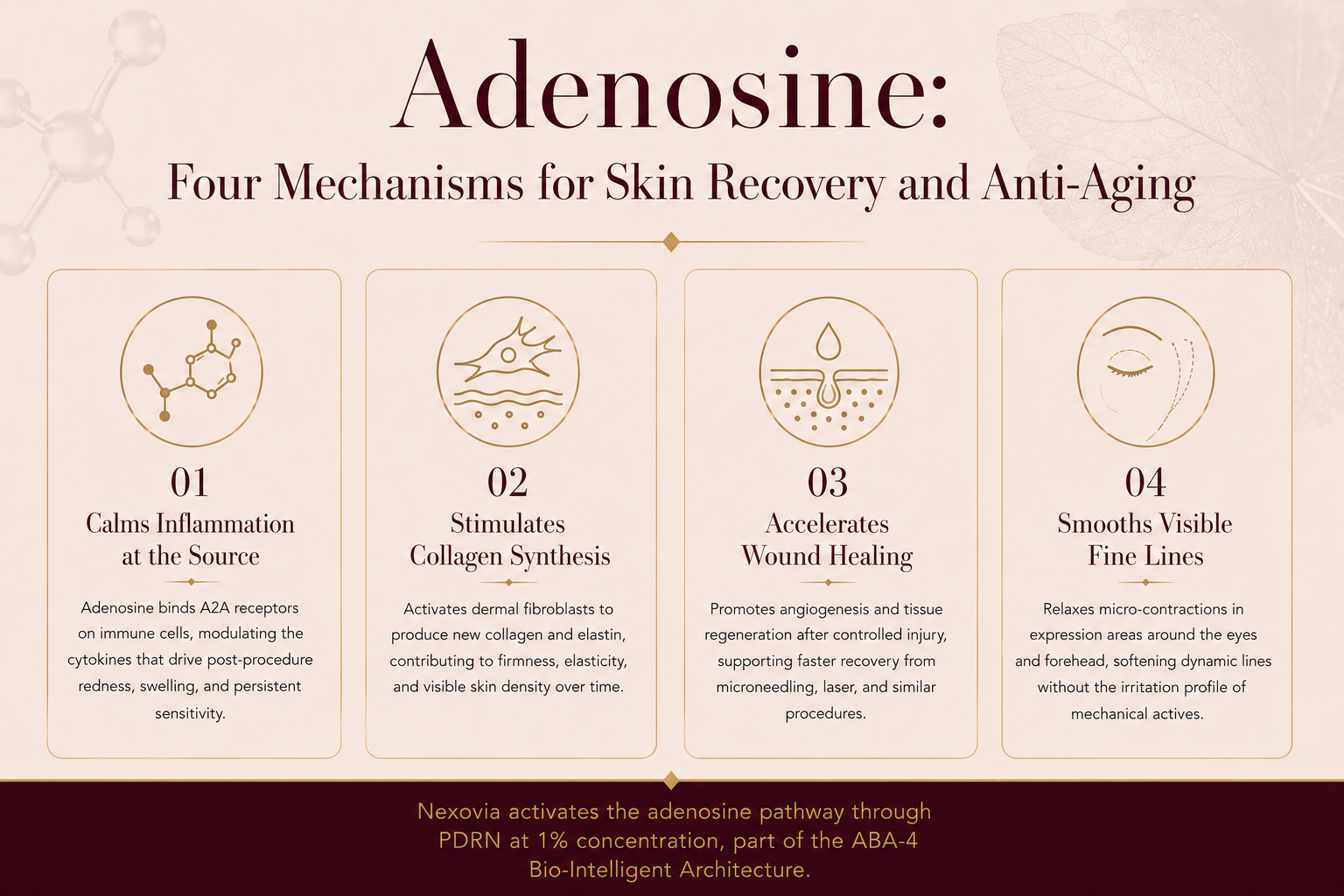
The cumulative effect of improved cellular function and enhanced structural protein synthesis contributes to a more youthful and revitalized appearance. The skin not only feels firmer but also reflects light more evenly, indicating a healthier and more refined surface.
Optimizing Adenosine Skincare Benefits
To fully harness the adenosine skincare benefits, formulation stability and effective delivery are paramount. As a relatively stable molecule, adenosine integrates well into various skincare vehicles, ensuring its efficacy upon topical application. Consistent use is key, allowing the ingredient to continuously engage with cellular receptors and support ongoing skin processes.
When selecting products, consider those that feature adenosine as a prominent active ingredient, particularly in serums or creams designed for targeted recovery or anti-aging. Its gentle nature makes it suitable for most skin types, including sensitive skin, and it pairs effectively with a wide range of other beneficial compounds.
Why Adenosine Works Best With Complementary Technologies
While adenosine offers substantial individual benefits, its power is significantly amplified when integrated into a sophisticated, multi-ingredient system. Nexovia’s ABA.4 Bio-Intelligent Architecture represents such a system, engineered to provide comprehensive cellular support and accelerate recovery. This proprietary complex features a synergistic blend of advanced bio-actives that enhance and extend the effects of adenosine.
- Peptide Matrix: A carefully curated selection of signaling and structural peptides works in concert with adenosine to further stimulate collagen and elastin production, while also supporting the skin’s natural repair mechanisms. This matrix enhances cellular communication, reinforcing the dermal scaffolding.
- Plant Exosomes (4 billion particles/mL): These nano-sized vesicles derived from botanical sources act as intelligent messengers, delivering a concentrated payload of growth factors, lipids, and proteins directly to skin cells. They augment adenosine’s regenerative capabilities by facilitating intercellular communication and promoting a more efficient healing response. Learn more about plant exosomes in skincare.
- PDRN (1%): Polynucleotides, derived from salmon DNA, are renowned for their ability to promote tissue repair and regeneration. PDRN works by stimulating cell growth and enhancing DNA repair processes, creating an optimal environment for adenosine to exert its restorative effects and improve overall skin vitality.
- NAD+ (1%): Nicotinamide adenine dinucleotide (NAD+) is a vital coenzyme central to cellular energy metabolism and DNA repair. By boosting cellular energy, NAD+ empowers cells to function more efficiently, allowing adenosine to perform its roles in inflammation modulation and structural protein synthesis with greater efficacy. Discover the role of NAD+ for skin.
This integrated approach ensures that the skin receives comprehensive support, addressing multiple facets of recovery and anti-aging simultaneously. The combined intelligence of ABA.4 Bio-Intelligent Architecture elevates the individual contributions of each ingredient, leading to more profound and lasting results.
Frequently Asked Questions
Is adenosine safe for sensitive skin?
Yes, adenosine is generally considered very safe and well-tolerated, even for sensitive skin types. It is a naturally occurring compound in the body, which minimizes the risk of irritation. Its anti-inflammatory properties can actually help to soothe and calm reactive skin, making it beneficial for those prone to sensitivity.
How long until I see adenosine skincare benefits?
Visible improvements from adenosine, such as reduced fine lines and enhanced skin smoothness, typically become apparent with consistent use over several weeks. For post-procedure recovery, its calming effects may be noticeable more quickly, contributing to a more comfortable healing process within days.
Can adenosine be combined with other active ingredients?
Adenosine is highly compatible with most other active ingredients, including retinoids, vitamin C, hyaluronic acid, and peptides. Its gentle nature and broad-spectrum benefits allow it to enhance the efficacy of a comprehensive skincare regimen without causing adverse interactions.
Is adenosine natural or synthetic?
Adenosine is a naturally occurring nucleoside found in all human cells. In skincare formulations, it can be derived through biotechnological processes, ensuring a high-purity, stable, and effective ingredient that mirrors the body's own compound.
What types of procedures benefit most from adenosine aftercare?
Adenosine is beneficial after a wide range of aesthetic procedures, particularly those that induce controlled injury or inflammation to stimulate regeneration. This includes microneedling, laser resurfacing, chemical peels, and other treatments where calming inflammation and supporting cellular repair are crucial for optimal outcomes.
This content is for informational purposes only and does not constitute medical advice. Always follow the specific aftercare instructions provided by your practitioner, as recommendations may vary based on your individual treatment and skin type.
Disclaimer: This article is for educational purposes only and is not medical advice. Always follow your provider's guidance after cosmetic procedures.