Journal
Why Does My Skin Feel Tight After a Procedure? Understanding Barrier Compromise
You had your procedure yesterday, and now your face feels like it is wrapped in plastic wrap that is one size too small. Every expression pulls, your skin feels parched no...
February 26, 2026 / 9 min read

You had your procedure yesterday, and now your face feels like it is wrapped in plastic wrap that is one size too small. Every expression pulls, your skin feels parched no matter how much water you drink, and you are wondering if something went wrong or if this uncomfortable tightness is just part of the process.
Take a breath. That tight, dry sensation is one of the most common experiences after aesthetic procedures, and in most cases, it is completely normal. Your skin is telling you something important: the protective barrier that usually keeps moisture in and irritants out has been temporarily compromised.
Understanding what is happening beneath the surface helps you respond appropriately and support your skin through this uncomfortable but temporary phase. This guide explains exactly why your skin feels tight after a procedure, what barrier compromise means for your recovery, and how to address the root cause rather than just masking the symptoms.
Your Skin Barrier: The Protective Shield You Never Think About
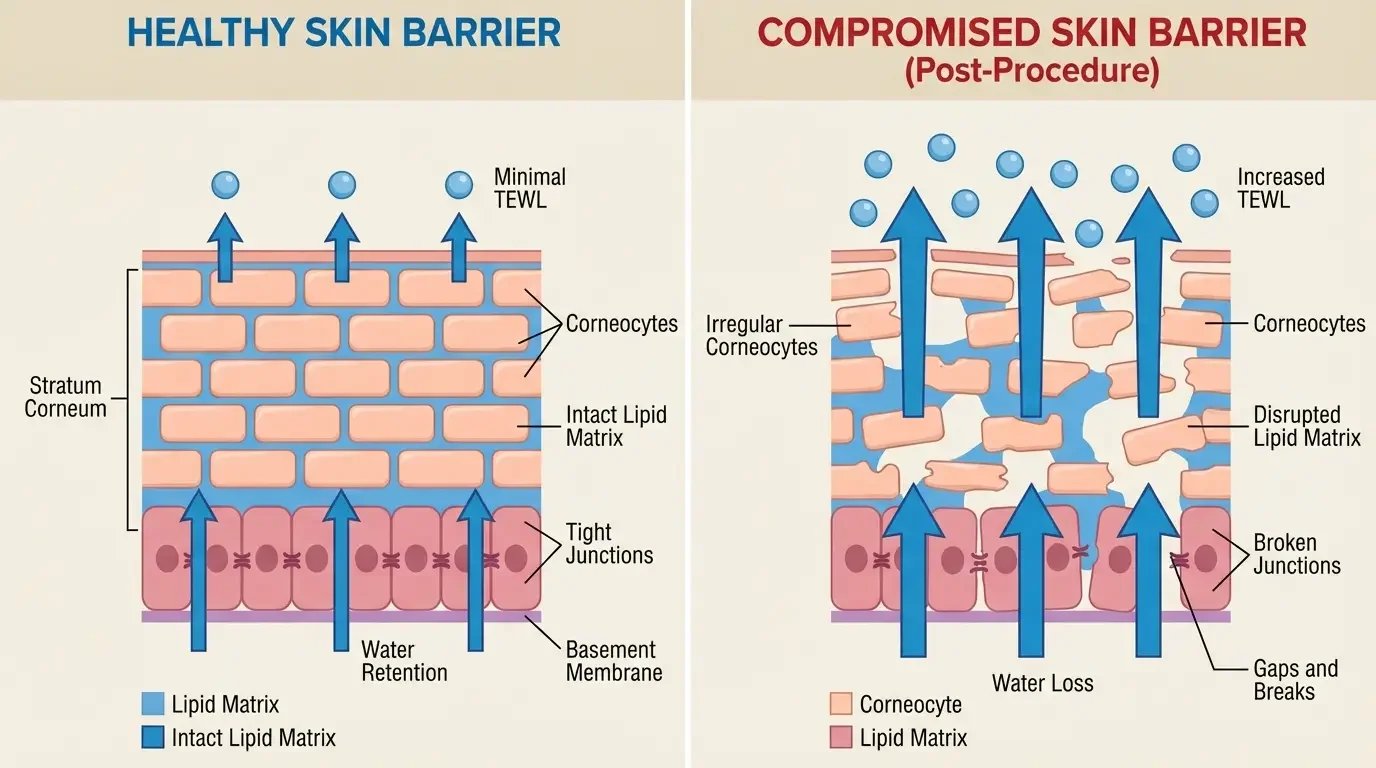
To understand post-procedure tightness, you need to understand your skin barrier. The outermost layer of your skin, called the stratum corneum, functions as a sophisticated protective shield. It consists of skin cells called corneocytes arranged like bricks, surrounded by a mortar of lipids including ceramides, cholesterol, and fatty acids.
When intact, this barrier performs two critical functions. It prevents excessive water loss from your body to the outside environment. And it blocks irritants, allergens, and pathogens from penetrating into deeper skin layers. A healthy barrier keeps water in and problems out.
This barrier is not passive. Your skin cells continuously produce the proteins and lipids needed to maintain its integrity. When everything functions normally, you do not notice your barrier at all. Your skin simply feels comfortable, hydrated, and resilient.
What Happens to Your Barrier During Aesthetic Procedures
Aesthetic procedures work by creating controlled disruption. Microneedling punctures the barrier thousands of times. Laser treatments deliver thermal energy that damages the outer layers. Chemical peels dissolve the bonds holding barrier cells together. IPL creates thermal injury to targeted structures.
This disruption is intentional and beneficial. The controlled damage triggers your body's healing response, stimulating collagen production, cellular renewal, and skin remodeling. Without this disruption, the improvements you seek would not occur.
However, this same disruption temporarily compromises your barrier function. The protective shield has been breached. The tight brick-and-mortar structure has been damaged. Until your skin repairs this damage, your barrier cannot perform its protective functions effectively.
Transepidermal Water Loss: The Real Reason Your Skin Feels Tight
With your barrier compromised, water escapes from your skin much more rapidly than normal. This phenomenon is called transepidermal water loss, or TEWL. Under normal conditions, your intact barrier limits TEWL to minimal levels. After procedures, TEWL can increase dramatically.
This accelerated water loss is the primary reason your skin feels tight. The outer layers become dehydrated as moisture escapes faster than it can be replaced from beneath. Dehydrated skin loses its flexibility and suppleness. It feels stiff, uncomfortable, and restricted.
The sensation is similar to what happens when you spend too long in a chlorinated pool or expose your skin to harsh winter wind. The barrier is stressed, water escapes, and tightness results. After aesthetic procedures, this effect is more pronounced because the barrier damage is more significant.
Understanding that tightness comes from water loss, not from something going wrong with your procedure, helps frame the appropriate response. Your skin is not damaged in a problematic way. It is temporarily unable to hold onto moisture while it repairs.
How Long Does Post-Procedure Tightness Last?
Knowing what to expect reduces anxiety and helps you gauge whether your recovery is on track.
Days 1 Through 3: Peak Tightness
The first few days typically bring the most intense tightness. Barrier compromise is at its maximum, TEWL is elevated, and your skin has not yet had time to begin meaningful repair. Tightness may feel constant during this phase, and you may notice your skin feels dry again shortly after applying moisturizer.
Days 4 Through 7: Gradual Improvement
As your skin begins rebuilding the barrier, tightness starts to ease. Moisturizer provides longer-lasting relief. The constant tight sensation transitions to intermittent tightness that comes and goes. Some patients experience light flaking during this phase as damaged outer cells shed.
Days 8 Through 14: Substantial Recovery
Most patients experience significant relief during this period. The barrier is well on its way to restoration, TEWL is decreasing, and skin feels increasingly normal. Residual tightness may occur occasionally, particularly in dry environments or after cleansing.
Beyond Day 14: Full Restoration
For most procedures, barrier function returns to normal within two weeks. Your skin should feel comfortable, hydrated, and resilient again. More intensive procedures like deep chemical peels or ablative laser treatments may extend this timeline. Your practitioner can provide specific expectations based on your treatment.
Why Drinking Water Alone Will Not Fix Post-Procedure Tightness
A common misconception. While staying hydrated is always beneficial for overall health, internal hydration cannot compensate for a compromised external barrier.
The water your skin needs must be retained in the outer layers where it maintains flexibility and comfort. When your barrier is compromised, water applied externally and water arriving from internal circulation both escape rapidly. Drinking more water simply means more water passes through without being retained.
Addressing post-procedure tightness requires restoring barrier function and providing external hydration support that stays in place. This means using appropriate skincare products rather than relying on internal hydration alone.
How to Relieve Tightness by Addressing the Root Cause
Temporary relief from tightness is easy to achieve with any moisturizer. Meaningful recovery requires supporting the barrier repair processes that will ultimately resolve the problem.
Support Barrier Repair at the Cellular Level
Your skin cells are working to rebuild the barrier, but this process requires significant resources and energy. Providing ingredients that support cellular repair accelerates barrier restoration.
Plant exosomes help coordinate the cellular communication necessary for efficient repair. PDRN activates tissue regeneration pathways through adenosine A2A receptor signaling. NAD+ fuels the cellular energy production that repair processes demand. Peptides signal cells to produce the structural proteins and lipids needed for barrier integrity.
These active ingredients do more than provide temporary relief. They support the underlying biological processes that will ultimately resolve tightness by restoring normal barrier function. Learn more about how each of these technologies works.
Provide Intensive Hydration
While supporting repair, you also need to compensate for increased TEWL by providing external hydration. Hyaluronic acid draws moisture into the outer skin layers, counteracting dehydration. Applying it to damp skin maximizes the hydrating effect.
However, humectants like hyaluronic acid need to be sealed in to prevent the moisture they attract from evaporating through the compromised barrier.
Protect Against Further Moisture Loss
Occlusive ingredients create a temporary physical barrier that reduces TEWL while your natural barrier repairs. Ingredients like squalane, shea butter, or petroleum-based products can help seal moisture in. Your practitioner may recommend specific occlusive products based on your procedure.
Avoiding hot water, harsh cleansers, and environmental stressors that increase TEWL helps preserve the moisture you do retain.
When Tightness May Indicate a Problem
While post-procedure tightness is normal, certain patterns warrant attention. Contact your practitioner if tightness is accompanied by increasing pain rather than gradual improvement, if you notice signs of infection such as pus, fever, or spreading redness, if tightness worsens significantly after the first few days rather than improving, or if you develop unusual symptoms not discussed in your aftercare instructions.
These situations are uncommon, but prompt communication with your practitioner ensures any issues are addressed quickly.
For a complete guide to recovery timelines and what to expect at each stage, see our post-procedure skincare guide.
Choosing Products That Support Barrier Recovery, Not Just Symptom Relief
Any moisturizer can temporarily mask tightness. The difference between adequate aftercare and excellent aftercare is whether your products address the underlying barrier compromise or simply sit on top of it.
Post-procedure formulations should support cellular communication so repair is coordinated, activate tissue regeneration pathways, provide cellular energy for the repair processes that rebuild the barrier, and deliver signaling molecules that direct structural protein production. Combining these mechanisms in a single formulation ensures the technologies work together rather than in isolation.
Nexovia Skin Serum was formulated on this principle. The ABA.4 Bio-Intelligent Architecture combines plant exosomes at 4 billion particles per milliliter, PDRN at 1%, NAD+ at 1%, and a peptide matrix with EGF-mimetics and matrikines. Each technology addresses a different aspect of barrier recovery, and together they support the full spectrum of repair processes that resolve post-procedure tightness at its source.
Frequently Asked Questions
How long will my skin feel tight after a procedure?
Most patients experience peak tightness during the first three days, with gradual improvement through day seven and substantial resolution by day fourteen. More intensive procedures may extend this timeline. Using barrier-supporting aftercare with ingredients like plant exosomes, PDRN, NAD+, and peptides can accelerate relief by supporting the cellular repair processes that restore barrier function.
Should I apply more moisturizer if my skin still feels tight?
Yes, you can apply moisturizer more frequently during the acute recovery phase. If your skin feels tight shortly after application, reapply as needed. The goal is to keep skin consistently hydrated while your barrier repairs. As barrier function improves, you will find that products provide longer-lasting relief. For best results, layer a hydrating serum underneath your moisturizer to address both the hydration deficit and the repair process simultaneously.
Is it normal for tightness to feel worse in the morning?
Yes. Overnight, your skin continues losing moisture while you sleep, and you are not replenishing with products. Applying a slightly heavier moisturizer before bed and rehydrating immediately upon waking can help. A recovery serum with multi-weight hyaluronic acid and barrier-repair actives applied before your evening moisturizer provides a longer window of hydration overnight.
Can I use facial oil to help with tightness?
Facial oils can help reduce TEWL by providing an occlusive layer. However, oils do not add water to your skin. For best results, apply hydrating products containing hyaluronic acid first, then seal with oil if desired. Check with your practitioner about which oils are appropriate for your specific procedure and recovery stage.
Why does my skin feel tight again right after washing my face?
Cleansing removes oils and some of the moisturizing products you have applied, temporarily increasing TEWL. Use a gentle, non-foaming cleanser with lukewarm water, and apply your hydrating serum and moisturizer immediately after patting dry. This minimizes the window of time when your compromised barrier is unprotected. As your barrier recovers over the first two weeks, this post-cleansing tightness will fade.
This content is for informational purposes only and does not constitute medical advice. Always follow the specific aftercare instructions provided by your practitioner, as recommendations may vary based on your individual treatment and skin type.


