Journal
Niacinamide After Microneedling: Benefits and Timing
Exploring the strategic integration of niacinamide into post-microneedling care reveals its capacity to support skin barrier integrity and mitigate common procedural effects, fostering optimal recovery.
August 4, 2026 / 7 min read
Microneedling procedures initiate a controlled wound healing response, stimulating collagen and elastin production for refined skin texture and tone. The period immediately following treatment is critical, as the skin's barrier is temporarily compromised, rendering it more receptive to topical applications.
Strategic aftercare is paramount to optimize results and support the skin's intrinsic recovery mechanisms. Among the array of post-procedure ingredients, niacinamide has garnered attention for its multifaceted benefits.

Understanding Niacinamide's Role in Skin Health
Niacinamide, or nicotinamide, is a water-soluble form of vitamin B3 essential for cellular function. Its versatility in skincare stems from its involvement in numerous biochemical reactions within the skin. It acts as a precursor to coenzymes NAD+ and NADH, which are crucial for cellular energy production and DNA repair.
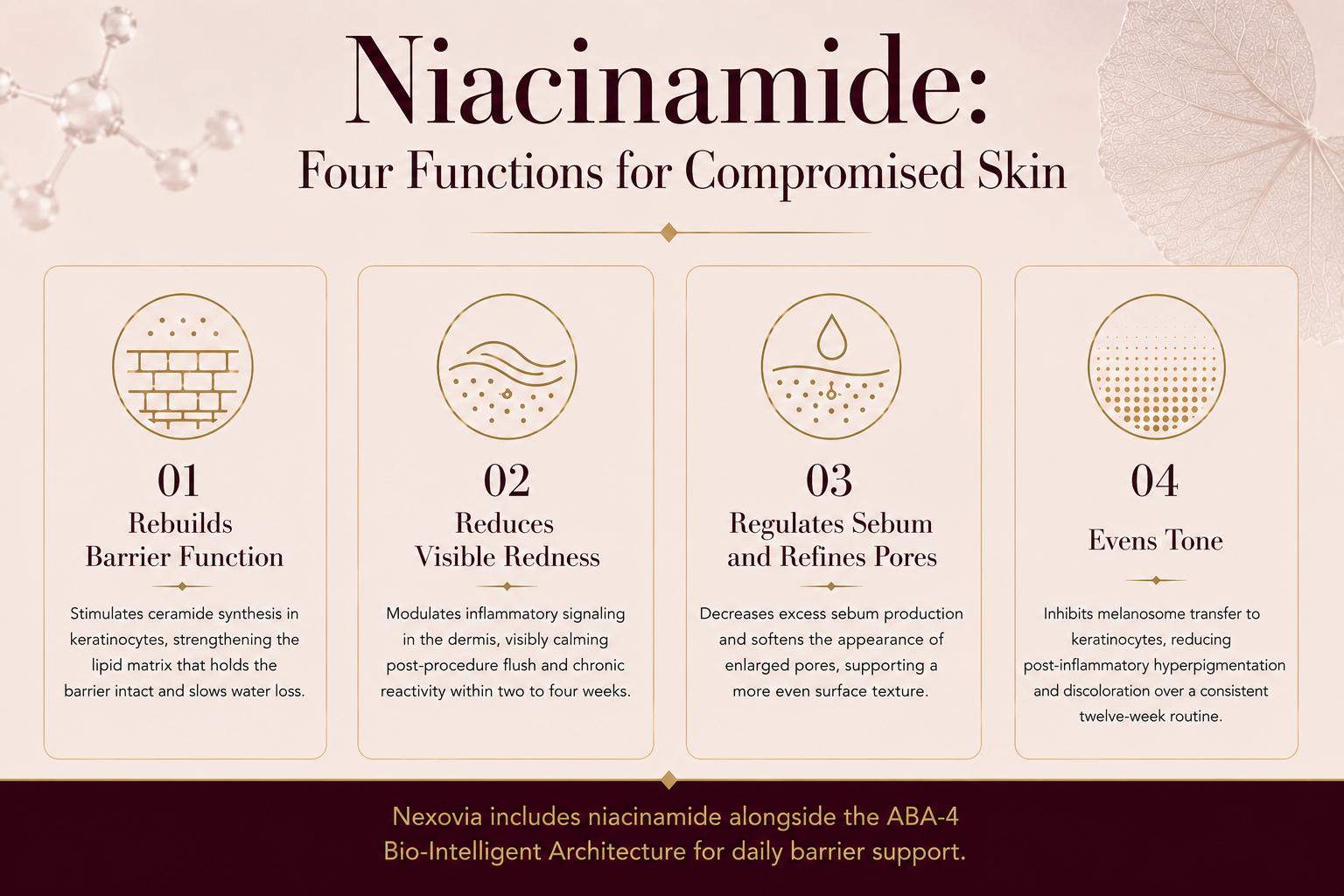
Beyond its foundational role in cellular metabolism, niacinamide exhibits properties that directly benefit skin integrity and resilience. It supports the synthesis of ceramides, which are vital lipid components of the skin barrier. A robust barrier is fundamental for retaining moisture and defending against environmental aggressors. Furthermore, niacinamide possesses antioxidant capabilities, helping to neutralize free radicals that contribute to cellular damage.
Its capacity to influence cellular communication pathways also allows it to regulate sebum production, minimize pore appearance, and improve overall skin tone and texture. These attributes position niacinamide as a valuable ingredient for maintaining balanced, healthy skin under normal circumstances, and particularly during periods of increased vulnerability such as post-procedure recovery.
Microneedling: A Catalyst for Skin Renewal
Microneedling is a minimally invasive procedure employing fine needles to create controlled micro-injuries in the skin's surface. These precise channels trigger the body's natural wound healing cascade, prompting the proliferation of fibroblasts and the deposition of new collagen and elastin fibers. The objective is to improve concerns such as fine lines, wrinkles, acne scars, and uneven skin texture.
The immediate post-procedure phase is characterized by temporary erythema, mild edema, and a sensation of tightness. The micro-channels created remain open for a brief period, allowing for enhanced penetration of topical agents. However, this increased permeability also signifies a compromised skin barrier, making the skin more susceptible to irritation and transepidermal water loss. Thoughtful product selection during this critical window is essential to facilitate optimal healing and prevent adverse reactions. For a comprehensive guide on navigating this period, refer to our resource on microneedling aftercare.
The Synergy: Niacinamide After Microneedling
Integrating niacinamide into a post-microneedling regimen capitalizes on its inherent properties to support the skin's recovery journey. Its ability to work with the skin's natural processes makes it a suitable candidate for post-procedure application, provided the concentration and formulation are appropriate for compromised skin.
Fortifying the Skin Barrier
Microneedling temporarily disrupts the skin barrier, leading to increased sensitivity and potential moisture loss. Niacinamide actively supports the synthesis of ceramides, free fatty acids, and cholesterol, which are the primary lipid components forming the skin barrier. By aiding in the reconstruction of these vital lipids, niacinamide helps to restore barrier integrity, reducing transepidermal water loss and enhancing the skin's natural defense mechanisms. This accelerates the return to a state of resilience, minimizing the duration of post-procedure vulnerability. Understanding what skin barrier compromise entails can further illuminate the importance of this function.
Mitigating Post-Procedure Redness
Erythema, or redness, is a common and expected outcome following microneedling due to the inflammatory response initiated by the procedure. Niacinamide possesses anti-inflammatory properties, enabling it to modulate cellular signaling pathways that contribute to redness and irritation. By calming the skin's response, it can help to reduce the intensity and duration of post-procedure erythema, contributing to a more comfortable and visually improved recovery. For more on managing this common effect, consider our article on how long redness lasts after microneedling.
Supporting Collagen Synthesis
While microneedling inherently stimulates collagen production, niacinamide may offer an adjunctive benefit. As a precursor to NAD+, it plays a role in cellular energy metabolism, which is essential for the complex processes involved in collagen synthesis and tissue repair. By ensuring optimal cellular function, niacinamide indirectly supports the skin's regenerative capacity, aligning with the primary goal of microneedling to enhance skin structure and firmness.
Optimal Timing and Application
The timing of niacinamide application post-microneedling is critical. Generally, it is advisable to introduce niacinamide after the initial 24-48 hours, once the immediate inflammatory response has begun to subside and the micro-channels have largely closed. Applying it too soon, especially in higher concentrations, may cause unnecessary irritation on acutely compromised skin.
When reintroducing, begin with a lower concentration, typically 2-5%, to assess skin tolerance. Look for formulations that are fragrance-free, non-comedogenic, and specifically designed for sensitive or post-procedure skin. A serum or lightweight moisturizer containing niacinamide can be gently pressed into the skin after cleansing. Gradually increase usage as the skin's barrier continues to heal. Always consult with your practitioner for personalized guidance on product reintroduction.
Addressing Concerns and Best Practices
While niacinamide is generally well-tolerated, some individuals may experience mild flushing or irritation, particularly with higher concentrations or if introduced too soon after a procedure. Patch testing a new product on a small, inconspicuous area of the skin before full facial application is a prudent step.
Ensure the skin is clean and dry before application. Layering niacinamide with other beneficial ingredients, such as hyaluronic acid or ceramides, can further enhance its effects and support hydration. Avoid combining it with highly acidic ingredients like L-ascorbic acid (pure vitamin C) in the same application, as this can potentially reduce efficacy or increase irritation, though modern formulations often mitigate this concern. For a comprehensive approach to product layering, consider exploring a post-procedure skincare routine guide.
Why Niacinamide Works Best With Complementary Technologies
While niacinamide offers substantial benefits for post-microneedling recovery, its efficacy is amplified when integrated into a regimen that incorporates advanced bio-intelligent technologies. The synergy between niacinamide and cutting-edge formulations creates an environment conducive to accelerated, profound skin rejuvenation.
Nexovia's ABA.4 Bio-Intelligent Architecture exemplifies this principle. Our formulation combines a sophisticated peptide matrix, plant exosomes (4 billion particles/mL), PDRN (1%), and NAD+ (1%). This intricate blend is engineered to work synergistically with the skin's natural healing processes.
The peptide matrix provides targeted signaling, promoting optimal cellular function and collagen synthesis. Plant exosomes deliver billions of bio-active particles, facilitating intercellular communication and enhancing repair mechanisms. PDRN (Polydeoxyribonucleotide) supports DNA repair and cellular regeneration, while NAD+ functions as a vital coenzyme for cellular energy production, critical for the intense demands of post-procedure healing. When combined with the barrier-strengthening and anti-inflammatory properties of niacinamide, this architecture ensures a comprehensive, multi-modal approach to recovery, optimizing results and reinforcing skin resilience after microneedling.
Frequently Asked Questions
Can I use niacinamide immediately after microneedling?
It is generally recommended to wait 24-48 hours after microneedling before reintroducing niacinamide. The skin is acutely sensitive and compromised immediately post-procedure, and introducing active ingredients too soon may cause irritation. Always follow your practitioner's specific post-care instructions.
What concentration of niacinamide is safe after microneedling?
Start with a lower concentration, typically 2-5%, to assess your skin's tolerance. Higher concentrations may be too potent for compromised skin. Look for gentle, fragrance-free formulations designed for sensitive skin.
What are the primary benefits of using niacinamide after microneedling?
Niacinamide helps to fortify the skin barrier by supporting ceramide synthesis, reduces post-procedure redness through its anti-inflammatory properties, and can indirectly support collagen production by enhancing cellular energy metabolism. These benefits contribute to a more efficient and comfortable recovery.
Can niacinamide cause irritation on post-microneedling skin?
While generally well-tolerated, some individuals may experience mild flushing or irritation, especially if using higher concentrations or applying too soon after the procedure. Always patch test and introduce gradually. Discontinue use if significant irritation occurs.
What other ingredients pair well with niacinamide after microneedling?
Niacinamide pairs effectively with hydrating ingredients like hyaluronic acid and barrier-supporting components such as ceramides. It also complements growth factors, peptides, and exosomes, which are often found in advanced post-procedure recovery formulations to enhance cellular repair and regeneration.
This content is for informational purposes only and does not constitute medical advice. Always follow the specific aftercare instructions provided by your practitioner, as recommendations may vary based on your individual treatment and skin type.
Disclaimer: This article is for educational purposes only and is not medical advice. Always follow your provider's guidance after cosmetic procedures.