Journal
Can I Use Vitamin C After Microneedling? Timing, Types, and Safety
Your microneedling session is behind you, your skin is recovering, and now you are eyeing that vitamin C serum on your shelf. It is probably one of your most trusted products,...
April 28, 2026 / 9 min read

Your microneedling session is behind you, your skin is recovering, and now you are eyeing that vitamin C serum on your shelf. It is probably one of your most trusted products, the one you credit for your brightening and anti-aging results. So the instinct to reach for it makes perfect sense. Vitamin C supports collagen production, protects against environmental damage, and brightens skin tone, all of which sound exactly like what post-microneedling skin would benefit from.
But here is where it gets complicated. Not all vitamin C is created equal when it comes to freshly treated skin, and timing matters significantly. Using the wrong form too soon after microneedling can cause stinging, burning, prolonged redness, and irritation that slows your recovery rather than supporting it. Understanding which types of vitamin C are safe, when to reintroduce them, and how to do so without compromising your results lets you get the benefits of this powerhouse ingredient without the risks.
Why Vitamin C Becomes Complicated After Microneedling
Vitamin C is a potent active ingredient, and that potency is precisely what makes it both valuable and potentially problematic on post-microneedling skin. During treatment, thousands of micro-channels are created in your epidermis and upper dermis. These channels remain open for several hours, and even after they begin closing, your skin barrier remains compromised for days.
The most popular and well-researched form of vitamin C, L-ascorbic acid, has a naturally low pH, typically between 2.5 and 3.5. This acidity is part of what makes it effective on intact skin, as it needs a low pH environment to penetrate and remain stable. However, when applied to barrier-compromised skin with open micro-channels, that same acidity can penetrate deeper than intended and cause significant irritation. The result is often a burning or stinging sensation, increased redness, and in some cases, a rash or prolonged inflammatory response that delays healing.
This does not mean vitamin C is off the table entirely. It means you need to understand the difference between forms, respect the timing, and reintroduce it strategically.
The Different Forms of Vitamin C and Their Impact on Healing Skin
Not every vitamin C product carries the same risk after microneedling. The key distinction is between pure L-ascorbic acid and its gentler derivatives.
L-Ascorbic Acid
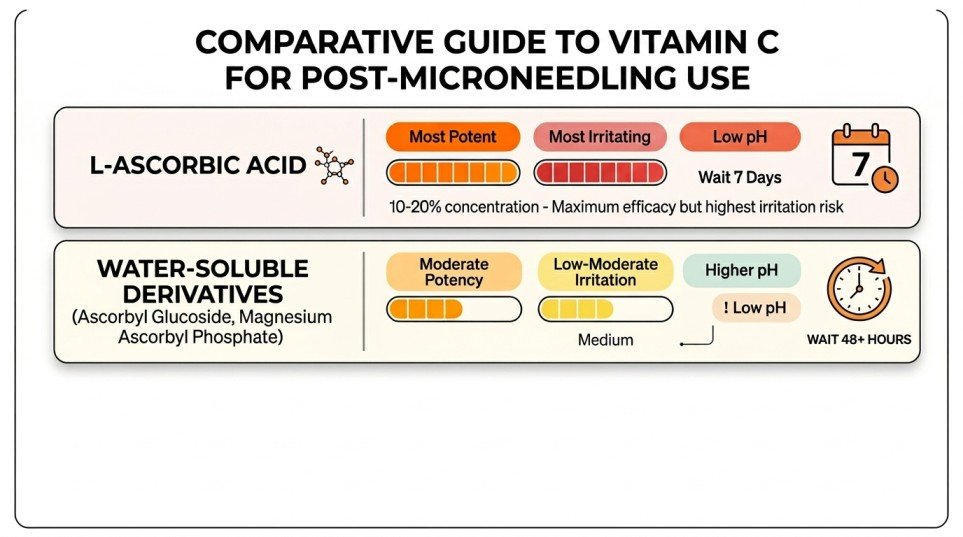
This is the most potent and most studied form of vitamin C. It delivers powerful antioxidant protection and collagen-stimulating benefits, but its low pH makes it the most irritating option for post-procedure skin. L-ascorbic acid serums, particularly those at concentrations of 10 to 20 percent, should be avoided for at least 48 to 72 hours after microneedling, and many practitioners recommend waiting a full week. If your skin tends toward sensitivity, erring on the longer end of that timeline is the safer choice.
Ascorbyl Glucoside and Magnesium Ascorbyl Phosphate
These water-soluble vitamin C derivatives are more stable and have a higher, gentler pH than L-ascorbic acid. They convert to active vitamin C within the skin and deliver brightening and antioxidant benefits with significantly less irritation potential. These forms are generally better tolerated closer to treatment, though waiting at least 48 hours remains a reasonable precaution.
Ascorbyl Tetraisopalmitate and Other Lipid-Soluble Forms
Lipid-soluble derivatives like ascorbyl tetraisopalmitate are among the gentlest forms of vitamin C. They are less likely to cause stinging or irritation because they do not rely on a low pH for penetration. While they may not deliver the same intensity of results as L-ascorbic acid on healthy skin, they offer a more comfortable reintroduction path for post-microneedling use.
When to Safely Reintroduce Vitamin C
The right timing for reintroducing vitamin C depends on the form you use, the intensity of your microneedling treatment, and your individual skin sensitivity. The following timeline provides general guidance, though your practitioner's specific instructions should always take priority.
During the first 24 hours, avoid all active ingredients including every form of vitamin C. Your micro-channels are still closing, your barrier is at its most vulnerable, and your skin needs only gentle, soothing, hydrating products during this critical window.
Between 24 and 72 hours, your micro-channels have largely closed and your barrier is beginning to rebuild. If your practitioner approves, gentler vitamin C derivatives like ascorbyl glucoside or magnesium ascorbyl phosphate may be cautiously reintroduced during this phase. However, if your skin still feels sensitive, stings when you apply products, or appears visibly irritated, wait longer.
After 72 hours to one week, most patients can begin reintroducing vitamin C, including L-ascorbic acid formulations, provided their skin shows clear signs of recovery: no visible redness, no stinging with product application, and no tightness or sensitivity. Start with a lower concentration than you normally use and apply every other day initially to gauge your skin's response before returning to daily use.
How to Reintroduce Vitamin C Without Irritation
When the time comes to bring vitamin C back into your routine, a gradual approach protects your results and minimizes the risk of a setback.
Start with a lower concentration. If you typically use a 20 percent L-ascorbic acid serum, consider starting with a 10 percent formula for the first few applications after microneedling. Your skin can work back up to its regular concentration once it has fully stabilized.
Apply to fully dry skin. Applying vitamin C to damp skin increases absorption and can intensify the stinging sensation on recovering skin. Allow your face to dry completely after cleansing before applying your vitamin C product.
Monitor for reactions. Pay close attention to how your skin responds during the first two to three applications. Mild tingling that subsides within a minute is generally acceptable. Persistent stinging, burning, or visible redness that worsens after application signals that your skin needs more time before vitamin C is reintroduced.
Layer strategically. Apply your vitamin C serum before heavier products like moisturizers and sunscreen. This layering order is standard practice, but it becomes especially important during recovery because it allows you to observe your skin's reaction to the vitamin C before sealing it with other products.
What to Use Instead During the Waiting Period
The days between your microneedling treatment and vitamin C reintroduction are not wasted time. They are an opportunity to support your skin with ingredients specifically designed for the demands of post-procedure recovery.
Ingredients like plant exosomes, PDRN, NAD+, and peptides address the core needs of healing skin, including inflammation modulation, tissue regeneration, cellular energy support, and extracellular matrix rebuilding, without the pH-related irritation risk that comes with active vitamin C. Hyaluronic acid provides essential hydration. Niacinamide supports barrier repair and offers brightening benefits through a completely different, non-acidic mechanism. Centella Asiatica and panthenol soothe and calm without overwhelming sensitized tissue.
During days one through seven, apply Nexovia Skin Serum at 1mL in the morning and 1mL at night. The ABA.4 Aesthetic Bio-Amplifier architecture delivers plant exosomes to modulate inflammation, PDRN to activate tissue regeneration pathways, NAD+ to fuel cellular repair, and a peptide matrix to rebuild your skin's structural framework. Follow with a bland moisturizer and broad-spectrum SPF 50 or higher during the day.
During days eight through fourteen, apply Nexovia at 0.5mL in the morning and 0.5mL at night as your skin completes its restoration phase. This is typically the window where vitamin C can be gradually reintroduced alongside your aftercare.
After day fourteen, continue applying Nexovia once daily until the 30mL bottle is finished to maintain results and support ongoing skin health.
Choosing Aftercare That Delivers Without the Irritation Risk
The waiting period before vitamin C reintroduction does not mean your skin goes without powerful active support. Purpose-built post-procedure formulations deliver collagen-stimulating, brightening, and regenerative benefits through ingredients that are specifically appropriate for barrier-compromised skin.
This is exactly why Nexovia's Skin Serum was formulated with its ABA.4 Aesthetic Bio-Amplifier architecture. The formula combines plant exosomes at 4 billion particles per milliliter, PDRN at 1% concentration, NAD+ at 1% concentration, and a peptide matrix including growth factors. This bio-intelligent aftercare addresses recovery from multiple angles simultaneously, designed to soothe instantly, support barrier recovery, and amplify your final results.
Made in South Korea and developed specifically for the post-procedure experience, Nexovia represents the next generation of aftercare formulated to work with your skin's natural healing processes.
Nexovia Skin Serum launches in June 2026. Register for early access to be among the first to experience bio-intelligent aftercare designed specifically for post-procedure recovery.
Frequently Asked Questions
Can my practitioner apply vitamin C during microneedling?
Some practitioners do apply vitamin C serums during the microneedling procedure itself to take advantage of the enhanced penetration through open micro-channels. When this is done in a clinical setting, the practitioner selects the appropriate form and concentration for direct application. This is different from applying your own vitamin C serum at home after treatment. If your practitioner applied vitamin C during your session, follow their specific aftercare instructions regarding when to reintroduce it at home.
I accidentally used vitamin C right after microneedling. What should I do?
If you applied vitamin C too soon and experienced stinging or irritation, rinse your face gently with lukewarm water to remove as much of the product as possible. Apply a soothing, hydrating product and avoid all active ingredients for the next several days. A single accidental application is unlikely to cause lasting damage, but your skin may appear more red or feel more sensitive for a day or two. If irritation persists or worsens, contact your practitioner.
Is vitamin C serum or vitamin C moisturizer better after microneedling?
A vitamin C moisturizer typically contains a lower concentration of vitamin C within a hydrating, buffered base, which can make it gentler on recovering skin than a concentrated serum. If you are cautious about reintroducing vitamin C, starting with a moisturizer that contains a gentle vitamin C derivative is a reasonable middle ground. Once your skin tolerates that well, you can transition back to your regular serum.
Can I use vitamin C and niacinamide together after microneedling?
Despite an outdated concern that these ingredients should not be combined, vitamin C and niacinamide are compatible in modern formulations. However, after microneedling, the question is less about combining them and more about when each is appropriate. Niacinamide is gentle enough for use during the early recovery period, while vitamin C, particularly L-ascorbic acid, should wait until your barrier has recovered. Once you are past the initial healing phase, using both in your routine is perfectly fine.
Will skipping vitamin C for a week after microneedling affect my results?
A one to two week pause on vitamin C will not undo the cumulative benefits you have built from consistent use. Your skin retains the collagen-supportive and antioxidant effects of ongoing vitamin C application, and a brief pause during recovery is far preferable to causing irritation that prolongs your healing timeline. Think of it as a strategic pause that protects your microneedling investment while your skin heals.
This content is for informational purposes only and does not constitute medical advice. Always follow the specific aftercare instructions provided by your practitioner, as recommendations may vary based on your individual treatment and skin type.


