Journal
How to Reduce Redness After Laser Treatment: Proven Strategies
You scheduled your laser treatment knowing there would be some downtime, but now that you are staring at your flushed, rosy face in the mirror, you are wondering if it will...
March 17, 2026 / 8 min read

You scheduled your laser treatment knowing there would be some downtime, but now that you are staring at your flushed, rosy face in the mirror, you are wondering if it will ever return to normal. The redness seems more intense than you expected, and every glance at your reflection brings the same question: how can I make this fade faster?
This concern brings thousands of patients to search for answers every day. The good news is that post-laser redness is completely normal and temporary. It signals that your body's healing mechanisms are actively working to regenerate your skin. The even better news is that there are proven strategies to support this process and help visible redness resolve more quickly.
This guide shares actionable strategies you can implement immediately to calm your skin and reduce visible redness after laser treatment. For a full recovery routine covering every phase of healing, see our laser skin resurfacing aftercare guide.
Why Redness Happens After Laser Treatment
Before diving into solutions, understanding the cause helps you approach redness reduction more effectively. Laser treatments work by delivering concentrated light energy into your skin. This energy creates controlled thermal injury that triggers your body's wound healing response, ultimately producing new collagen and healthier skin tissue.
The redness you see is a visible sign of this healing cascade in action. When your skin detects injury, it responds by dilating blood vessels in the affected area. This vasodilation increases blood flow, bringing oxygen, nutrients, immune cells, and growth factors needed for repair. The increased blood volume near the skin's surface creates the characteristic flushed appearance.
Additionally, the inflammatory response releases signaling molecules that further contribute to redness and warmth. This inflammation is not a complication but a necessary part of healing. Without it, the collagen stimulation and skin renewal you are seeking would not occur.
The goal of redness reduction strategies is not to shut down this healing response entirely but to support it efficiently so your skin moves through the inflammatory phase as quickly as possible while minimizing unnecessary prolongation of visible symptoms.
Use Ingredients That Modulate Inflammation
The most effective strategy for reducing redness is applying ingredients that help regulate the inflammatory response. Rather than suppressing inflammation entirely, which could impair healing, the right ingredients help your skin manage inflammation efficiently and transition out of this phase faster.
Plant exosomes derived from botanicals like Centella Asiatica and Panax Ginseng are particularly effective. These microscopic lipid vesicles carry bioactive compounds that modulate inflammatory signaling at the cellular level. They support intercellular communication, helping your skin cells coordinate their response more efficiently.
PDRN, formulated as Sodium DNA, activates adenosine A2A receptors that play a key role in regulating inflammation while simultaneously supporting tissue regeneration. This dual action helps calm redness while accelerating the repair process.
Niacinamide helps strengthen the skin barrier and has well-documented anti-inflammatory properties. Centella Asiatica extract, also known as Cica, has been used for centuries to soothe irritated skin and support wound healing.
For a detailed breakdown of which ingredients support healing and which to avoid, see our guide on what to put on your face after microneedling. The ingredient principles apply across all post-procedure recovery.
Keep Your Skin Consistently Hydrated
Dehydrated skin appears more red and irritated than well-hydrated skin. After laser treatment, your barrier is compromised and transepidermal water loss increases significantly. This dehydration exacerbates the appearance of redness and can prolong recovery.
Hyaluronic acid is essential for post-laser hydration. This humectant draws moisture into the skin, plumping cells and creating a more even, less inflamed appearance. Apply hydrating products frequently throughout the day, never allowing your skin to feel tight or dry.
Maintaining moisture also supports the healing process itself. Skin cells function optimally in a hydrated environment, and adequate moisture prevents the formation of crusts or scabs that can lead to scarring and prolonged redness.
Avoid Heat and Activities That Increase Blood Flow
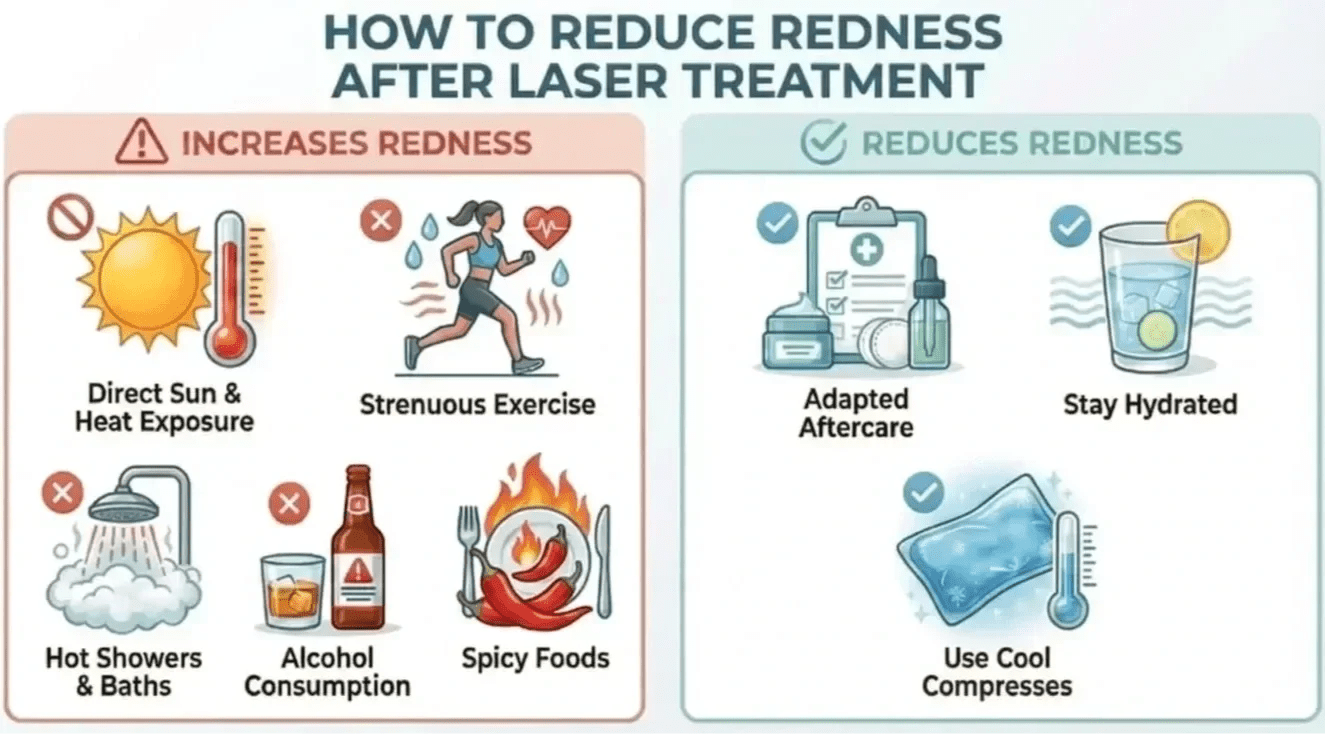
Anything that raises your body temperature or increases blood flow to your face will temporarily intensify redness. During the first week of recovery, avoid hot showers and baths, saunas and steam rooms, intense exercise that causes sweating, spicy foods and hot beverages, and alcohol consumption.
These activities cause additional vasodilation, bringing more blood to your already-flushed skin. While the effect is temporary, repeatedly triggering increased blood flow can prolong the overall duration of visible redness.
Opt for lukewarm water when cleansing, keep your environment cool, and postpone vigorous workouts until your practitioner approves.
Protect Your Skin From Sun Exposure
UV exposure is one of the most significant threats to healing skin and can dramatically worsen and prolong redness. Sun exposure triggers additional inflammation, can cause permanent hyperpigmentation, and stresses skin that is already working hard to repair itself.
Once your practitioner approves sun protection products, apply broad-spectrum SPF 50 or higher every morning and reapply every two hours if outdoors. Physical sunscreens containing zinc oxide or titanium dioxide are often better tolerated by sensitive post-laser skin than chemical formulations.
Beyond sunscreen, practice sun avoidance during the peak UV hours of 10am to 4pm. Wear wide-brimmed hats when outside. Stay in shade whenever possible. This vigilance should continue for at least four to six weeks after treatment, even after visible redness has resolved.
Sleep With Your Head Elevated
Fluid accumulation contributes to swelling and can intensify the appearance of redness, particularly in the morning. Sleeping with your head slightly elevated on an extra pillow helps fluid drain away from your face overnight, reducing puffiness and the associated flushed appearance.
This strategy is most helpful during the first three to five days after treatment when swelling is most pronounced. Side sleeping can also cause asymmetric swelling, so try to sleep on your back during early recovery.
Be Patient With Makeup Coverage
While the temptation to cover redness with makeup is strong, applying cosmetics too early can irritate healing skin and potentially prolong recovery. Most practitioners recommend waiting at least 24 to 48 hours for lighter treatments and up to seven to ten days for more intensive laser procedures.
When you do resume makeup, choose mineral-based, fragrance-free formulas that are less likely to irritate sensitive skin. Apply with clean tools using a gentle touch. Remove makeup thoroughly but gently at the end of the day.
Avoid Irritating Products and Ingredients
Your regular skincare routine likely contains ingredients that are too harsh for post-laser skin. Retinoids, alpha hydroxy acids, beta hydroxy acids, vitamin C serums, benzoyl peroxide, and fragranced products can all trigger additional inflammation and prolong redness.
Simplify your routine to gentle cleansing, hydrating and healing serums, moisturizer, and sun protection. Resist the urge to add products in an attempt to speed healing. More is not better when your skin is compromised. Wait until your practitioner specifically approves before reintroducing active ingredients.
When to Be Concerned About Redness After Laser Treatment
While redness is normal, certain patterns may indicate a problem requiring attention. Contact your practitioner if redness intensifies rather than gradually improving after the first few days, if you notice spreading redness beyond the treated area, if redness is accompanied by increasing pain, pus, fever, or other signs of infection, or if redness persists without any improvement beyond the expected timeline for your specific treatment.
Your practitioner can assess whether your redness falls within normal parameters or requires intervention.
If your redness is specifically from microneedling rather than laser, see our dedicated guide on how long redness lasts after microneedling for that specific timeline.
Wondering if your recovery is progressing normally?
Frequently Asked Questions
How long does redness typically last after laser treatment?
Redness duration varies based on treatment type and intensity. Non-ablative treatments may cause redness lasting three to seven days. Ablative treatments can result in redness persisting two to eight weeks, gradually fading from intense red to pink to normal skin tone. Your practitioner can provide specific expectations based on your treatment.
Can I use ice to reduce redness after laser treatment?
Cold compresses may provide temporary relief, but applying ice directly to freshly treated skin is generally not recommended as it can be too harsh on compromised tissue. If your practitioner approves, use a clean, cool compress wrapped in soft cloth applied gently for short periods. Focus primarily on anti-inflammatory skincare ingredients for lasting redness reduction.
Will the redness turn into hyperpigmentation?
Redness itself does not cause hyperpigmentation, but sun exposure during recovery can trigger pigmentation changes in healing skin. This is why strict sun protection is essential. If you notice darkening rather than fading of color, contact your practitioner for guidance. Using products with niacinamide can help manage pigmentation concerns.
Is it normal for redness to look worse in the morning?
Yes, many patients notice more pronounced redness and puffiness in the morning due to fluid accumulation overnight. Sleeping with your head elevated can minimize this effect. The redness typically improves throughout the day as you move around and fluid redistributes.
Can certain foods or drinks affect post-laser redness?
Yes, foods and beverages that cause vasodilation can temporarily intensify redness. Spicy foods, hot drinks, and alcohol all increase blood flow to the face. During recovery, opt for cool or room-temperature beverages and mild foods to avoid triggering unnecessary flushing.
What is the fastest way to reduce redness after laser treatment?
The fastest approach is combining multiple strategies: use a post-procedure serum that addresses inflammation, barrier damage, and tissue repair simultaneously, stay hydrated, protect from UV, and avoid heat and irritating products. Nexovia Skin Serum was formulated specifically for this, combining plant exosomes, PDRN, NAD+, and a peptide matrix in its ABA.4 architecture to calm redness at the source while supporting the healing process.
This content is for informational purposes only and does not constitute medical advice. Always follow the specific aftercare instructions provided by your practitioner, as recommendations may vary based on your individual treatment and skin type.


