Aftercare for Sensitive Skin Types: Adjusting Your Recovery for Reactive Skin
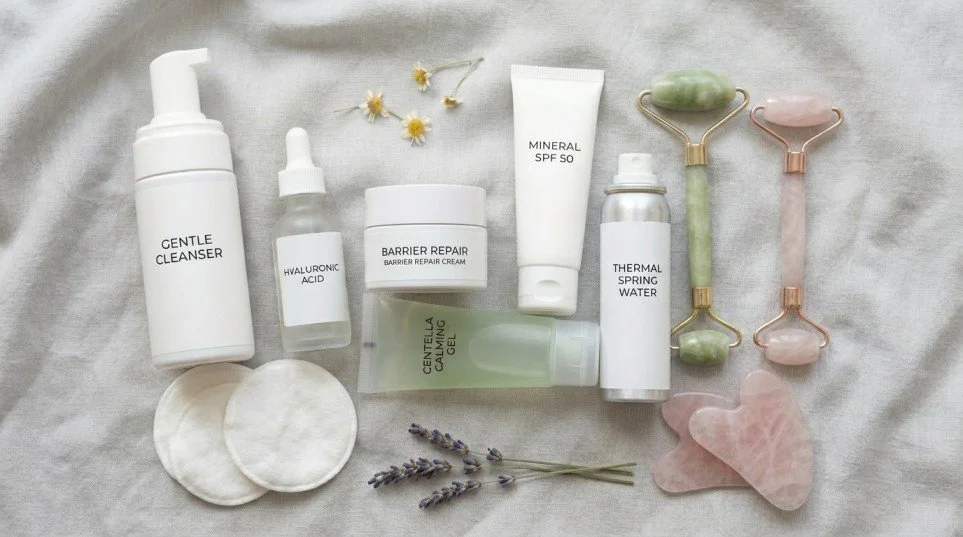
Opens by acknowledging that standard aftercare instructions assume a relatively resilient skin type, but not everyone's skin fits that profile. If your skin stings when you try a new product, flushes easily in response to temperature changes, or has a history of conditions like rosacea, eczema, or contact dermatitis, you already know that your barrier does not respond the same way as someone with a more tolerant complexion. After an aesthetic procedure like microneedling, laser resurfacing, a chemical peel, IPL, or RF microneedling, sensitive and reactive skin faces a double challenge: the barrier that was already compromised before the treatment is now intentionally disrupted further. This guide explains why sensitive skin requires adjusted aftercare, which ingredients to lean on, which to avoid entirely, and how to navigate recovery with a lower threshold for irritation.
What Makes Skin Sensitive or Reactive
Explains the difference between temporarily sensitized skin (which everyone experiences after a procedure) and inherently sensitive or reactive skin (which is a baseline characteristic). Sensitive skin is typically defined by a thinner or more permeable stratum corneum, lower lipid content in the barrier, heightened nerve-ending responsiveness, and a tendency toward inflammatory overreaction. Conditions like rosacea involve disrupted tight junctions and altered sebum and lipid composition, leading to increased transepidermal water loss and heightened reactivity to external triggers. Eczema-prone skin often has reduced ceramide levels and filaggrin protein deficiencies, making the barrier structurally weaker. When someone with any of these baseline vulnerabilities undergoes a procedure that intentionally disrupts the barrier further, the resulting sensitivity is amplified compared to what a person with resilient skin would experience. Recovery takes longer, reactions are more intense, and the margin for error with product choices is much smaller.
Communicating With Your Practitioner Before the Procedure
Emphasizes that aftercare for sensitive skin actually begins before the treatment. Patients should inform their practitioner about their history of sensitivity, any diagnosed conditions like rosacea or eczema, specific products or ingredients that have caused reactions in the past, and current medications including topical prescriptions. This information allows the practitioner to adjust treatment settings, using shorter needle depths during microneedling, lower energy settings during laser, or milder peel concentrations, to reduce the intensity of the controlled injury. A less aggressive treatment with proper aftercare often delivers better outcomes for sensitive skin than an aggressive treatment followed by weeks of inflammatory complications.
The Minimalist Aftercare Approach
Explains that for sensitive and reactive skin, fewer products are almost always better during recovery. While someone with resilient skin might comfortably layer a serum, moisturizer, and treatment product within the first few days, sensitive skin benefits from stripping the routine down to the absolute essentials. The core recovery routine for reactive skin should include only three to four products: a gentle, fragrance-free, non-foaming cleanser used with lukewarm water and clean hands, a hydrating and barrier-supportive serum or moisturizer, a mineral sunscreen with SPF 50 or higher using zinc oxide or titanium dioxide, and nothing else for the first seven to ten days unless specifically instructed by the practitioner. The temptation to add soothing extras, a mist here, a mask there, should be resisted. Every additional product introduces additional ingredients, and each ingredient carries a potential for reaction on freshly disrupted, already-reactive skin.
Ingredients That Support Sensitive Skin Recovery
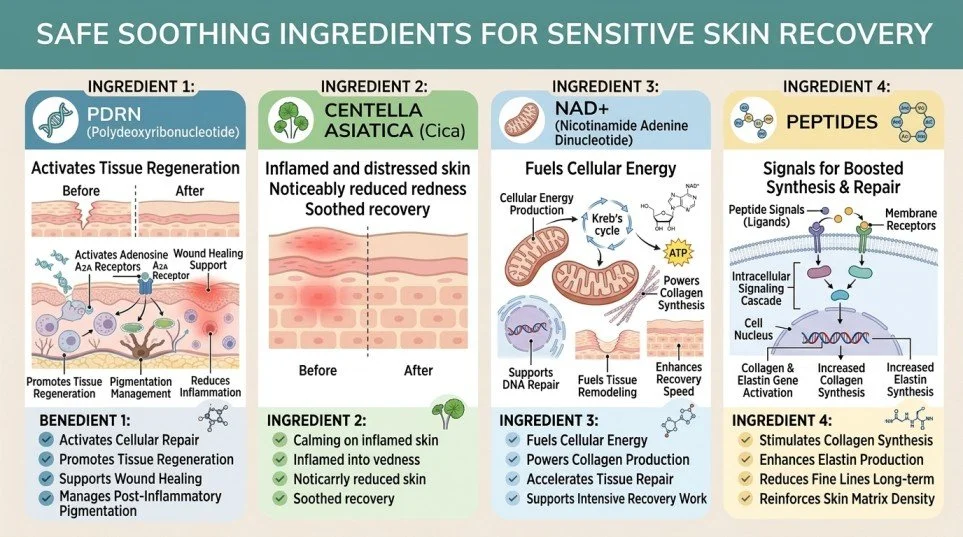
While the product count should be minimal, the ingredients within those products matter enormously. Certain ingredients have demonstrated strong safety and efficacy profiles specifically for sensitive and post-procedure skin. PDRN (Polydeoxyribonucleotide) is a bioactive compound derived from DNA fragments that supports skin regeneration and repair. Topical PDRN helps stimulate cellular renewal, enhance tissue healing, and improve overall skin recovery without triggering inflammation. It is considered one of the safest and most effective post-procedure ingredients for all skin types. Centella asiatica, also known as cica, contains active compounds including madecassoside and asiaticoside that reduce inflammation, support collagen synthesis, and accelerate wound healing. It has a long history of use in both traditional medicine and modern dermatological formulations for irritated and sensitive skin. NAD⁺ (nicotinamide adenine dinucleotide) is a powerful coenzyme that plays a central role in cellular energy production and repair. In skincare, it supports skin regeneration, enhances cellular turnover, and helps improve resilience in compromised or post-procedure skin. Its ability to promote recovery at the cellular level makes it especially beneficial for sensitive or stressed skin without provoking irritation. Peptides are short chains of amino acids that act as signaling molecules to support skin repair and regeneration. They help stimulate collagen production, strengthen the skin barrier, and reduce inflammation, making them highly suitable for post-procedure care. Niacinamide (vitamin B3) interrupts the inflammatory cascade that leads to redness and irritation while strengthening the barrier by supporting ceramide production. At concentrations of 4 to 5 percent, it is typically well tolerated by sensitive skin, though higher concentrations may cause irritation in some individuals.
Ingredients to Avoid or Delay
For sensitive skin recovering from a procedure, the list of ingredients to avoid is longer and the avoidance period is extended compared to standard aftercare. Retinoids, including retinol, tretinoin, and adapalene, should be avoided for a minimum of two weeks, and for sensitive skin it is often safer to wait three to four weeks or until the practitioner confirms the barrier has fully recovered. Exfoliating acids including glycolic acid, salicylic acid, lactic acid, and any AHA or BHA should be avoided for the same extended period. Vitamin C in its L-ascorbic acid form has a low pH that can sting and irritate compromised sensitive skin; gentler derivatives or complete avoidance for two to three weeks is recommended. Fragrances and essential oils, even those marketed as natural or calming such as lavender or tea tree oil, can trigger inflammation in reactive skin and should be avoided entirely during recovery. Alcohol-based products strip moisture and disrupt the already-compromised lipid barrier. Physical exfoliants, including scrubs, brushes, and textured cloths, must be avoided until healing is fully complete.
Adjusting the Recovery Timeline
Standard aftercare guides often suggest that most healing is complete within five to seven days after microneedling or seven to fourteen days after laser. For sensitive skin, these timelines should be extended by approximately 30 to 50 percent. Surface healing may take seven to ten days after microneedling and up to three weeks after laser resurfacing. Full barrier normalization, meaning the skin can comfortably tolerate its pre-procedure routine without stinging or flushing, may take three to six weeks for sensitive skin types. This does not mean something went wrong. It means the skin is following its own pace, and respecting that pace produces better outcomes than rushing to reintroduce active products before the barrier is ready.
Managing Flare-Ups During Recovery
Sensitive skin may experience temporary flare-ups during post-procedure healing that would not occur in resilient skin types. Redness that intensifies on day three or four, a rosacea flare triggered by the inflammatory response, or a patch of eczema activated by the disruption are all possible. The approach for managing these is to simplify further rather than add products. Cool compresses applied for ten to fifteen minutes can calm inflammation without introducing any ingredients. If a specific product seems to worsen a flare, discontinue it and contact the practitioner before replacing it with something else. Resist the urge to self-treat a flare with over-the-counter anti-inflammatory creams or steroid creams unless specifically advised by the provider, as some of these can interfere with the wound-healing process.
How Nexovia Skin Serum Supports Sensitive Post-Procedure Skin
For sensitive skin managing the dual burden of baseline reactivity and post-procedure disruption, the aftercare product needs to support repair without adding unnecessary ingredients or irritation triggers. Nexovia Skin Serum's ABA.4 Aesthetic Bio-Amplifier architecture was designed for post-procedure recovery across all skin types, including sensitive and reactive profiles. It delivers four bio-active pillars: plant exosomes at 4 billion particles per milliliter provide multi-signal communication that supports barrier repair, calms inflammation, and promotes collagen synthesis without the low-pH irritation of acidic actives. PDRN at 1 percent supports cellular repair at the DNA level and has demonstrated soothing and hydrating properties particularly relevant for reactive skin. NAD+ at 1 percent fuels cellular energy during recovery, helping the skin maintain its repair processes even when the barrier is under stress. The peptide matrix with growth factors reinforces collagen remodeling without the irritation risk associated with retinoids or exfoliating acids. For sensitive skin, the protocol can be gently adjusted in consultation with the practitioner: Days 1–7 apply 1 mL morning and night to clean skin, followed by a bland, fragrance-free moisturizer and mineral SPF 50+ during the day. Days 8–14 reduce to 0.5 mL morning and night. After day 14 continue with 1 mL once daily until the 30 mL bottle is finished. If the skin shows signs of a flare at any point, reduce to once daily application and consult the practitioner. Made in South Korea, Nexovia Skin Serum launches in June 2026 with early-access registration available.
Frequently Asked Questions
-
For sensitive skin, the reintroduction of active products should follow a slow, one-at-a-time approach. Wait until the skin can comfortably tolerate its basic cleanser-moisturizer-sunscreen routine without any stinging, tightness, or redness. Then introduce one product at a time, starting with the gentlest active (typically niacinamide or a gentle vitamin C derivative) and waiting a full week before adding the next. If any product causes a reaction, discontinue it and give the skin another week before trying again. Retinoids should be the last active reintroduced, and at a lower concentration than the pre-procedure level, with frequency gradually built back up from every third night to every other night to nightly use over several weeks.
-
Yes. Sensitive skin is not a contraindication for most aesthetic procedures, but it does require adjusted settings, careful product selection, and an extended aftercare timeline. Working with a practitioner experienced in treating reactive skin types is essential for safe outcomes.
-
Normal post-procedure sensitivity involves redness, tightness, and mild stinging that gradually improves each day. Warning signs that warrant a call to the practitioner include redness that continues to worsen after 72 hours, spreading warmth that feels like infection, blistering or oozing, or a rosacea or eczema flare that is significantly worse than your typical baseline episodes.
-
Yes. Mineral sunscreens containing zinc oxide or titanium dioxide are preferred over chemical sunscreens for sensitive and post-procedure skin. Chemical sunscreen filters like oxybenzone and avobenzone can cause stinging and irritation on compromised skin. Choose a mineral formula that is fragrance-free and rated SPF 50 or higher.
-
It is. Recovery timelines for sensitive skin can be 30 to 50 percent longer than standard guides suggest. This is not a sign that something went wrong, it reflects the skin's baseline characteristics. Patience and a gentle, consistent routine are the most reliable path to full recovery.
-
This depends on the specific medication and the procedure performed. Some prescription treatments, particularly topical steroids, can interfere with wound healing. Always discuss your prescription medications with the practitioner before the procedure so they can advise on which to continue, pause, or adjust during the recovery period.
This content is provided for informational purposes only and does not constitute medical advice. Always follow your practitioner's specific aftercare instructions, particularly if you have a diagnosed skin condition.
