Journal
Can I Exercise After a Chemical Peel? A Timeline for Returning to the Gym
You left the clinic feeling great about your chemical peel, already imagining smoother, more radiant skin in a week or two. But now your alarm is going off for your morning...
April 14, 2026 / 8 min read

You left the clinic feeling great about your chemical peel, already imagining smoother, more radiant skin in a week or two. But now your alarm is going off for your morning workout and you are standing in your kitchen wondering whether a spin class or a run is going to undo everything you just invested in. It is a frustrating position to be in, especially if exercise is a non-negotiable part of your daily routine.
The short answer is yes, you can exercise after a chemical peel, but not right away. Returning to the gym too soon can introduce sweat, heat, and friction to skin that is actively healing, and the consequences range from stinging discomfort to prolonged redness and even complications like breakouts or hyperpigmentation. Understanding why exercise affects recovery and how long to wait based on your specific peel depth lets you get back to your routine safely without compromising your results.
Why Exercise Is a Problem for Freshly Peeled Skin
A chemical peel works by applying an acid solution that removes the outermost layers of skin, triggering your body's regenerative response. The depth of removal depends on the type and concentration of acid used, but regardless of peel intensity, the result is the same: your skin's protective barrier is temporarily stripped away, leaving new, delicate tissue exposed.
Exercise creates several challenges for skin in this vulnerable state. When you work out, your body temperature rises and blood flow to the skin increases, amplifying redness and inflammation that are already elevated from the peel itself. Your body produces sweat to cool down, and sweat contains salt, urea, and other compounds that can sting and irritate barrier-compromised skin. On freshly peeled skin where the outer protective layer has been chemically removed, sweat can become trapped beneath peeling or flaking tissue, creating an environment that breeds bacteria and increases the risk of breakouts or infection.
The increased blood flow also brings additional heat to the surface, which can intensify the inflammatory response and delay the healing timeline. Activities performed in gyms or studios introduce additional variables like shared equipment, environmental bacteria, and contact with towels or mats that may further irritate or contaminate healing skin.
Your Timeline for Returning to Exercise by Peel Depth
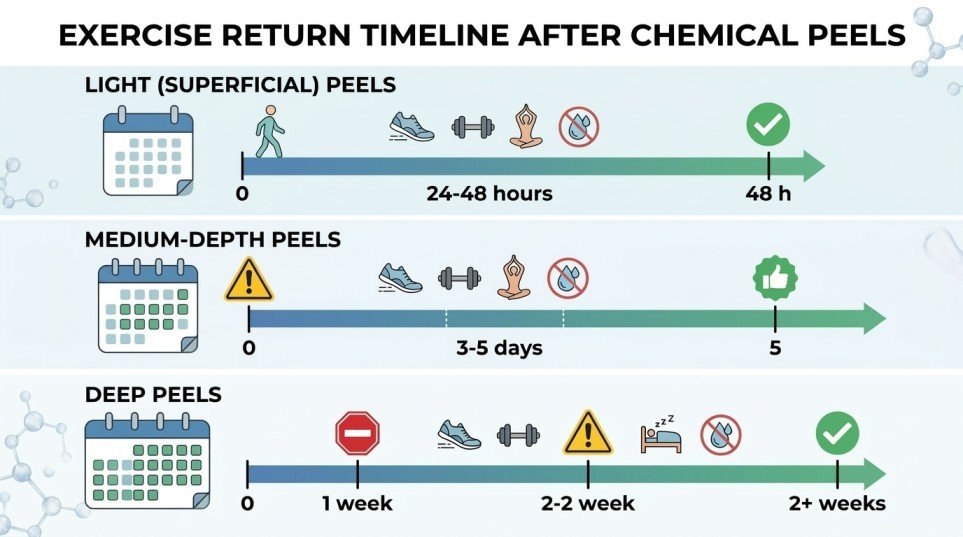
The length of time you should wait before exercising depends on how deep your chemical peel penetrated. Deeper peels create more extensive barrier disruption and require longer recovery periods before your skin can safely tolerate the demands of a workout.
Light (Superficial) Peels
Light peels using ingredients like low-concentration glycolic acid or lactic acid affect only the outermost layer of skin. Recovery is relatively quick, and most patients can return to light physical activity within 24 to 48 hours. During this window, avoid anything that causes heavy sweating. Gentle walking is typically fine on the first day, but save the intense cardio, hot yoga, or heavy lifting until at least 48 hours have passed and your skin shows no signs of significant sensitivity.
Medium-Depth Peels
Medium peels using acids like trichloroacetic acid penetrate deeper into the skin, creating more pronounced peeling and a longer healing window. These peels demand a wait of at least three to five days before resuming exercise. The peeling process is more visible and more fragile during this period, and sweat getting trapped under shedding skin can cause irritation, stinging, and uneven healing. Wait until active peeling has subsided and your skin no longer stings with gentle touch before returning to the gym.
Deep Peels
Deep chemical peels create substantial controlled injury and require the most patience. Exercise should be avoided for at least two weeks, and in some cases longer depending on your healing progress. These peels produce significant peeling, redness, and sensitivity that take considerable time to resolve. Follow your practitioner's specific guidance closely, as deep peels require the most individualized aftercare.
What Happens If You Work Out Too Soon
If you return to exercise before your skin is ready, you may notice increased redness and a flushed appearance that takes longer to calm down, stinging or burning sensations as sweat contacts healing skin, prolonged or uneven peeling, and in some cases, breakouts caused by sweat and bacteria becoming trapped under flaking tissue. A single premature workout is unlikely to permanently damage your results, but repeated early exercise can extend your overall recovery timeline and lead to complications that could have been avoided with patience.
If you do accidentally work out too soon and notice irritation, stop the activity immediately. Gently cleanse your face with lukewarm water and a mild, fragrance-free cleanser. Apply a soothing, hydrating aftercare product and avoid further heat exposure for the rest of the day.
How to Return to Exercise Safely
When your skin signals that it is ready, a gradual return to exercise protects your healing while getting you back to your routine. Start with low-intensity activities like walking or light stretching before jumping back into high-intensity workouts. Exercise in a cool environment when possible, and avoid hot yoga, saunas, or steam rooms for at least a week beyond your initial waiting period. Keep a gentle, fragrance-free facial mist or clean towel on hand to lightly dab sweat away from your face rather than letting it sit on your skin. Cleanse your face gently as soon as possible after your workout and immediately apply your aftercare products to support continued healing.
Pay attention to how your skin responds during and after your first few workouts back. If you notice increased sensitivity or redness, scale back the intensity and give yourself another day or two before trying again.
Supporting Recovery So You Can Get Back to the Gym Faster
The most effective way to shorten the gap between your peel and your return to the gym is supporting your skin with proper aftercare that accelerates barrier repair. When your skin rebuilds its protective layer efficiently, sensitivity resolves sooner and you can safely resume your normal activity level.
During days one through seven, apply Nexovia Skin Serum at 1mL in the morning and 1mL at night. The ABA.4 Aesthetic Bio-Amplifier architecture delivers plant exosomes to modulate inflammation, PDRN to activate tissue regeneration pathways, NAD+ to fuel the cellular energy needed for repair, and a peptide matrix to rebuild the skin's structural framework. Follow with a bland moisturizer and broad-spectrum SPF 50 or higher during the day.
During days eight through fourteen, apply Nexovia at 0.5mL in the morning and 0.5mL at night as your skin completes its restoration.
After day fourteen, continue applying Nexovia once daily until the 30mL bottle is finished to maintain results and support ongoing skin health.
Choosing Aftercare That Supports an Active Recovery
When your aftercare is specifically formulated for the demands of post-procedure skin, every application reinforces your barrier's ability to heal and withstand the stresses that come with returning to an active lifestyle.
This is exactly why Nexovia's Skin Serum was formulated with its ABA.4 Aesthetic Bio-Amplifier architecture. The formula combines plant exosomes at 4 billion particles per milliliter, PDRN at 1% concentration, NAD+ at 1% concentration, and a peptide matrix including growth factors. This bio-intelligent aftercare addresses recovery from multiple angles simultaneously, designed to soothe instantly, support barrier recovery, and amplify your final results.
Made in South Korea and developed specifically for the post-procedure experience, Nexovia represents the next generation of aftercare formulated to work with your skin's natural healing processes.
Nexovia Skin Serum launches in June 2026. Register for early access to be among the first to experience bio-intelligent aftercare designed specifically for post-procedure recovery.
Frequently Asked Questions
Can I do light walking on the same day as my chemical peel?
Gentle walking that does not cause sweating is generally considered safe on the day of a light or superficial chemical peel. The key is avoiding anything that raises your body temperature enough to produce sweat on your face. If you can walk at a relaxed pace in a cool environment without breaking a sweat, this is typically fine. For medium and deep peels, even walking should be approached cautiously during the first couple of days.
What if I sweat accidentally after a chemical peel?
If you find yourself sweating unexpectedly, gently blot the sweat from your face with a clean, soft cloth rather than rubbing. As soon as possible, rinse your face with lukewarm water and apply your aftercare products. A single episode of sweating is unlikely to cause lasting problems, but try to avoid repeated exposure during the critical first days of recovery.
Can I do strength training that does not make me sweat much?
Even if you do not sweat heavily during strength training, the increased blood flow and elevated heart rate still direct more heat to your skin's surface. This can intensify redness and inflammation on healing skin. It is safest to wait the recommended period for your peel depth before resuming any form of exercise that elevates your heart rate, even if sweating feels minimal.
Is swimming safe after a chemical peel?
Swimming should be avoided for at least a week after any chemical peel, and longer for medium or deep peels. Pool water contains chlorine and other chemicals that can severely irritate barrier-compromised skin. Ocean water introduces salt and bacteria. Both environments pose risks for infection and irritation that are not worth taking during recovery.
How do I know my skin is ready for exercise again?
Your skin will show clear signals when it is ready. Look for the absence of visible peeling or flaking, no stinging when you apply your regular aftercare products, reduced redness and sensitivity, and skin that feels comfortable without constant moisturizing. When in doubt, give it an extra day and consult your practitioner for personalized guidance based on your specific treatment.
This content is for informational purposes only and does not constitute medical advice. Always follow the specific aftercare instructions provided by your practitioner, as recommendations may vary based on your individual treatment and skin type.


